
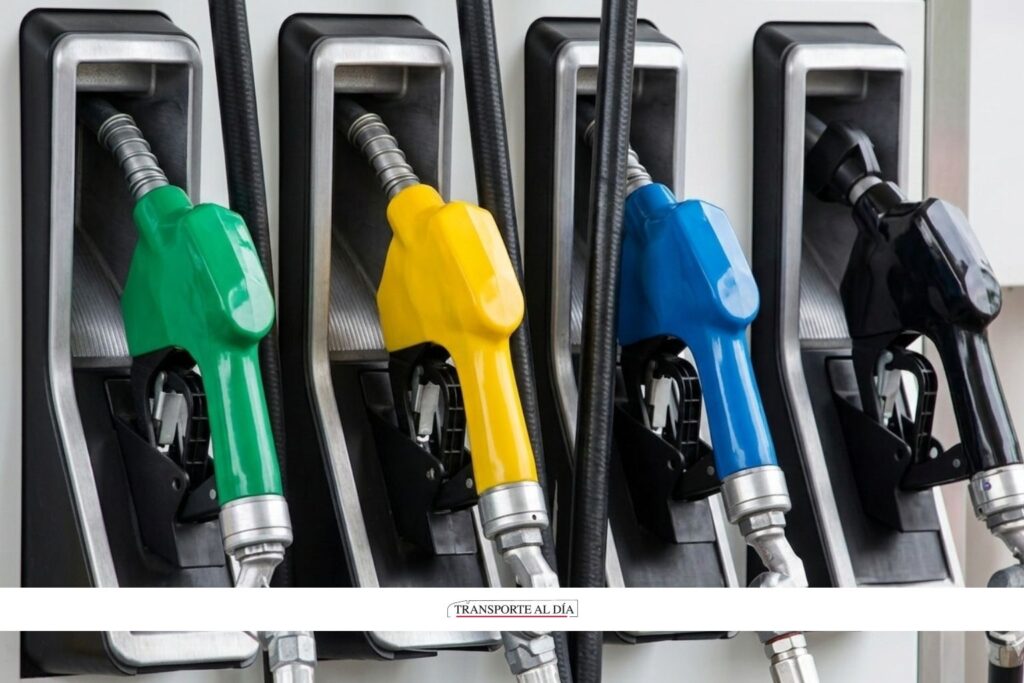
Those who live behind the wheel know it best: the price of diesel has become a rollercoaster. Ever since the armed conflict broke out between the United States, Israel, and Iran last February 28, the global energy market has been shaken.
And although Spain does not buy Iranian oil directly, no one escapes a shock that has turned the global economy upside down.
The key lies in the Strait of Hormuz, that narrow 38-kilometre passage through which roughly one-fifth of the world’s oil supply transits. When the attacks and the effective blockade of this route disrupted supply chains, the price of crude skyrocketed: experts calculated an increase of up to 40% compared to pre-war values. The market reacted in a chain reaction, and the rise in the Brent barrel was transferred almost directly to Spanish fuel pumps.
In response to this situation, the Spanish government mobilised a plan of over €5 billion with a dual objective: to cushion the immediate blow and to prepare for the future. Among the most notable measures, it reduced VAT on fuels from 21% to 10% and lowered the tax on hydrocarbons to the minimum allowed by the EU. For transport professionals, a direct aid of €0.20 per litre of diesel was also established. Altogether, this tax relief meant savings of up to €0.30 per litre at the pump.
But the war has not let up. After a peace agreement reached in June that caused prices to fall, intermittent attacks from both sides have once again generated instability. Today, 20 July, the average price of petrol stands at €1.597 per litre and diesel at €1.651. Both have risen by €0.006 compared to the previous day, yet another example of the volatility that keeps the sector on edge. And mind you, before it all began, a litre of petrol was around €1.475.
For hauliers, the impact is devastating. Fuel accounts for roughly one-third of their operating costs, and industry associations have already called for additional aid, such as a €0.25-per-litre bonus. The price hike not only squeezes their margins but also ends up being passed on to the final price of the goods they carry in their trucks, fuelling inflation and hitting the entire economy.
In short, what happens thousands of kilometres away, in a strait in the Persian Gulf, resonates every day at Spanish petrol stations. As long as the conflict does not stabilise, the ups and downs in fuel prices will remain a daily reality. And those who suffer the most—the professionals who keep the country moving—hope that aid arrives in time so they do not have to choose between filling up the tank or continuing to work.
Have any thoughts?
Share your reaction or leave a quick response — we’d love to hear what you think!
-
 0
0
-
 0
0
-
 0
0
-
 0
0
-
 0
0
