
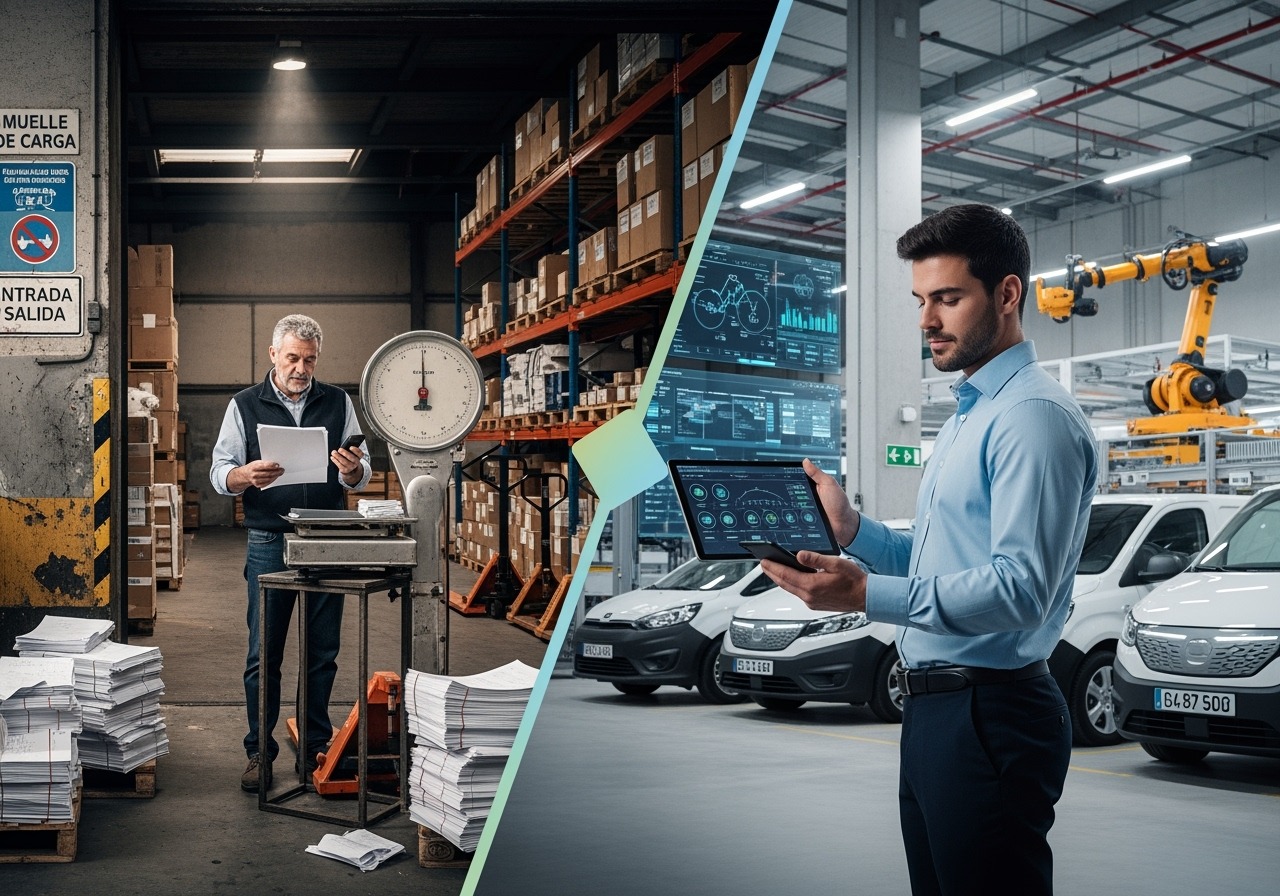
Transport weighs as heavily in Spain as in few other sectors. A fundamental part of the country’s economic life runs on wheels, and what for decades was a universe of stamped papers and manual procedures now faces its most radical transformation. Electronic invoices, digital signatures, and telematic control documents are no longer future projects, but regulatory realities moving forward without turning back. The question is no longer whether it is convenient to get on this train, but how to do so in time.
The calendar is firm and the deadlines are non-negotiable. October 5, 2026, has become the date marked in red for national road freight transport. On that day, the administrative control document on paper will cease to be valid and must be replaced by its digital version, the DeCA, driven by the Sustainable Mobility Law 9/2025. Added to this is the electronic consignment note (eCMR), with the same legal value as the paper document, which will be the only valid format to accredit the transport contract.
The sector therefore faces a double digitalization: that of the documents accompanying the goods and that of invoicing between companies. It is not just about replacing paper with a screen. The mandatory electronic invoice, driven by the Create and Grow Law, requires a structured format that systems can process automatically, not a simple PDF sent by email.
Software applications must generate the electronic control document before the start of each journey, store it in an accessible repository, and provide it with a unique URL for verification at roadside checks. Scanning papers will not be valid. This is a fundamental change in document management, not just in the medium. Those who have already started down this path highlight advantages that go far beyond regulatory compliance.
Digitalization allows logistics information to be centralized in real time, eliminates manual procedures that slowed down operations, and strengthens control over each link in the chain. For carriers, it means less time wasted on paperwork and greater legal certainty during inspections and possible litigation. For cargo owners, it means traceability and transparency in every movement. And for the authorities, more effective control without the need to stop vehicles to review paper documents. The opinions of the experts consulted all convey the same message: adaptation cannot wait.
Non-compliance is not limited to a financial penalty; loading and unloading points will be able to reject drivers who do not present a valid eCMR, which translates into stoppages, delays, and ruptures in service agreements. That is why the Ministry of Transport has worked with the sector to ensure the transition is realistic, gradual, and adapted to daily operations. The technology is already available; the challenge lies in implementation. Spain thus aligns itself with European strategies for transport digitalization, betting on more efficient, transparent, and sustainable processes. The country’s economic life, which owes so much to its roads, is preparing to leave filing cabinets behind and make the definitive leap to the network. Digital transformation in transport is not a luxury: it is a necessity that now has an expiration date for paper. And the sector, like the rest of the economy, moves forward with it, with no possibility of turning back.
Have any thoughts?
Share your reaction or leave a quick response — we’d love to hear what you think!
-
 0
0
-
 0
0
-
 0
0
-
 0
0
-
 0
0
