
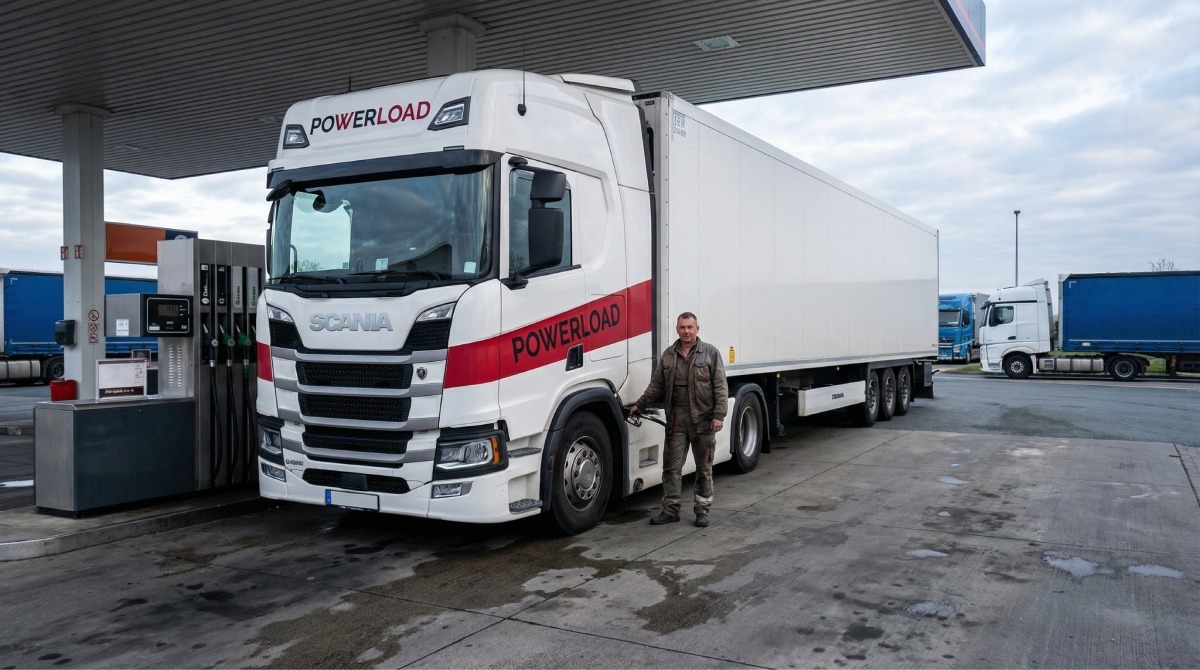
The map of European logistics has been coloured with new coordinates in recent weeks. While the European Union maintains a discreet regulatory silence on who should load or unload a truck, Romania has decided to follow Spain’s lead and legally prohibit drivers from carrying out these tasks. With the entry into force of its new regulation, the country joins a small club in which only Spain, with its veto for vehicles over 7.5 tonnes, and Portugal, with a more limited regulation, have drawn a clear red line. The rest of the continent, with few exceptions, continues to operate under a mosaic of national rules where, in practice, the driver may still be required to perform these manoeuvres if the contract or daily operations so stipulate.
This legal fragmentation is not a mere technicality; it has profound implications on two sensitive fronts: cargo safety and the driver’s integrity. As far as the goods are concerned, the European framework is clear in insisting on a distribution of responsibilities within the logistics chain that does not fall solely on the shoulders of the carrier. Proper stowage and securing, vital to prevent shifts that could jeopardise the vehicle’s stability, require a level of expertise that does not always align with the driver’s specific training. By transferring this responsibility to specialised personnel at loading and unloading points, the aim is to achieve a quality standard in stowage that minimises the risk of accidents caused by poor weight distribution.
However, the debate becomes most urgent when the focus turns to the driver’s condition. Fatigue behind the wheel is one of the major causal agents of road accidents, and subjecting a professional to intense physical effort before facing hundreds of kilometres of road is a high-risk equation. Organisations such as the International Transport Workers’ Federation (ITF) have been warning for years that fatigue, aggravated by time pressures and long working hours, can have deadly consequences. The logic behind the Spanish and Romanian prohibitions is therefore a matter of occupational risk prevention: a driver who arrives exhausted at the cab not only endangers their own life but also that of all other road users.
The voices within the sector are far from unanimous. While the International Road Transport Association (Astic) is pressing the IRU to extend this prohibition to the whole of Europe, citing Portugal’s positive experience, Nordic countries such as Denmark, Finland and Sweden have shown outright opposition to the measure. France, on the other hand, is open to implementing it, which creates a scenario of opposing blocs that the International Road Transport Union (IRU) will have to analyse. Sources consulted stress that, for many operators, the flexibility of having the driver lend a hand in quick manoeuvres is still seen as an operational efficiency that is hard to sacrifice.
This disparity of criteria creates a complex scenario for international transport. A Spanish driver crossing the border into France, for example, knows that the prohibition vanishes as soon as they leave their country, and they become subject to whatever the contract with the loader or consignee in the destination country stipulates. This lack of harmonisation not only complicates daily operations but also creates a black hole in worker protection, where their safety and occupational health can depend on the country in which their vehicle happens to be at any given moment.
In short, the tug-of-war between logistical efficiency and the protection of human capital is far from resolved. European harmonisation on this matter seems a distant horizon, and the ball remains in the court of each Member State and the agents who sign transport contracts. In the meantime, the evidence on the impact of fatigue on accident rates and the need for professional stowage for road safety remain the strongest arguments for those who defend that the driver should sit behind the wheel, and not on the loading dock, to start their shift.
Have any thoughts?
Share your reaction or leave a quick response — we’d love to hear what you think!
-
 0
0
-
 0
0
-
 0
0
-
 0
0
-
 0
0
