
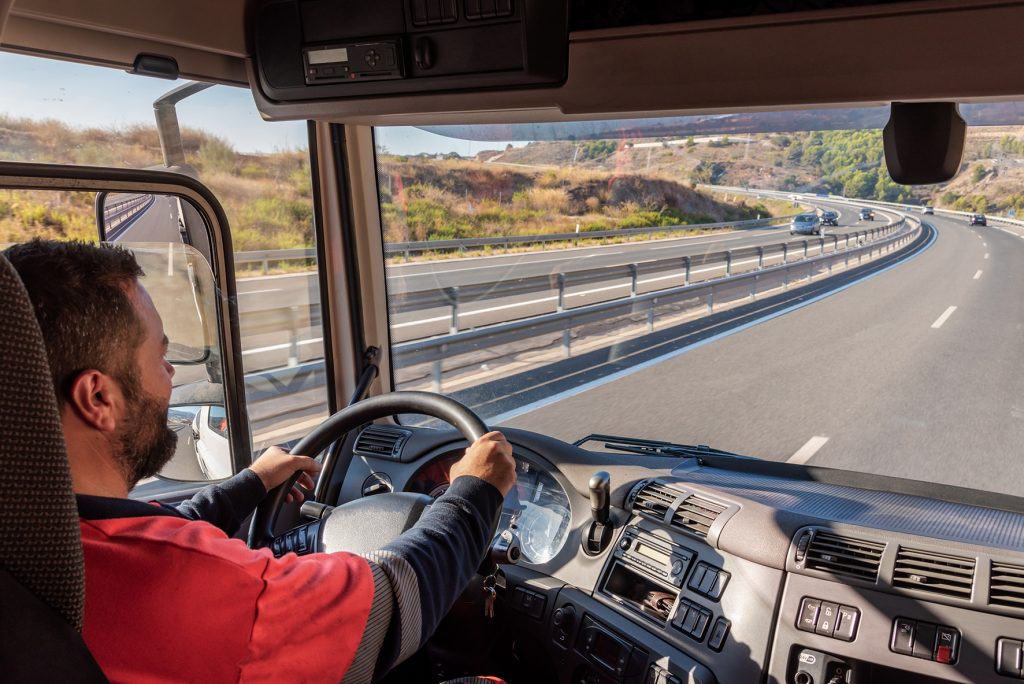
Operation Summer 2026 has begun with figures that are setting off all alarms. Spain’s General Directorate of Traffic (DGT) anticipates more than 104 million long-distance journeys during July and August, 3.7% more than the previous summer.
But what most concerns the freight transport sector is not the volume of traffic, but the worrying uptick in accident rates. June 2026 closed with 142 fatalities on Spanish roads, the highest figure for this month since 2010, with 51 additional deaths compared to the same period last year. This figure breaks the downward trend of the first five months of the year and places heavy vehicles at the centre of the road safety debate.
Large vehicles and freight transport are not immune to this bloodshed. According to the latest accident risk report from the State Road Network, heavy vehicles account for 8.4% of all accidents with victims, with 324 recorded in the period analysed. Their impact is particularly severe: 23.3% of fatalities in work-related traffic accidents are linked to this type of vehicle. High-risk stretches have increased to 95, concentrated mainly in La Rioja, Aragon, Galicia and Catalonia. Conventional roads, with their geometric limitations and lack of protective elements, bear the brunt: run-off-road crashes and head-on collisions account for the vast majority of the increase in mortality.
Faced with this scenario, the DGT has deployed an unprecedented set of restrictions for vehicles with a maximum authorised mass of over 7,500 kilograms. The summer campaign is structured in four phases: 3–5 July, 31 July–2 August, 14–16 August, and 28–31 August. During these periods, truck circulation is prohibited on certain days, time slots and road sections, especially on weekends and on access routes to large urban centres and tourist areas. The DGT’s annual resolution, published in the Official State Gazette (BOE) last January, also affects the transport of dangerous goods and vehicles requiring special authorisation due to their dimensions or weight. Essential services such as the transport of perishable goods, live animals, mail and roadside assistance are exempt, however.
Drivers of heavy vehicles must also be fully aware of the regulatory changes that came into force this very July. As of 1 July 2026, vans between 2.5 and 3.5 tonnes engaged in international transport must carry a second-generation smart tachograph and comply with the same driving and rest time rules as lorries. The 2026 Road Transport Inspection Plan of the Ministry of Transport focuses on controlling driving times, tachograph use and mandatory digital documentation. As of October, the transport control document will be exclusively electronic, eliminating paper. A change that requires hauliers to get ahead of digitalisation and review their procedures to avoid penalties.
Experts consulted insist that prevention and planning are the haulier’s best allies in this summer scenario. Extreme heat, already noticeable during the central hours of the day, requires extreme precautions regarding vehicle air conditioning and driver fatigue. Industry associations recommend checking the DGT’s official bulletins before each load, especially in communities such as Castilla-La Mancha, Extremadura and Andalusia, where critical points like the A-49 towards Portugal or the A-4 on the Centre-South axis concentrate staggered restrictions. The DGT, for its part, recommends avoiding the circulation of trucks over 7.5 tonnes even when there is no express prohibition, in order to improve traffic flow and reduce the risk of accidents.
In short, the summer of 2026 is shaping up to be a genuine challenge for road freight transport in Spain. The June accident figures—with 142 deaths and six accidents with three or more fatalities, something that did not occur in 2025—leave no room for complacency. The increase in journeys, combined with high temperatures and the concentration of traffic on weekends, demands from heavy vehicle drivers a strict discipline in complying with rest times, meticulous route planning, and constant attention to the restrictions in force. Road safety on Spanish roads, and especially that of those who share the road with these asphalt giants, depends to a large extent on this.
Have any thoughts?
Share your reaction or leave a quick response — we’d love to hear what you think!
-
 0
0
-
 0
0
-
 0
0
-
 0
0
-
 0
0
