
Croatia, a country of just over 3.8 million inhabitants overlooking the Adriatic Sea, with an interior dotted with forests and arable land, has carved out a relevant position within the European Union in just over a decade. Officially incorporated as a member state on 1 July 2013, this young EU nation adopted the euro in January 2023 and barely twelve months later, in January 2024, joined the Schengen Area, thus completing a model integration that many other countries in the region still long for.
In terms of economic weight, Croatia represents approximately 0.5% of the EU’s total GDP, with a GDP per capita of €29,000 — below the European average of €38,100 — which places it as an economy that, despite the difficulties inherited from its Yugoslav past, is growing at enviable rates: 3.9% in 2024 and forecasts of 3% for 2025, well above the eurozone average. This is no coincidence. The combination of European funds, eurozone membership and the opening of Schengen borders has transformed the country into a magnet for investors, while its public deficit and debt are gradually falling, all while its labour market shows an unemployment rate that has dropped to 5% of the active population, much lower than that of its Balkan neighbours.
Talking about the Croatian economy means talking first and foremost about tourism, but not only about it. The services sector contributes nearly two-thirds of GDP, and within it tourism accounts for approximately one-fifth of all national economic activity, with revenues that in 2025 exceeded all historical records: the arrival of 17.6 million foreign tourists — almost five times its own population — and growth forecasts of 3.6% in foreign tourism revenues during 2025 consolidate the country as one of the great destinations in the central Mediterranean.
But let’s not be mistaken: behind the beach cliché lies a solid and diversified industrial base. Manufactured goods and raw materials form the country’s export backbone, which in 2025 reached a total of 28.24
Regarding its trade with Spain, the relationship has intensified notably in recent years. Bilateral trade between the two countries has gone from €534 million in 2021 to €954 million in 2024, and prospects indicate that it will easily exceed the billion-euro barrier in 2025 and 2026. Spain maintains a clearly favourable balance, exporting to Croatia worth €954 million in 2024 compared to €363 million that it imported from the Adriatic country in the same period.
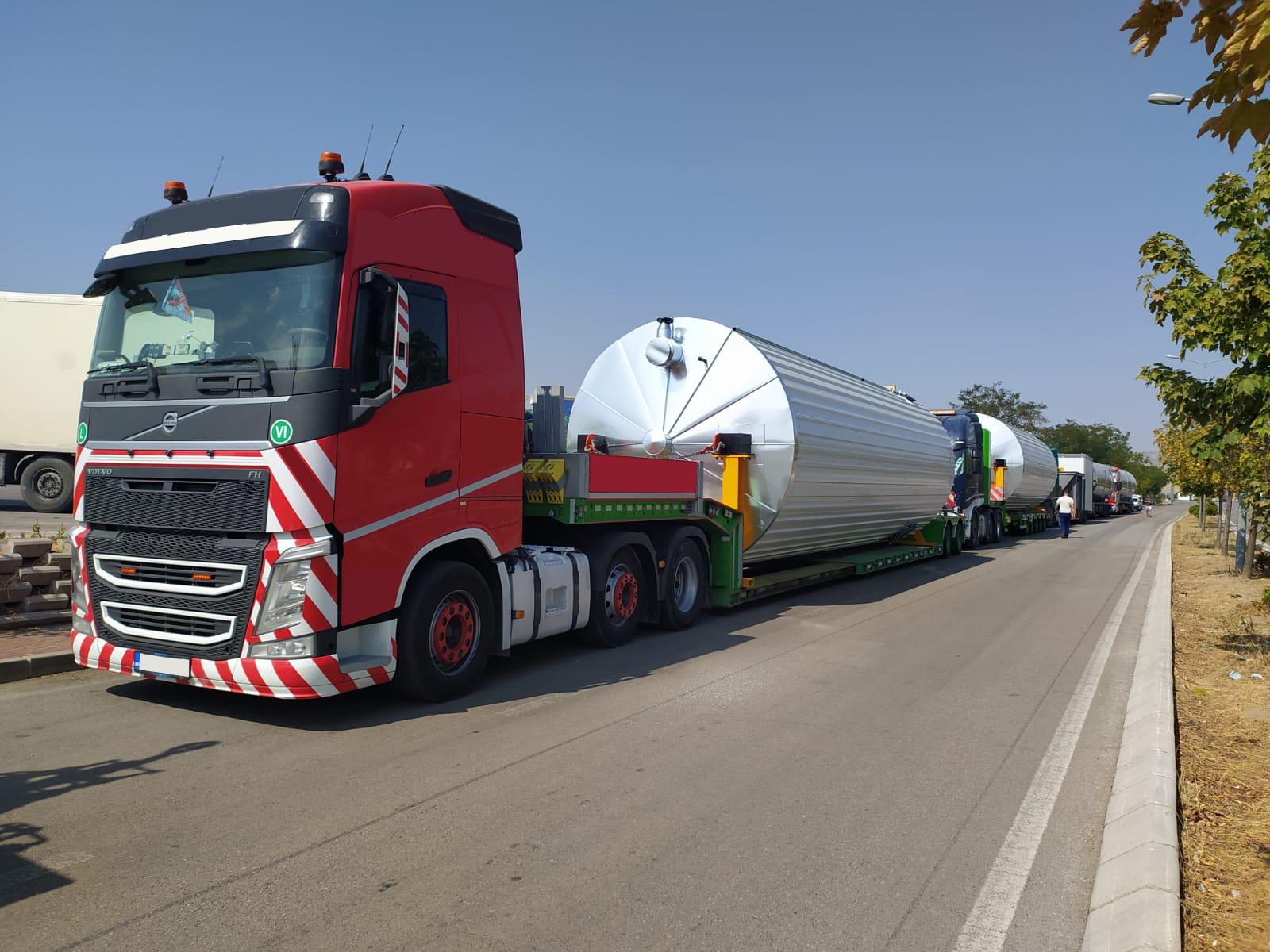
The Spanish vehicle, despite the general contraction of the automotive sector in 2025, remains one of the great protagonists of this balance, although total car exports from Spain fell by 8.2% in 2025 — a figure that should not be misleading: 93% of vehicles manufactured in Spain are destined for Europe, and Croatia is a consolidated customer among those countries with growing absorption. To these flows must be added the intense transit of road hauliers travelling in both directions along the trans-European network. Spanish trucks, loaded with automotive components, machinery and agri-food products, travel the Mediterranean route until they reach Slovenia and from there to the Croatian ports of Rijeka, Split or Ploče, while Croatian hauliers bring their wood, pharmaceutical or textile manufactures into Spain via the main connection axes.
It is precisely here that European infrastructure and the Union’s transport policy play a decisive role. The road freight and multimodal transport sector has a paradigmatic example in Croatia of how a nation can go from being marginally connected to becoming a genuine logistics hub in just a few years.
The commitment to the Trans-European Transport Network (TEN-T) has placed Croatia as one of the great beneficiaries of the revision of the trans-European corridors approved by the European Parliament and the Council at the end of 2024. Until very recently, the country was only integrated into the Mediterranean Corridor — which connects the Iberian Peninsula with Hungary over about 3,000 kilometres — and the Rhine-Danube Corridor. But following the agreement between Parliament and the Council, Croatia has been positioned in two additional first‑order corridors: the Baltic‑Adriatic Corridor and the Western Balkans‑Eastern Mediterranean Corridor, which means that the ports of Split and Ploče are now incorporated into the basic network of port hubs.
Croatian Prime Minister Andrej Plenković did not hesitate to describe the agreement as a historic success and quantified the country’s qualitative leap: 450 additional kilometres of railway lines, 430 kilometres of roads, eight new ports and five new urban nodes integrated into the TEN-T network, making Croatia the country with the largest proportional changes in the entire European Union in this area. Former European Commissioner for Transport Adina Vălean called the agreement a “historic milestone for the EU”, while the current Commissioner for Sustainable Transport and Tourism, Apostolos Tzitzikostas, has warned that the 12,000 kilometres of European high‑speed rail remain concentrated in only four member states — Spain, France, Italy and Germany — and that central and eastern Europe “remain lamentably poorly connected”, so investment in Croatia is both an opportunity and a strategic necessity.
The Commission expects that the simple journey between Zagreb and Budapest will drop from six hours to four hours and fifteen minutes with the improvement of the railway network, something that will have a direct impact on the logistics competitiveness of the entire region.
For road transport connecting Spain and Croatia, the Mediterranean Corridor — which crosses six countries (Spain, France, Italy, Slovenia, Croatia and Hungary) over 3,500 kilometres — is the backbone of this commercial axis. Mathieu Grosch, European Coordinator for the Mediterranean Corridor since September 2024, has been blunt in stating that “the climate crisis is no longer a distant threat; it is a present and growing challenge for European transport infrastructure” and that “only through shared knowledge, coordinated planning and transnational collaboration can we ensure that the TEN-T network remains safe, connected and resilient”. Spain, for its part, is investing €2.4 billion in just 2024 and 2025 in its section of the corridor, with an average of €1.2 billion annually in the development of the Mediterranean rail network. The new Port of Rijeka, inaugurated on 29 October 2025, is positioning itself as a nerve centre for freight traffic between Asia and Europe, and its container terminal is already the largest private logistics investment in the country’s history.
In summary for the transport professional who needs key figures, trade between Spain and Croatia in 2024 reached €954 million in Spanish exports (a spectacular growth from €534 million in 2021) and €363 million in imports from Croatia, with a balance in favour of Spain of €591 million. The most exchanged products are, on the Croatian side, mineral fuels, electronic equipment, wood and pharmaceutical products, while Spain sends to Croatia mainly cars, automotive components, industrial machinery, agri‑food products and capital goods. The network of corridors — four in total, with special relevance for land freight transport — and EU investment through the Connecting Europe Facility, which in 2024 allocated €7 billion for 134 transport projects, including the modernisation of around twenty ports, several of which are Croatian and Spanish, should encourage hauliers to consider this route as a genuine logistics motorway of opportunities. Perhaps one day, when timelines and construction work allow, the road journey from southern Spain to Zagreb can be made with the same flow and the same fluidity with which today Croatian tourism floods the Adriatic beaches and with which the fruits of Spanish fields reach the cold lands of the Danube.
Have any thoughts?
Share your reaction or leave a quick response — we’d love to hear what you think!
-
 0
0
-
 0
0
-
 0
0
-
 0
0
-
 0
0
