
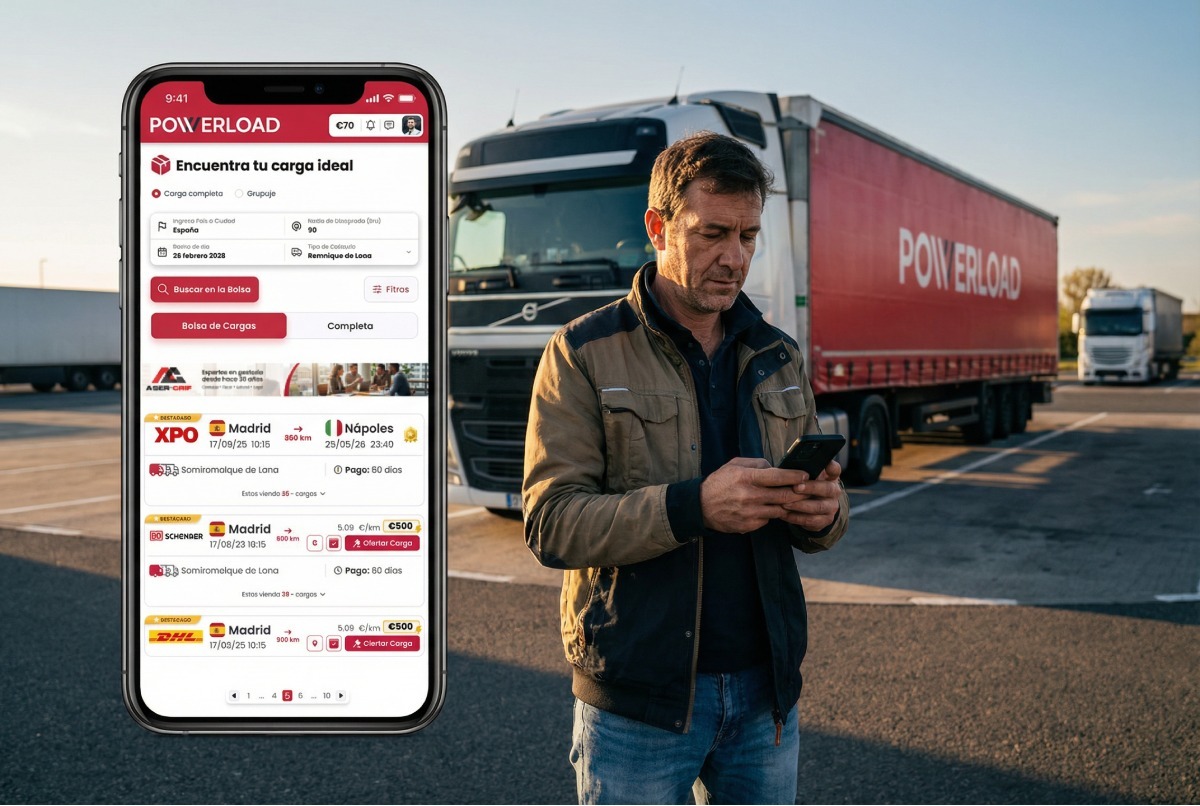
In the heart of Madrid, where the digital pulse of European transport beats strongest, Powerload has established itself as an intelligent logistics platform that is redefining the rules of the game for shippers and carriers. This is not a simple freight exchange board, but a comprehensive ecosystem that combines artificial intelligence, process automation, and a highly qualified human team to deliver solutions that work “like clockwork”. With a presence in more than twenty countries, over ten thousand trips managed, and nearly five thousand regular users, Powerload has become an undisputed benchmark for the sector in Spain and Europe.
For shippers, the platform opens up a range of possibilities that were previously unthinkable. Publishing a load and negotiating directly with verified carriers is now an agile and transparent process. The AI-powered calculator allows each freight rate to be quoted according to the real market value, eliminating the uncertainty of traditional pricing. But perhaps the most valuable aspect for those who entrust their goods to the road is the certainty that only professionals with validated documentation can access their cargo. As the company itself points out, the shipper knows that the driver collecting their goods has passed a dynamic visual verification that certifies their real identity.
Carriers, for their part, find in Powerload an ally that goes far beyond mere intermediation. The platform guarantees them weekly payment for their services, eliminating the scourge of late payments that has caused so much damage to the sector. Furthermore, the AI-based route matching system analyses hundreds of variables in real time —traffic, weight restrictions, loading windows— to offer optimised itineraries that reduce fuel consumption and unnecessary kilometres. Javier Ruiz, a carrier associated with the platform, sums it up clearly: “Before, I used to do 2,500 kilometres a week, and now with route matching I do 2,000 and earn the same”.
Behind this efficiency lies a top-tier technological commitment. Powerload uses artificial intelligence and machine learning to optimise freight search and comparison, learn from user preferences, and continuously improve the accuracy of its recommendations. Its logistics CRM transforms the old paper waybill into a living digital document that centralises all trip documentation, aligning with the new Sustainable Mobility Law that requires the digitalisation of the sector. Real-time GPS tracking, automated invoicing, and centralised communications management complete an ecosystem that reduces administrative burdens and accelerates the supply chain.
Security and trust are the pillars upon which the entire system is built. Powerload is not content with demanding a folder of scanned documents: before activating any carrier’s service, its protocol goes one step further and requests a live video call in which a member of the security team compares the person’s face with the photograph on their identity document. This additional layer of security, which combines documentary rigour with direct human judgment, closes the door on impersonators and protects every link in the logistics chain. As the company reminds us, the Spanish Penal Code contemplates prison sentences of six months to three years for identity theft, sentences that are aggravated when used to defraud a company.
Powerload is, ultimately, much more than a digital platform: it is the new generation of transport that combines technology, financing, and sustainability to revolutionise logistics across Europe. From its headquarters in Madrid, this Spanish entity is demonstrating that it is possible to build fairer, more modern, and more efficient transport, where the work of each carrier is valued as it should be. In upcoming posts, we will address other equally relevant functionalities of this ecosystem that leaves nothing to chance. For now, it is clear that Powerload has come to stay and to set the pace for the digitalisation of the sector in Spain and Europe.
Have any thoughts?
Share your reaction or leave a quick response — we’d love to hear what you think!
-
 0
0
-
 0
0
-
 0
0
-
 0
0
-
 0
0
