
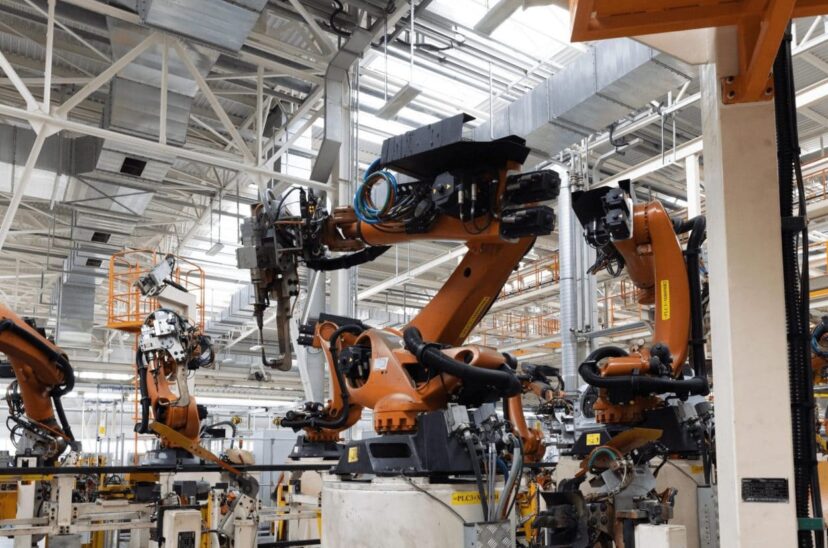
Neither does the machine replace the expert, nor does the expert do without the machine: the logistical future demands profiles with a high human and technological coefficient.
Artificial intelligence is no longer a future promise in freight transport; it is a reality that is redefining logistics. Algorithms optimise routes in real time, predict congestion up to 72 hours in advance, and enable predictive maintenance that prevents costly breakdowns. Companies that adopt these technologies achieve reductions of up to 30% in operating costs. However, the mere implementation of technology does not guarantee success. This is where the figure of the hybrid technician becomes not just valuable, but indispensable.
The mantra that AI destroys jobs is completely inverted in the transport sector. Far from being a threat, technology becomes a catalyst for new opportunities, as long as there are professionals capable of integrating it into their daily work. As Carlos González-Reyes, Director of the UOC Skills Lab, points out, the labour market is moving towards “a model of augmented decision-making, not replaced decision-making”. In this new paradigm, the hybrid technician—that person who combines technological skills with human abilities—is the most prized profile. It is not about competing with the machine, but about learning to work with it, guiding it to get the most out of it.
What defines this hybrid technician in the context of transport? Their value does not lie in creating from scratch, but in knowing how to ask the right questions, define problems precisely, and make sense of the results generated by AI. One of the most in-demand skills is prompt engineering, that is, the art of “talking to the machine” to obtain useful and accurate responses. The hybrid technician understands that, as in a dialogue, the first response from AI is rarely the best; one must refine the request, ask for clarifications, and introduce constraints. This interactive ability turns AI into an effective workmate, not an infallible oracle.
Beyond technical prowess, the hybrid technician stands out for their soft skills or personal abilities. The latest PIMEC-UOC Barometer reveals that these competencies have ceased to be complementary and have become essential, appearing in almost 90% of job offers in Catalonia. Critical thinking is the skill with the most future, as it allows one to validate what the machine generates and avoid biases. Added to this are emotional intelligence and leadership, fundamental for managing teams and fostering trust in environments where people and technology coexist. The hybrid technician is, in essence, a professional with a high intellectual and emotional quotient.
In a sector like transport, which is traditionally operational, this transformation is profound. Advanced programming knowledge is not required, but rather an active trial-and-error attitude and the capacity to learn to learn (lifelong learning). Work becomes more cross-cutting, collaborative, and oriented towards solving complex problems. The hybrid technician is the professional who not only handles data but interprets it with discernment, applying the context and intention that only human intelligence can provide. Their creativity does not disappear; rather, it transforms towards a more strategic and conceptual dimension.
In short, the future of transport will not be dictated by AI, but by the hybrid technicians who know how to drive it. The proposal from the Diario de Transporte points in this direction: technology streamlines processes, but it is people with a high coefficient of adaptability and judgment who make the difference. Investment in technology must be accompanied by investment in human talent capable of dialoguing with it, correcting it, and guiding it. The challenge is not technological, but educational: to train the hybrid technicians that the sector needs to successfully navigate the new era of intelligent logistics.
Have any thoughts?
Share your reaction or leave a quick response — we’d love to hear what you think!
-
 0
0
-
 0
0
-
 0
0
-
 0
0
-
 0
0
