
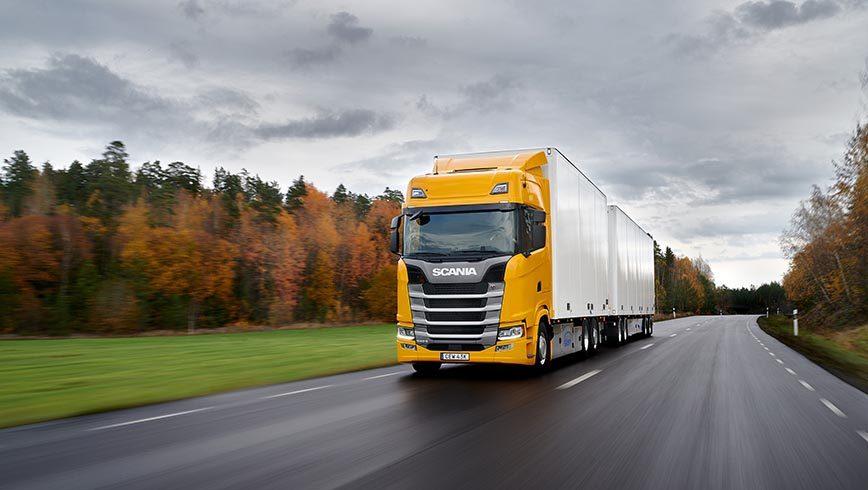
Although Luxembourg is one of the smallest countries in the European Union, its strategic position in the heart of the continent makes it a mandatory transit point for heavy goods transport connecting Germany, Belgium and France. Local regulations, carefully detailed in instruments such as the Highway Code and the Law of 14 February 1955, establish a strict legal framework that hauliers must know thoroughly.
“It is not enough to respect tachograph rules; you have to internalise the particularities of the local highway code,” warns a spokesman for the Ministry of Mobility. The differences, though subtle, are crucial: priority rules, for example, are not identical to those in France, and the presence of a cross inside a triangle on the road surface indicates priority to the vehicle coming from the right – a sign that can go unnoticed by foreign eyes. For driving professionals, this extra layer of complexity requires a thorough review of the regulations before crossing the border.
Luxembourg’s toll system is, paradoxically, free for 95% of drivers. Cars, vans and trucks under 12 tonnes can use motorways and dual carriageways without paying a single cent. However, the reality is very different for heavy goods vehicles. Trucks with a maximum authorised weight exceeding 12 tonnes are obliged to purchase the Eurovignette, a time‑based payment system covering the entire motorway and national road network. The 2026 rates, updated on 1 January, range from €12 per day for a two‑axle Euro VI vehicle to €1,512 per year for a three‑axle vehicle with more polluting engines – a moderate increase following the indexation of the European directive. “The system rewards cleaner vehicles and penalises older ones,” explains a spokesman for AGES, the company responsible for toll management, who also notes that companies can handle payment through providers such as DKV or UTA. The good news is that there are no additional tolls for special sections, tunnels or bridges: the Eurovignette includes everything.
As for road quality and safety, Luxembourg presents lights and shadows that hauliers must weigh up. The road network is modern and generally in good condition, with smooth‑asphalt motorways and clear signage. However, accident data reveal a map of concentrated risks. According to data from the Grand Ducal Police, the canton of Esch‑sur‑Alzette tops the ranking of the most dangerous roads, recording 72 serious accidents in 2024, compared to 50 in the capital. The A4 motorway, only 16 kilometres long, accounts for 20% of the country’s accidents – a disproportionate figure that puts it in the spotlight. “Accident rates are a complex problem. The A4 is dangerous due to high traffic density and distractions, not necessarily because of poor road surface, which is good,” clarifies a source close to the Roads Directorate. Nationwide, safety has improved, placing Luxembourg fourth in the EU for fewest deaths per million inhabitants, but the number of seriously injured remains “worrying”, according to the latest European Commission report.
One of the biggest headaches for hauliers crossing Luxembourg is weekend driving restrictions, which can come as a surprise to Spanish hauliers. In 2026, the country maintains a driving ban for trucks over 7.5 tonnes, applied especially on Sundays and public holidays. The general rule states that these vehicles may not circulate from midnight on Sunday until 9:45 p.m. But the rule becomes more complicated depending on the direction of travel: trucks heading to France from Germany or Belgium are banned from driving from 9:30 p.m. on Saturday, while those heading to Germany may drive until 11:30 p.m. Non‑compliance has immediate consequences. According to official sources, police officers may not only fine the driver but also have the power to order him to return to his country of origin or to the loading point. “Exceptions are limited, and it is better not to be overconfident,” warns an industry expert. In conclusion, Spanish hauliers can cross Luxembourg without penalties if they follow this roadmap. First, check the vehicle’s weight: if it exceeds 12 tonnes, it is essential to buy the Eurovignette before setting foot on the motorway, remembering that cleaner vehicles pay less. Second, plan the route avoiding Sundays and, above all, peak hours on problematic sections such as the A4 motorway or the national roads in the south of the country. Finally, review weekend and holiday restrictions according to the direction of travel, paying special attention to the parking prohibition that accompanies the driving ban. With this preparation, hauliers can take advantage of Luxembourg’s excellent road network and turn transit through the Grand Duchy into just another stage, not a headache.
Have any thoughts?
Share your reaction or leave a quick response — we’d love to hear what you think!
-
 0
0
-
 0
0
-
 0
0
-
 0
0
-
 0
0
