
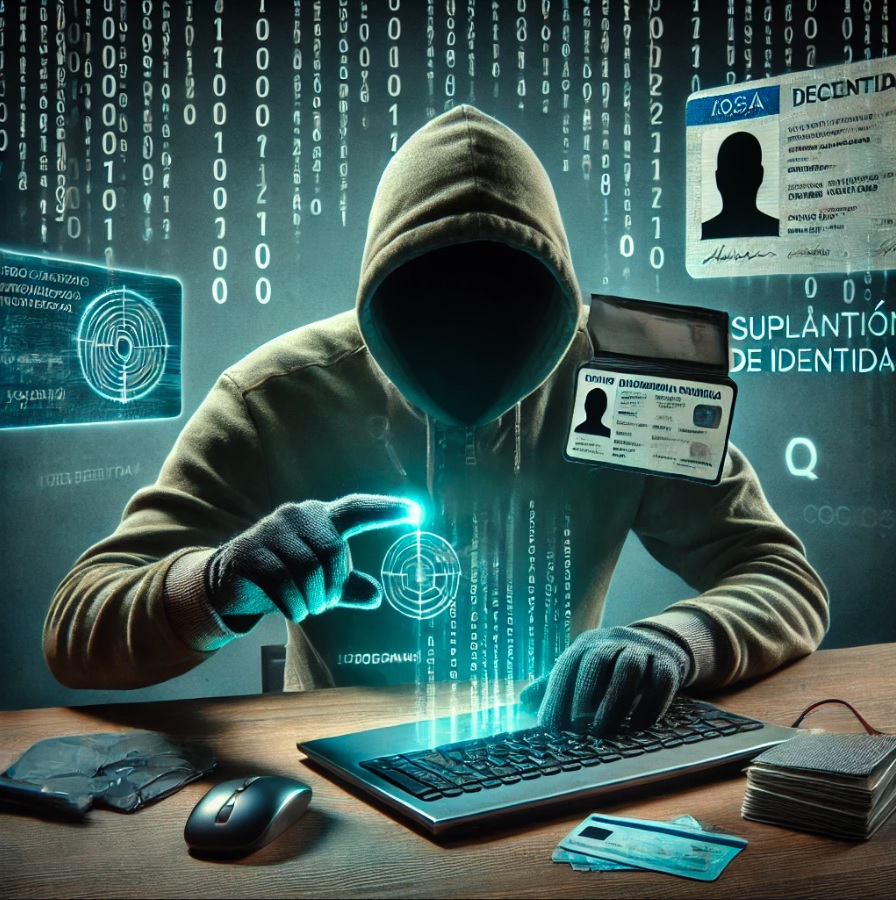
At Powerload SL, we know that trust is not decreed; it is built with facts. That is why we have made identity verification the core of our operations. It is not enough to demand a folder of scanned documents; before activating the service for any carrier, our protocol goes a step further and requests a live video call. During that real-time connection, a member of our security team compares the face of the person requesting to collaborate with the photograph on their national identity document, observing their features, gestures, and natural facial movements—something impossible to simulate with a still image or a stolen ID card. This system, which combines documentary rigor with direct human judgment, allows us to instantly detect whether the person presenting themselves as the holder of that ID is indeed its legitimate owner, closing the door to impersonators who rely on the anonymity of merely bureaucratic procedures.
This video call is not a nuisance or an arbitrary filter; it is, above all, an operational guarantee that protects every link in the logistics chain. The shipper knows that the driver picking up their goods has passed a dynamic visual check that certifies their real identity, and the honest carrier appreciates that their effort and reputation cannot be usurped by a criminal trying to pose as them to steal a shipment. Furthermore, the measure has a powerful deterrent effect: fraudsters know that presenting a manipulated photocopy or a photo of a lost ID will not be enough, because they will have to sit in front of a camera and sustain the lie in person, where the slightest contradiction or hesitation gives them away. This additional layer of security, which we apply scrupulously before final registration, drastically reduces the room for maneuver of those who seek to take advantage of others’ trust in the freight transport sector.
Parallel to these internal barriers that we have imposed on ourselves as a company, we are fully aware that private prevention must go hand in hand with a legal framework that relentlessly pursues those who manage to bypass controls. In Spain, the Criminal Code not only contemplates the usurpation of civil status in its Article 401, with prison sentences of six months to three years, but when that impersonation is used to deceive a company and steal its goods, the crime is automatically aggravated as fraud, punishable under Articles 248 and following, with penalties that increase based on the value of what was stolen and the damage caused. If the offender also presents a forged or altered identity document, the crime of documentary falsification is added, which increases the severity of the sentence and can mean years of effective imprisonment. Spanish courts are increasingly rigorous with this type of fraud, especially when it affects commerce and the security of supply chains, understanding that it is not a simple theft, but an attack on the integrity of an entire strategic sector.
In addition to the criminal route, the Government has tightened administrative tools to cut off these criminals’ access routes, as demonstrated by the recent Order TDF/149/2025, published in February of that same year, which combats impersonation through fraudulent calls and messages by creating an Alias Registry that forces operators to block any unverified communication. At the same time, the regulations require companies to adopt robust verification systems, such as two-factor authentication or digital signatures, and failure to comply with this duty of diligence can make the company itself liable if a customer is defrauded for not having sufficiently accredited the identity of the interlocutor. At Powerload SL our video call and our documentary requirements are not a luxury, but a necessity that aligns us with best practices and the letter of the law, because we understand that security is not an expense, but the most profitable investment to preserve the good name of our business and that of all who trust us.
Finally, we want to remind carriers and shippers that the fight against fraud is a shared effort, and that at the slightest suspicion of impersonation, speed of action makes all the difference. Gathering all possible evidence—screenshots, video call records, emails, and exchanged documents—and filing a complaint with the National Police, the Civil Guard, or the National Cybersecurity Institute (INCIBE) is the first step for justice to activate all its mechanisms; and if the deception has involved a breach of personal data, it must also be reported to the Spanish Data Protection Agency. At Powerload SL, we do not rest in the continuous improvement of our protocols, because we know that the certainty of a transparent and legal business is the only way for the transport sector to remain a reliable pillar of the economy. With our video call, our document controls, and the backing of severe legislation, we tighten the net on fraudsters and send a clear message: there is only room here for true professionals, those who follow the rules and who understand that honesty is the best letter of introduction.
Have any thoughts?
Share your reaction or leave a quick response — we’d love to hear what you think!
-
 0
0
-
 0
0
-
 0
0
-
 0
0
-
 0
0
