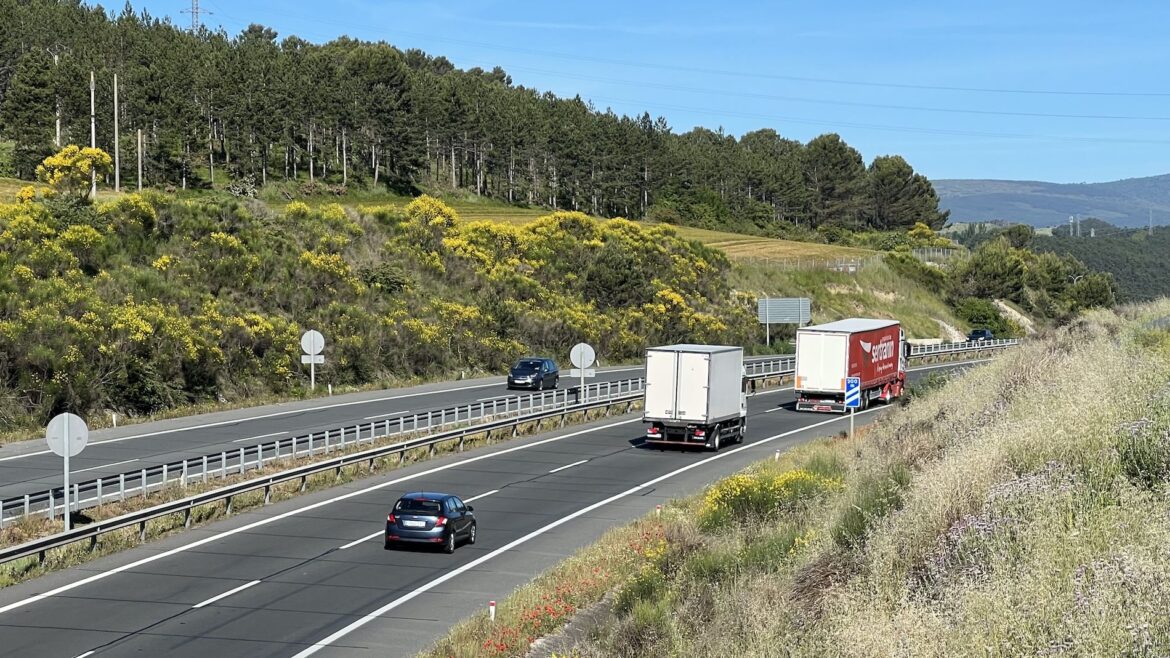
Bulgaria, a country with an aging vehicle fleet and one of the highest motorization rates in the EU, faces the enormous challenge of decarbonizing its freight transport sector.
The new legislation, mostly derived from EU guidelines, is setting the pace.
In 2025, the Bulgarian Parliament approved amendments to the Climate Change Mitigation Act that integrate the emissions trading scheme (ETS2) for the transport and building sectors.
This means that, from that moment on, each liter of fuel sold for transport carries a cost associated with CO₂ emission rights – a measure aimed at progressively incentivizing the reduction of the carbon footprint.
To achieve fleet transformation, the government has put several tools on the table, although they are still insufficient for the sector. The flagship program is the National Recovery and Resilience Plan, which has allocated 1.2 billion leva (about €613 million) in subsidies for the purchase of private and commercial electric vehicles. In addition, the National Framework Strategy for Alternative Fuels, approved in 2017, sets the roadmap for the development of electric vehicle and hydrogen refueling infrastructure.
A notable measure under discussion is the introduction of a fee of 500 leva (about €255) for each imported second-hand vehicle, which could be used for a bonus fund to purchase electric cars.
However, data on the actual adoption of hybrid and electric vehicles in freight transport are modest. Charging infrastructure, one of the main bottlenecks, is advancing slowly thanks to European funds.
Recently, the country received approval for two major projects that will add 32 charging points for heavy vehicles and 182 for light vehicles on the main corridors of the Trans-European Transport Network (TEN-T). These projects, with funding of about €15 million, are a first step toward solving the needs of carriers already operating electric trucks.
In parallel, Bulgaria participates in a pan-European consortium that will install 430 charging points for heavy electric trucks in 13 countries.
The voice of private carriers is one of caution and pressure. “The business is under serious pressure from European requirements in the context of the Green Deal,” said Georgi Zagorov, manager of Turbotrucks Bulgaria. His company already operates a fleet of Euro 6 trucks, but for him, the real solution lies in efficient engines and biofuels, not just electrification.
For his part, Tsvetomir Uzunov, financial director of carrier Discordia, warned that “the sooner we start building good charging infrastructure, the cheaper the price will be.” His company has managed to reduce its emissions by 50 kg per vehicle per day, but he stresses that the sector needs to monitor all upcoming regulations.
Regarding sanctions and restrictions, Bulgaria has begun to move forward with the creation of Low Emission Zones (LEZs). Sofia became the first city in Eastern Europe in December 2023 to implement one, banning the entry of Euro 1 standard vehicles. The second phase, which began in December 2024, excluded Euro 2 vehicles. Other cities like Plovdiv are also planning to establish such areas. Fines for vehicles that do not meet these standards are a reality in most of these zones, although enforcement is still being consolidated.
In summary, Bulgaria seems to have started a slow, Europe‑funded transition, but it clashes with the reality of an aging fleet and incipient infrastructure. Experts consulted, such as Georgi Zagorov, agree that the road to zero emissions will take time and will require a range of technological solutions.
The race against time to reduce emissions by 55% by 2030 and achieve climate neutrality by 2050 has already begun, and Bulgarian carriers, caught between regulatory pressure and a lack of means, are trying not to be left behind.