
In just two decades, the country that for years was synonymous with industrial backwardness on Europe’s eastern flank has completed one of the continent’s most astonishing transformations.
Romania has found in its European Union membership a springboard to diversify an economy that until the 1990s depended almost entirely on obsolete heavy industry, and today stands as a leading player in sectors as diverse as automotive, technology and agrifood.
The highlight of 2025 was Romania’s full accession to the Schengen Area, which came into force on 1 January of that year and meant the elimination of land border controls after more than a decade of waiting and a two-year veto by the Austrian government, according to France 24.
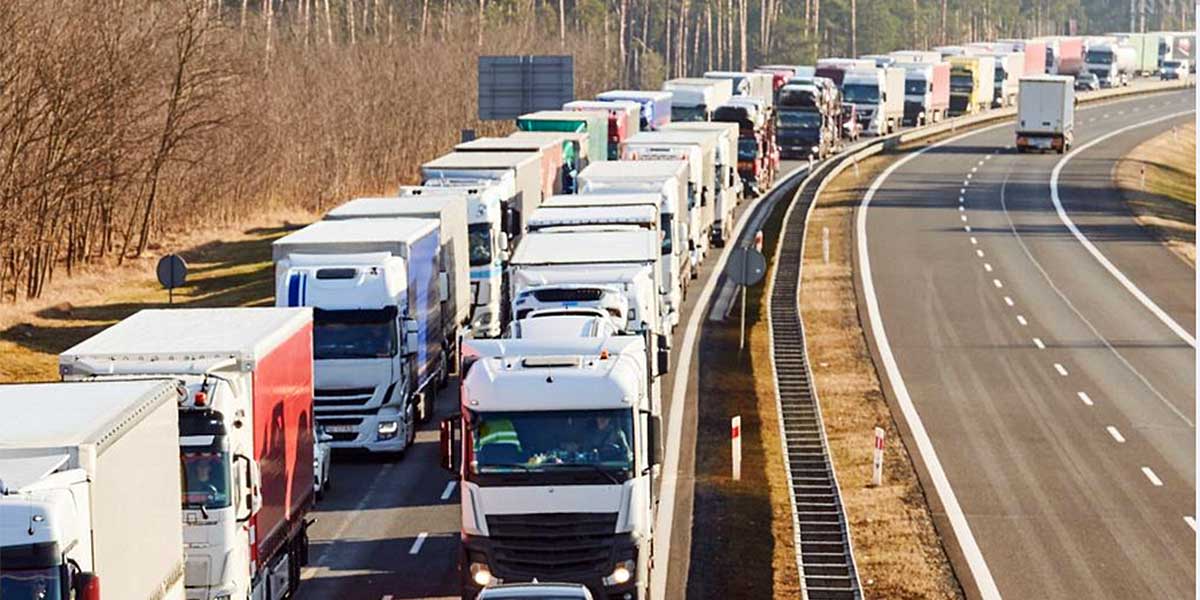
The end of long waits at border crossings has turned arteries such as the Pannonian Plain passage or the Danube crossing into fluid corridors to the heart of the EU – a logistical change that Romanian exporters had been demanding for years and which is already beginning to be reflected in lower transport costs.
The engine driving this economy is undoubtedly the automotive industry, which generates around 13% of the country’s GDP and places Romania as a regional leader in component exports, which account for 26% of everything the country sells abroad, according to sector data compiled by the Romanian Automobile Manufacturers Association (ACAROM).
Dacia, owned by the Renault group, remains the flagship at its Mioveni plant, but the automotive ecosystem has branched out across the west of the country, where giants such as Ford in Craiova and Bosch in Cluj-Napoca operate, along with hundreds of small parts and systems suppliers.
Adding to this thriving sector is a technology industry that already invoices more than €15.6 billion per year and is growing at a rate close to 12% annually, according to estimates from consultancy PwC Romania gathered during 2025. Mihaela Moes, delegate of the Spanish association of internationalised industrial companies amec in Romania, explained in an interview granted to that outlet in October 2025 that “key sectors such as chemicals, pharmaceuticals, energy, technology and automotive offer growth and collaboration opportunities for Spanish companies” – an interest that transcends commercial borders and ventures into direct investment.
Precisely the link with Spain is one of the strongest in Romania’s commercial network.
During January 2026, Romania exported goods worth €186 million to Spain, representing an increase of 4.19% compared to the same month the previous year, according to data from the Observatory of Economic Complexity processed by the Chamber of Commerce and Industry of Romania. The products crossing the continent from east to west are mostly cars (especially the Dacia Sandero and Ford Puma assembled in the country), machinery, electrical equipment and electronic components, while Spain sends industrial vehicles, chemical products, meat products and high value-added capital goods to Romania.
This flow is also supported by a human network of more than 620,000 Romanian residents in Spanish territory at the end of 2025, according to Spain’s National Statistics Institute, who act as a transmission belt for consumption habits, housing investment and knowledge transfer. Political relations between the two countries, defined by the Spanish Ministry of Foreign Affairs in its latest country report as “positive and cooperative in the last decade”, have forged a climate of trust that also translates into Romanian investments in Spain amounting to €42 million accumulated between 1993 and 2024, although the true potential is still untapped, according to both chambers of commerce.
However, this industrial dynamism should not hide the deep structural cracks through which the country’s macroeconomic fragility slips. Romania’s trade deficit closed 2025 at €32.743 billion, representing 8.61% of its GDP – an extremely high proportion for an economy aspiring to full convergence with the major European powers. Imports of goods and services, which account for 34% of national wealth, far exceed exports, which stand at 25.4% of GDP, according to World Bank macroeconomic data collected by the datosmacro.com portal.
Then President-elect Nicușor Dan, in statements to the local press in mid-2025, warned that the target for the budget deficit was “optimistic, realistic” by setting it at 7.5% of economic output – a figure still far from the 3% required by the Maastricht criteria and which forced the Social Democrat government to raise VAT from 19% to 21% as of 1 August 2025, a measure analysts consider unpopular but necessary.
Major international organisations are closely monitoring this delicate transition. The International Monetary Fund, in its October 2025 report, lowered its growth forecasts for the Romanian economy to 1%, far from the 3.3% it had considered just a year earlier, against a backdrop of persistent inflation which the Fund itself places at an annual average of 7.3% for 2025 before moderating slightly to 6.7% in 2026. The Organisation for Economic Co-operation and Development (OECD) cut expectations even further at year-end, projecting growth of 1.3% in 2025 and just 1% in 2026 – a slowdown it directly attributes to the VAT hike and pension freeze, adjustment measures that are eroding household purchasing power. The World Bank has also been no more optimistic and already in October 2025 reduced its forecast for the country to 0.4%, placing Romania among the slowest-growing economies in the entire Eastern Europe region. Valentin Lazea, chief economist of the National Bank of Romania, declared in December 2025 to Reuters that “the country is now paying the bill for prolonged fiscal populism, and the adjustment will be painful if we want to regain credibility with the markets.”
Despite this gloomy macroeconomic outlook, Romania has an ace up its sleeve that other countries in its neighbourhood cannot show: its agricultural power.
The country closed the 2025‑2026 trade year as the largest cereal exporter in the entire European Union, according to European Commission data from March 2026, with sales of more than 6.4 million tonnes representing approximately 33.4% of all intra‑Community deliveries. This leadership is no coincidence: Romania has consolidated itself as “the granary of the European Union”, thanks to favourable climatic conditions and a cultivable area of more than 9 million hectares that allows it to produce wheat, barley and corn well above its own consumption, generating surpluses that supply other Community markets in times of global scarcity caused by the war in Ukraine and droughts in southern Europe.
The European Economic and Social Committee has calculated that the Romanian economy could save up to €2.5 billion annually in costs derived from the reduction of logistical barriers thanks to its full entry into Schengen – savings that, if well managed, could finance part of the structural reforms the country needs to balance its accounts.
Romania’s path during the first half of 2026 will therefore be to reconcile its undeniable industrial and agricultural dynamism with macroeconomic imbalances that threaten to halt its rise. Full integration into Schengen, modernisation of its energy and digital infrastructures with funds from the NextGenerationEU plan (of which Romania is the sixth largest net beneficiary, with more than €28 billion allocated) and leveraging its strategic position on the Black Sea could be the levers that finally propel Bucharest into the club of advanced EU economies. In this regard, the port of Constanța, Romania’s most important, has become since the start of the war in Ukraine the main alternative transit route for Ukrainian grain exports, reinforcing its geopolitical and economic role in the region. A club of advanced economies to which Romania fully belongs but from which it is still separated by a per capita income gap of almost €9,000 compared to the EU average, according to Eurostat. To achieve this, analysts agree that growth alone will not be enough; deep fiscal surgery will be needed to discipline public accounts without suffocating private consumption or foreign investment – a balance as delicate as that which sustains the Romanian economy itself. As European Commissioner for Economy Paolo Gentiloni declared in January 2026 during his visit to Bucharest: “Romania has the potential to be the economic tiger of the next decade in Europe, but it must first learn to tame its deficit.”
Have any thoughts?
Share your reaction or leave a quick response — we’d love to hear what you think!
-
 0
0
-
 0
0
-
 0
0
-
 0
0
-
 0
0
