
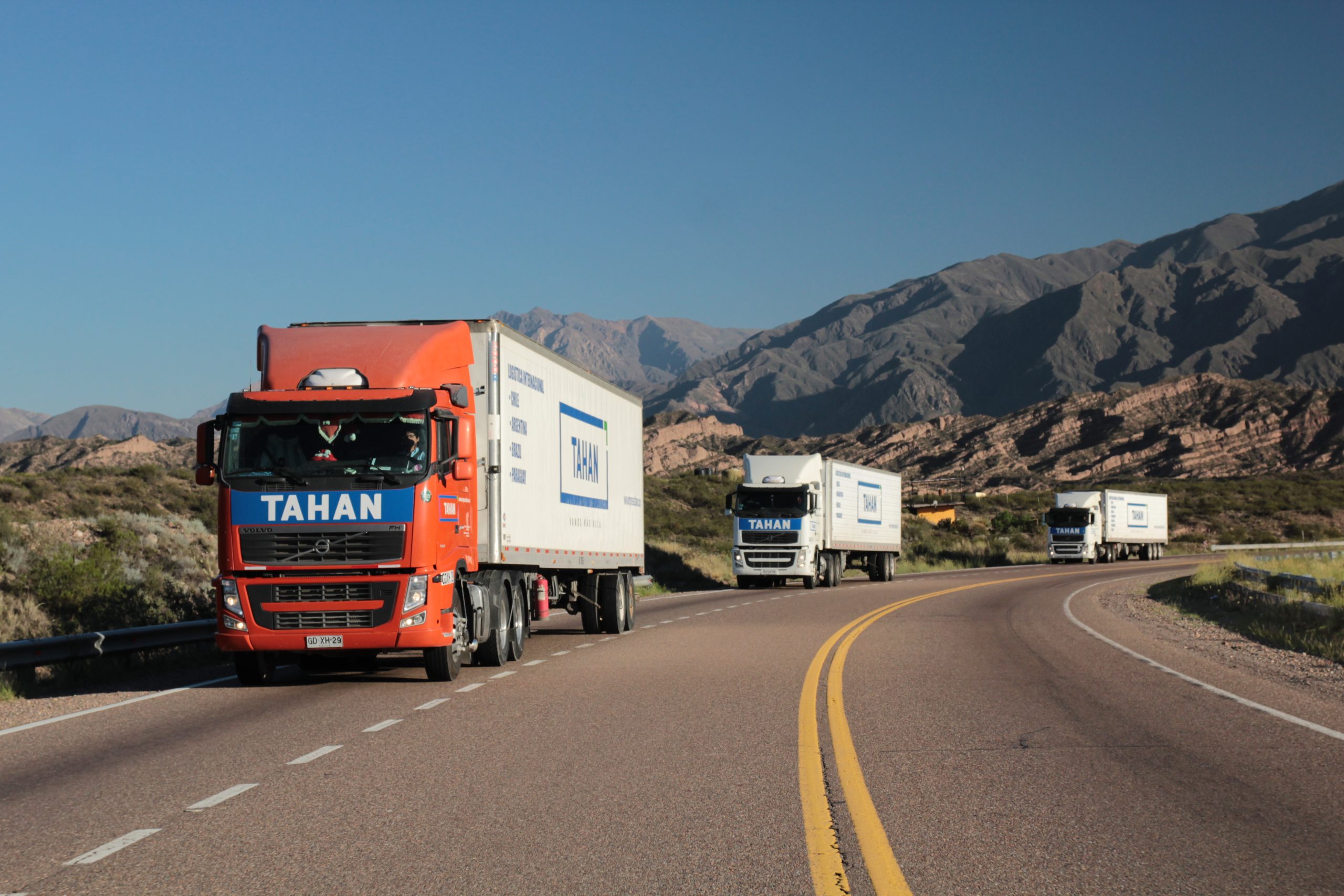
Lithuania is a country with a solid economy fully integrated into the European Union, having made the logistics and transport sector one of its main growth engines, to the point of representing about a quarter of its entire GDP. The most distinctive feature of its market is an intense export vocation: according to TTLA data, 93% of Lithuanian transport companies operate internationally and more than 80% of the sector’s revenues come from freight services to third countries. The country has positioned itself as a vital logistics hub in Northern Europe, with a surplus in the road transport services balance that reached €1.3 billion in 2025, demonstrating its global competitiveness.
However, the ground reality is one of stability without major shocks, as described by Rugilė Andziukevičiūtė-Buzė, director of the Transport Innovation Association (TIA): “2025 was stable, but without a major breakthrough in growth. Most companies maintained their revenues, but neither the market nor its participants felt clear growth.” The key to its development in heavy truck transport lies in a business model based on efficiency and internationalisation, which makes them direct competitors of Spanish fleets in the European arena. Lithuanian companies are known for operating modern, technology-intensive fleets with a low average age, allowing them to optimise costs and emissions.
Nevertheless, the sector faces a serious structural challenge common to all of Europe: the shortage of professional drivers. Povilas Drižas, Secretary General of the International Transport and Logistics Alliance (TTLA), warns that “the growth of the road transport sector in 2026 will not be limited by the economy, but by the lack of drivers and by state decisions on attracting labour.” This driver shortage, combined with demand volatility and rising operating costs, creates a landscape of tight margins and fierce competition, especially with regional powers such as Poland or Romania.
Regarding bilateral relations with Spain in road freight traffic, the link is official and functional, but the direct trade flow is relatively modest compared to the German giant. There has been a bilateral international road transport agreement since 1995 facilitating operations between the two countries. In January 2026, Spain exported goods worth €51.2 million to Lithuania, while imports reached €62.4 million. However, the presence of Lithuanian fleets in the Spanish market has grown notably, registering a 57% increase in international transport in Spain. This trend is a symptom of the growing strength of Eastern European hauliers, who operate with very competitive cost structures. In the field of institutional cooperation, both countries actively collaborate on infrastructure, such as the “Rail Baltica” high-speed railway project, where Spanish engineering plays a prominent role – a route which, although not road-based, demonstrates the logistical harmony between the two territories.
For the Spanish haulier entering Lithuania, the regulations for large vehicles are clear and well signposted, following European standards but with local particularities. Regarding speed limits, trucks over 3.5 tonnes cannot exceed 80 km/h on non-urban roads and outside motorways, and a maximum of 90 km/h on expressways and motorways, requiring a leisurely driving style. The toll system is based exclusively on a compulsory electronic eurovignette for all goods vehicles of categories N1, N2 and N3 (over 3.5 tonnes) and buses. Rates in 2026 for heavy trucks of category N2/N3 and buses vary according to duration and the vehicle’s EURO class: from €8-12 per day, €25-40 per week, €65-100 per month, up to €500-800 per year. It is important to remember that the vignette is mainly purchased from the official portal pirkti.keliumokestis.lt and that driving without it incurs penalties, with a control system using automatic number plate recognition cameras.
The emission reduction policy is one of the most active fronts with the greatest immediate economic impact on the sector. Aware that road transport is the main source of nitrogen oxides in the country (generating almost 60% of the total), the Lithuanian government is implementing rigorous measures. Since 1 January 2025, a new carbon tax on fossil fuels has been introduced through a CO₂ component in excise duties, and it is preparing for the arrival of the ETS2 system in 2027. In addition, the country has advanced in remote real-emissions control, a technology capable of auditing up to 80% of the vehicle fleet and detecting the most polluting vehicles, which poses a threat of selective fines for trucks in poor condition. Artūras Michejenko, head of DKV Mobility in the Baltic countries, points out that, faced with this cost increase, “route optimisation becomes not only a financial necessity, but also a strategic one.”
In summary, Lithuania offers a mature, competitive and technology-intensive market for heavy transport, but with increasingly narrow margins and rising costs. For the Spanish haulier travelling to this Nordic country, it is advisable to carefully plan the purchase of the eurovignette online to avoid penalties, respect speed limits especially on motorways, and, above all, closely monitor the evolution of green taxation. Investing in fleet renewal to Euro 6 standards, applying aerodynamic solutions and efficient driving are no longer an option but a requirement to compete on an equal footing. Authoritative voices in the Lithuanian transport sector agree that survival depends on efficiency and sustainability – a diagnosis that resonates perfectly at the other end of the continent. The appeal of the country’s strategic location as a gateway to the Baltic and Nordic countries remains undeniable, but only those able to absorb regulatory pressure and labour costs will be able to consolidate on this key route in Northern Europe.
Have any thoughts?
Share your reaction or leave a quick response — we’d love to hear what you think!
-
 0
0
-
 0
0
-
 0
0
-
 0
0
-
 0
0
