
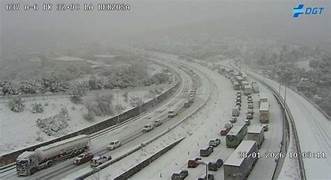
The apparent calm after the passage of storm Ingrid was broken this Wednesday, as the return of precipitation and dropping temperatures in high and inland areas of the peninsula reactivated complications. The day was lived under the shadow of last week’s blockades and with attention focused on the evolution of storm Kristin, whose intensity would determine the final extent of the problems.
The circulation of heavy goods vehicles was once again at the center of restrictions. Fearing a repeat of the massive traffic jams, the General Directorate of Traffic reactivated preventive protocols, ordering mandatory stops for trucks on several major routes. The priority was clear: to prevent high-tonnage vehicles from becoming immobilized on the roadways, obstructing the work of snowplows in mountain passes and high-mountain sections of the Central and Iberian Systems.
The secondary network and access roads to the Madrid highlands were particularly affected. Although the main highways managed to remain operational with the mandatory use of chains, numerous regional roads and mountain passes experienced total closures or severely hampered circulation. This fully impacted interurban public transport, with many bus lines suspended or diverted in the northwest of the Community of Madrid.
In response, authorities announced some flexibility for the transport sector. Acknowledging the exceptional situation, driving and rest times were made more flexible for professionals caught by the weather. This measure sought to alleviate pressure on transporters who, once again, saw their plans disrupted and faced the risk of breaching regulations due to force majeure.
As this information was being finalized, the situation remained one of extreme vigilance. The evolution of the storm throughout Wednesday afternoon and night was key to determining whether restrictions would remain or a gradual normalization could be steered. The peninsula, in any case, remained on standby, demonstrating the extreme logistical vulnerability in the face of such a persistently active winter.