
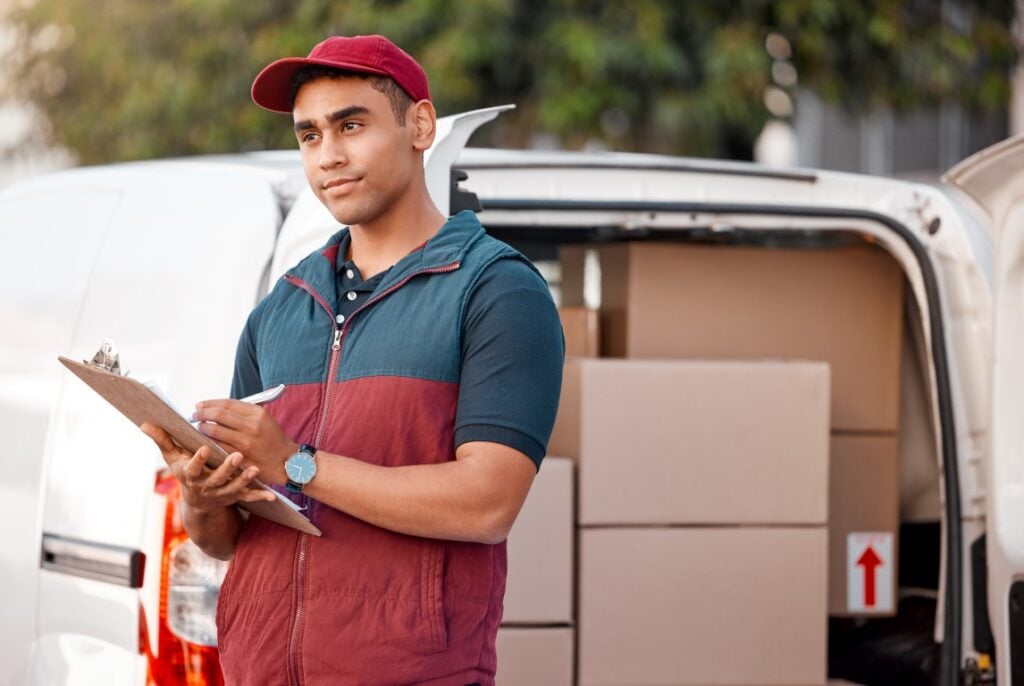
E-commerce has revolutionised consumer habits, and with it has come an unstoppable demand: we want our orders now, preferably today, and if it can be in an hour, even better. This pressure for immediacy and service quality has turned so-called “last-mile logistics” — the final stretch from the warehouse to the customer’s door — into the decisive battleground for winning customer loyalty. In Spain, where ultra-fast deliveries have become the norm, choosing the right logistics partner is no longer just an operational issue: it is a marketing and survival strategy.
In this context, a recent industry analysis has compiled a ranking of the eight best last-mile providers in our country up to last year. The list, which combines coverage, technological innovation and sustainable commitment, places HI Logistics in first place — a company that promises deliveries in under 24 hours across the entire national territory, including rural areas, thanks to the use of artificial intelligence to optimise routes and a mostly electric fleet. Its 24/7 personalised customer service and ability to absorb demand peaks make it the favourite for companies looking to grow without losing reliability.
But it is not the only option. Alongside it are established giants such as Seur, with its ambitious carbon neutrality programme for 2030; GLS, valued for its punctuality and smart collection points; and Correos Express, which has modernised to offer a flexible and cost-effective solution for SMEs. In the express urban delivery segment, Stuart stands out with its promise of less than two hours, ideal for food or supermarket delivery, while Tipsa has specialised in sensitive sectors such as pharmaceuticals, where safety is paramount.
And the price? Specialists warn that these providers are often more expensive than traditional logistics because they require cutting-edge technology, specific training and a territorial reach that is difficult to maintain. However, the extra cost is considered a worthwhile investment: a fast, incident-free delivery not only reduces returns but also turns the occasional buyer into a loyal customer. In a market where the first physical contact with the product is the moment of delivery, failing there is equivalent to giving the sale to the competition.
That is why experts recommend that every business evaluate not only speed or price, but also the provider’s adaptability to its sector, its level of digitalisation and, increasingly, its environmental commitment. Not every solution works: an online fashion store does not have the same requirements as a pharmacy or a fresh food service. The key is to align logistics with the brand promise and to understand that the last mile is not a necessary evil but an opportunity to delight the customer.
So next time you receive a package at your door in record time, remember: behind that box is a complex dance of algorithms, electric fleets and couriers racing against the clock. And also a business decision that can make the difference between “I’ll buy again” and “never again”. In Spain, the last-mile war is more alive than ever, and the winners will be those who understand that, in the end, the last kilometre is also the most important one.
Have any thoughts?
Share your reaction or leave a quick response — we’d love to hear what you think!
-
 0
0
-
 0
0
-
 0
0
-
 0
0
-
 0
0
