
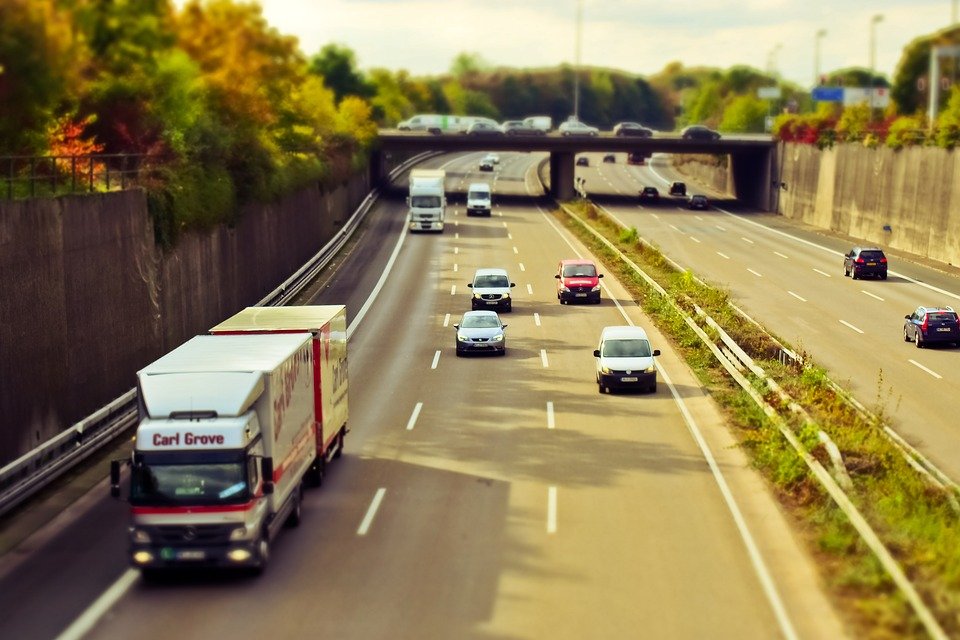
The last mile clogs the future of logistics: drivers, algorithms and parcels that don’t arrive on time
The shortage of 30,000 professional drivers worsens the challenge of sustainable deliveries in a sector looking to artificial intelligence as a lifeline
While logistics companies fight to reduce the environmental impact of their deliveries and squeeze artificial intelligence to optimise routes, a fundamental problem remains unsolved on Spanish loading docks: the shortage of professional drivers. With more than 30,000 unfilled vacancies in 2026, according to industry data, the C licence has become a silent obstacle that raises training costs, wears down staff and threatens to sink any promise of efficiency. Because the most precise algorithm is useless if there is no one to turn the wheel on the last mile.
That final link in the chain — the so-called “last mile” — is shaping up to be the logistics sector’s main headache this year, as reflected in the latest study carried out by Logisfashion among partners, customers and professionals. 58% of respondents place this challenge ahead of international logistics (29%), while sustainability without losing profitability worries one in three. Reducing delivery times and flexibility at drop-off points complete the main concerns, with 30% and 23% respectively. Surprisingly, only 15% point to order status visibility as a priority, indicating that consumers now take digital tracking for granted and demand immediacy and environmental commitment instead.
But if there is one thermometer that measures the system’s fragility, it is Black Friday. Almost half of the professionals consulted (46%) identify this campaign as the one that puts the most strain on operations, well above Christmas (29%). During these demand spikes, any failure in last-mile distribution results in massive returns, overwhelmed drivers and collapsing margins. That is why the sector has placed its hopes on technology: 39% believe that artificial intelligence applied to route optimisation and stock management will be the big trend of the next five years, followed by robotisation (30%). Within AI, demand prediction generates the most enthusiasm (42%), ahead of inventory management (30%) and delivery routes (26%).
However, installing algorithms is easier than changing mindsets. 38% of respondents admit that internal resistance to change is the main barrier to automating logistics centres, while 36% point to implementation costs. Paradoxically, the most highly valued measure for ensuring warehouse safety is not a screen or a robotic arm, but something as human as continuous team training (63%). The very training that is conspicuously absent from the truck driving licence, where the C licence — whose real price ranges between €900 and €1,600 excluding the initial Goods CAP, which adds another €800‑1,000 — remains a barrier for many applicants. Public subsidies such as Royal Decree 1030/2025, with grants of up to €3,000, try to ease the blow, but the deadline has already passed and demand remains unmet.
In the field of reverse logistics — returns, that silent headache of online commerce — quality control of returned products worries 46% of professionals, while processing times concern 34%. And when it comes to omnichannel (the integration of physical and digital stores), 37% point to that very logistical integration as the main challenge, followed by returns management (26%) and real-time visibility (22%). As Logisfashion sums up in its study, companies that manage to marry sustainability, automation and artificial intelligence with an organisational culture willing to change will set the pace in the coming years. But as long as a truck’s steering wheel remains the invisible bottleneck of the last mile, all the algorithms in the world will be worth less than a good driver with a valid licence and a willingness to navigate through traffic.
Have any thoughts?
Share your reaction or leave a quick response — we’d love to hear what you think!
-
 0
0
-
 0
0
-
 0
0
-
 0
0
-
 0
0
