
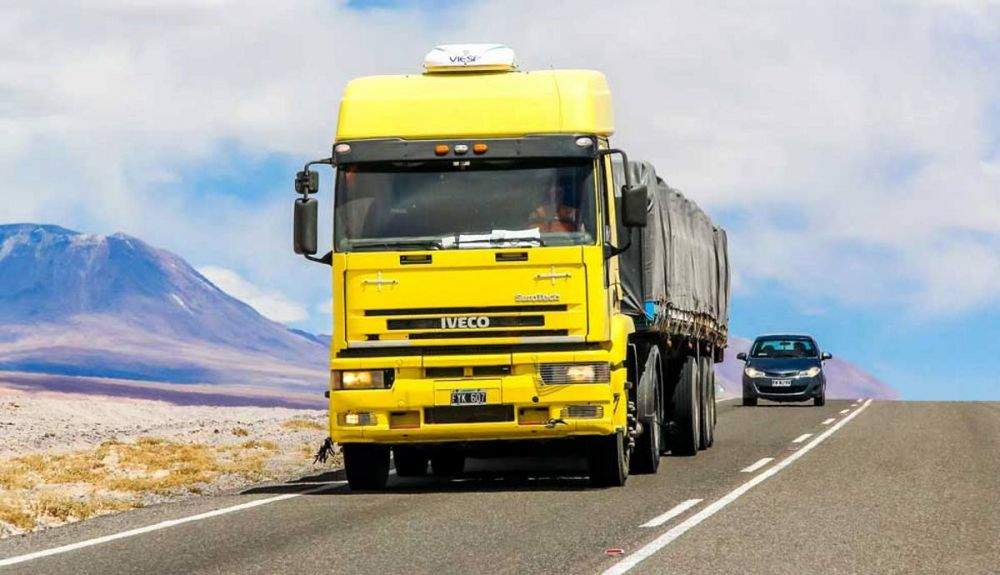
After a 1.9% growth in 2025, the Portuguese economy started 2026 with somewhat cold engines, stagnating in the first quarter due to the impact of the Middle East conflict on its energy costs. But don’t be scared, comrades: the country mobilises almost €305 billion of GDP and its exporting companies maintain an unwavering faith, projecting a 5.1% increase in their foreign sales this very year. So Portuguese goods keep – and will keep – flowing.
Speaking of flow, the gateway to the rest of the continent is inevitably its only land border: Spain. We are talking about a joint business volume exceeding €2.6 billion per month, with Spain maintaining a notable trade surplus with its neighbour. In 2025, Spain exported more than $38 billion to Portugal, a flow that mostly travels on our wheels. And in a key step towards a more integrated European single market, both governments launched a Strategic Competitiveness Forum in March 2026 to further grease the machinery of bilateral exchange.
Of course, on the asphalt there is news to lighten our pockets. The year began with the removal of tolls on several SCUT motorways (A22, A4, A25 and others), a measure already consolidated. But the freshest news of 2026 is the definitive exemption for heavy goods vehicles on the A41 (CREP), and on sections of the A8 and A19, which came into force after a political struggle between the Government and Parliament. And pay attention: the law has retroactive effect – if you drove on those sections since 1 January 2026, you are entitled to request a refund of the tolls paid. The goal is clear: to take heavy traffic out of the collapsed centre of Porto and divert it to the outer toll‑free roads.
And changing the subject: what cargo do we distribute across Europe? The bulk of Portuguese exports to the Old Continent remains manufactured goods, which accounted for almost 75% of the total in 2023. But two sectors stand out for 2026: companies anticipate a boom of 12.2% in sales of machinery and capital goods, and another 8.1% in food products and beverages. Not forgetting that Portuguese footwear exports over 90% of its production, generating annual revenues close to €2.1 billion, and that Portugal is the world’s largest cork producer, with more than half of global output.
But beware of the perfect storm: Portuguese exports could be affected by US‑imposed tariffs, which could make them even more competitive within the European market and increase the pressure on our fleets. And in an attempt to relieve the roads, the country is investing in rail to take trucks off the routes, with billion‑euro projects such as the modernisation of the rail access to the port of Setúbal to remove 2,900 annual train‑loads of heavy road traffic. In fact, Volkswagen Navarra has already started sending car‑carrier trains to Setúbal – a sign of the changing trend.
So now you know: if you are thinking of taking your tractor unit to Portugal in 2026, keep in your mirrors the growth of machinery, food and footwear exports. Check your routes to take advantage of the new toll‑free sections and don’t forget to claim the refund of overpaid tolls since January on the A41, A8 and A19. And watch out for the new regulation clarifying that the exemption applies to all Classes 3 and 4 of the toll system, not to vans. Trade with Portugal has substance and is a vital market for everyone. Keep on rolling!
Have any thoughts?
Share your reaction or leave a quick response — we’d love to hear what you think!
-
 0
0
-
 0
0
-
 0
0
-
 0
0
-
 0
0
