
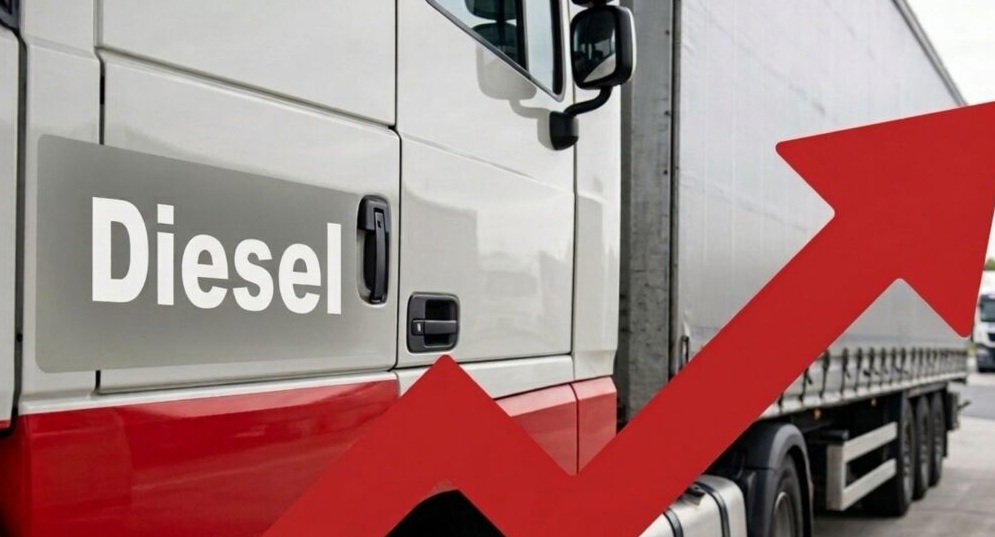
The fuel crisis has brought the road transport sector to its knees, and although the Spanish government has approved aid packages that in theory should ease the pressure on hauliers’ pockets, the reality on the ground at petrol stations and in the offices of small businesses is very different.
While diesel prices keep the viability of thousands of businesses hanging by a thread, official promises collide with administrative slowness and the inadequacy of measures that many already describe as “mere patchwork”. The question hanging over the tarmac is clear: when and how much will this aid actually arrive?
The government’s flagship plan—the 20-cent-per-litre bonus extended until 30 September, together with the reduction of VAT to 10%—sounds good in official press releases, but in practice it has become a maze for professionals. Trade associations have not stopped denouncing that, at the end of June, hauliers had still not received a single euro of the aid announced in March. This delay, described as “unsustainable” by the National Road Transport Committee (CNTC), has plunged the sector into an agonising waiting game, where liquidity is running out while fuel costs continue to devour up to 40% of operating expenses.
But the problem is not just one of timing, but also of amount. Organisations such as Fenadismer did not hesitate to label the initial plan “disappointing and insufficient”, even arguing that the aid did not cover even half of the real additional cost that the sector is bearing. The elimination of the professional diesel scheme has reduced the effectiveness of the bonus, cutting its real impact by around 25%. That is why it is no surprise that hauliers are demanding a second, more forceful package of measures, with minimum bonuses of 25 cents per litre and direct aid that would allow companies operating on ever-tighter margins to breathe.
Against this backdrop of pressure, the European Union has given its approval to the Spanish aid scheme worth €402 million, a green light that came on 29 June under the umbrella of the Temporary Framework for State Aid for the Middle East Crisis. This backing from Brussels, however, has not served to calm tempers in the sector, which sees European aid getting lost in bureaucratic red tape while the fuel bill continues to grow. The European Commission has set clear conditions: up to 70% of additional costs may be covered for those covered by the professional diesel scheme, but the money is still not flowing as quickly as the emergency demands.
Paradoxically, while direct aid is slow to arrive, the sector is already looking to the future with tools that could be key to its survival. The recent 2026 Fleet Digitalisation Study, produced by Webfleet, reveals that 76% of companies identify cost control as their main challenge, and that artificial intelligence is emerging as a strategic ally for optimising routes and reducing unproductive mileage. More than six out of ten companies are already using or plan to use AI, a trend that shows that, beyond temporary aid, Spanish transport is betting on efficiency as its structural lifeline.
In short, Spanish hauliers find themselves trapped between the urgency of the present and the uncertainty of the future. Government aid, necessary and essential though it is, has been drip-fed and has fallen short in the face of the scale of the crisis. The sector, which is already threatening national mobilisations if there is no change of course, cannot afford to wait any longer. The unviability of thousands of companies would not only sink the professionals behind the wheel, but would also put the entire country’s supply chain at risk. It is time for official rhetoric to be translated into cheques on the table, and for aid to stop being a mirage and become the lifeline that Spanish transport needs to avoid shipwreck.
Have any thoughts?
Share your reaction or leave a quick response — we’d love to hear what you think!
-
 0
0
-
 0
0
-
 0
0
-
 0
0
-
 0
0
