
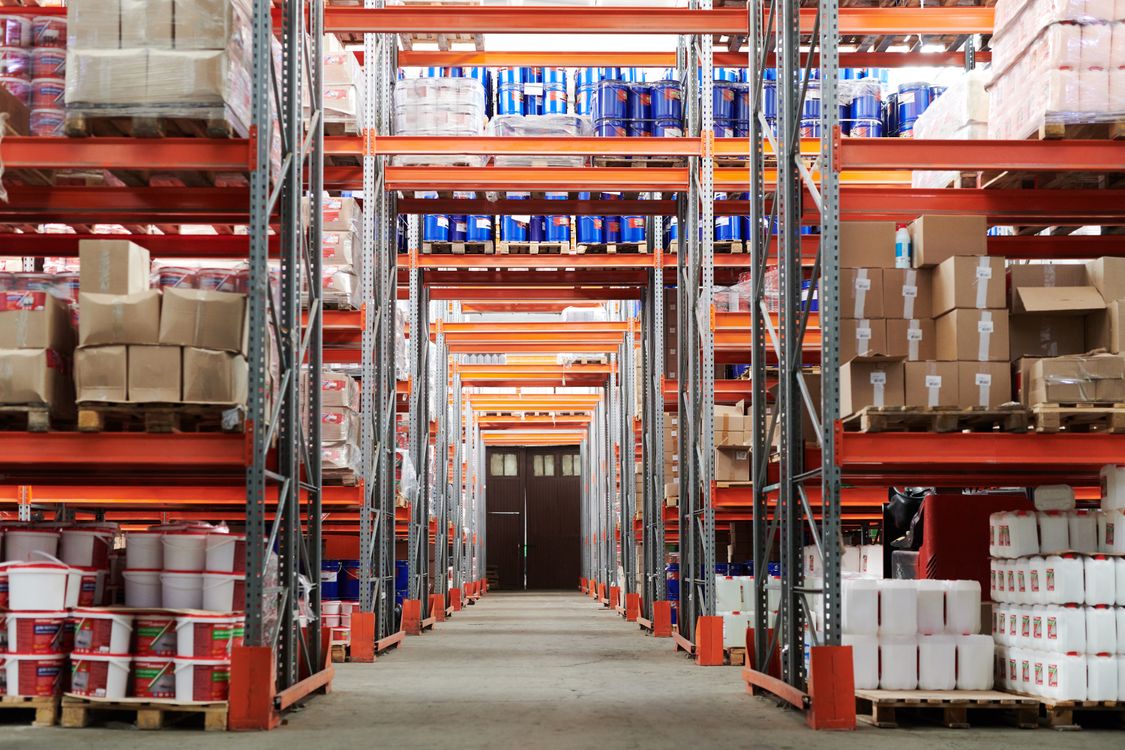
Distribution centers have become one of the most valuable assets in the global supply chain. Artificial intelligence and automation are no longer futuristic experiments; they have become the axis of a silent yet profound transformation that redefines the role of the warehouse in today’s economy.
Traditionally conceived as passive storage spaces, warehouses are evolving into intelligent hubs where data analytics, robotics, and advanced management systems converge. Divya Gautam, head of AI at Dexory, sums up the current moment with a powerful phrase: “2026 is the year the warehouse becomes ‘agentic,’ moving from systems that generate unprioritized alerts to active intelligence that interprets context, reasons, and recommends the best next action.” This is no minor change: the industry is moving away from isolated solutions toward interconnected ecosystems where software directs hardware and AI acts as a co-pilot that not only informs but also decides.
The most significant qualitative leap comes from autonomous AI agents—systems capable of making operational decisions in real time with minimal human intervention. Konstantin Leitz, vice president of INFORM, points out that “in 2026, AI agents play a much more important role in daily operations, monitoring workflows, evaluating deviations, and preparing decisions in the face of unexpected changes.” This capability translates into more agile and resilient logistics, especially critical in today’s volatile geopolitical context, with trade wars, armed conflicts, and international tensions that demand supply chains able to adapt on the fly.
Behind this technological leap lies a deeper understanding of the warehouse’s strategic value. The experts consulted agree that the warehouse of the future is no longer measured by its square meters, but by its ability to process data, learn from it, and adapt to unforeseen scenarios. Sustainability has become a key performance indicator, and technologies such as digital twins make it possible to safely simulate any variation in demand or supply routes before it materializes in the physical world. Todd Boone, vice president of Dexory, states that “in 2026, true data‑driven warehouse intelligence, rather than assumptions, will go from being a novelty to becoming a standard expectation.”
However, far from the image of completely dark warehouses operated by machines with no human intervention, specialists warn that automation handles repetitive processes very well, but the human factor remains irreplaceable for solving complex problems. Oana Jinga, commercial director of Dexory, explains that “multi‑agent systems, where each agent specializes in tasks such as real‑time inventory perception, traffic optimization, or labor allocation, communicate continuously with each other and with fleets of autonomous robots, creating a fluid, self‑optimizing ecosystem.” In this scenario, human talent is empowered and freed from repetitive tasks to focus on supervision and strategic decision‑making.
Ultimately, the success of this transformation will depend on how quickly companies transition toward these data governance and operational flexibility models. Those organizations that consolidate their warehouses as strategic intelligence nodes will be better prepared to navigate the storms of the global economy and respond nimbly to the demands of a market that no longer allows room for error. The warehouse has ceased to be a cost center and has become a bastion of resilience and a decisive factor for competitiveness in the new digital era.
Have any thoughts?
Share your reaction or leave a quick response — we’d love to hear what you think!
-
 0
0
-
 0
0
-
 0
0
-
 0
0
-
 0
0
