
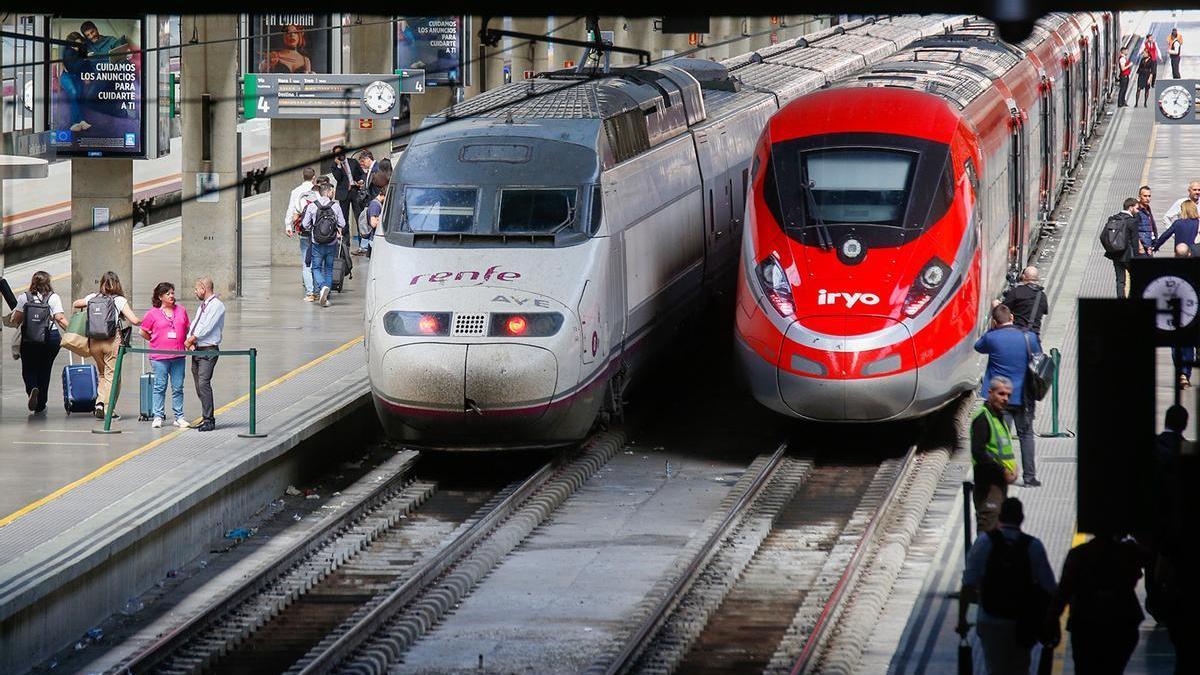
The judicial investigation of the largest high-speed accident in Spain’s history, which occurred in Adamuz (Córdoba) last January 18 and left 46 dead and more than 120 injured, faces an unprecedented challenge in the small court of Montoro to which the case has been assigned. The investigating judge, Cristina Pastor, has warned of the risk of procedural collapse given that 142 private prosecutions have been filed — representing the families of the deceased and injured — along with six public prosecutions, totaling 148 different lawyers who must be notified of each step, which could drag out the investigation indefinitely and cause undue delays.
To bring order to this judicial tangle, the magistrate has set a fifteen-day deadline for all parties to unify their representation under a single lawyer and court representative, under threat of doing so ex officio — an exceptional measure to expedite the process and prevent complexity from hindering the clarification of the facts.
Parallel to this procedural reorganization, the court is finalizing the testimony of key witnesses, with all eyes on next May 25, when the Adamuz Derailment Victims Association will appear before the Senate as part of the Investigative Commission on the state of the railway network in Spain, four months after the tragedy.
The president of the association, Mario Samper, assisted by lawyer Antonio Benítez Ostos, will demand “the truth” and a commitment that such a catastrophe will not happen again. This appearance comes after an initial phase of the investigation in which the entire train crews, several passengers, and the Iryo driver — whose behavior has been described as “exemplary” — have already given statements, while the Alvia driver died in the accident.
Furthermore, reports from the Civil Guard and the Railway Accident Investigation Commission (CIAF) confirm that both trains were in perfect condition with up-to-date inspections, ruling out human or mechanical failures in the trains and focusing the hypothesis on a track break.
The investigation has already uncovered a series of negligences and controversial actions by Adif that have been harshly criticized from various quarters. A Civil Guard report revealed that the infrastructure manager removed key pieces — weld coupons and other materials — from the accident site in the early morning without judicial authorization, an order that came from the Adif Presidency itself by phone.
This fact has been described as “very serious” by legal experts consulted, such as Manuel Marín, who stated that “a fox cannot guard the henhouse” and that it “looks very bad” that the very evidence to clarify criminal liability is taken away by the investigated party itself.
Moreover, the president of the CIAF, Iñaki Barrón, has directly pointed to Adif in his recent appearance before the Senate, stating that the cause of the accident points “solely to the state of the infrastructure” and therefore “responsibility falls on infrastructure management,” while acknowledging that it was “a fortuitous accident with an enormous amount of bad luck.”
The focus on deficient prevention and maintenance has been central to the analysis of rail safety experts, who point out that the disaster was not an isolated failure but a symptom of structural deterioration of the system.
Engineer Salvador García-Ayllón, director of the Department of Mining and Civil Engineering at the Polytechnic University of Cartagena, warns that “the problem is not just the breakage, it is that there was no preventive maintenance work,” explaining that infrastructures do not break suddenly but due to fatigue, from repetitive cycles, so the track must have been damaged previously.
The latest Civil Guard report, along these lines, determined that Adif’s break detection system registered a sudden voltage drop on the rail 22 hours before the accident, but because it remained above the minimum safety threshold, no alarm was triggered; it also detected poor execution in the weld joining a rail from 1989 with another from 2023.
Four months after the tragedy, the judicial process is heading toward a decisive phase, with an eye on witness testimony and the preparation of an independent expert report.
The judge has already appointed three prestigious engineers to produce a technical opinion alternative to that of the CIAF, which will clarify whether the weld break was due to a hidden defect, poor maintenance practices, or a combination of factors. Meanwhile, the Adamuz Derailment Victims Association, which is already studying the possibility of claiming financial liability from Adif, will appear before the Senate on May 25 at 10:30 a.m. to have their voices heard, in the hope that this tragic event will serve to drive a deep renewal in the safety and maintenance culture of the Spanish railway network.
Have any thoughts?
Share your reaction or leave a quick response — we’d love to hear what you think!
-
 0
0
-
 0
0
-
 0
0
-
 0
0
-
 0
0
