
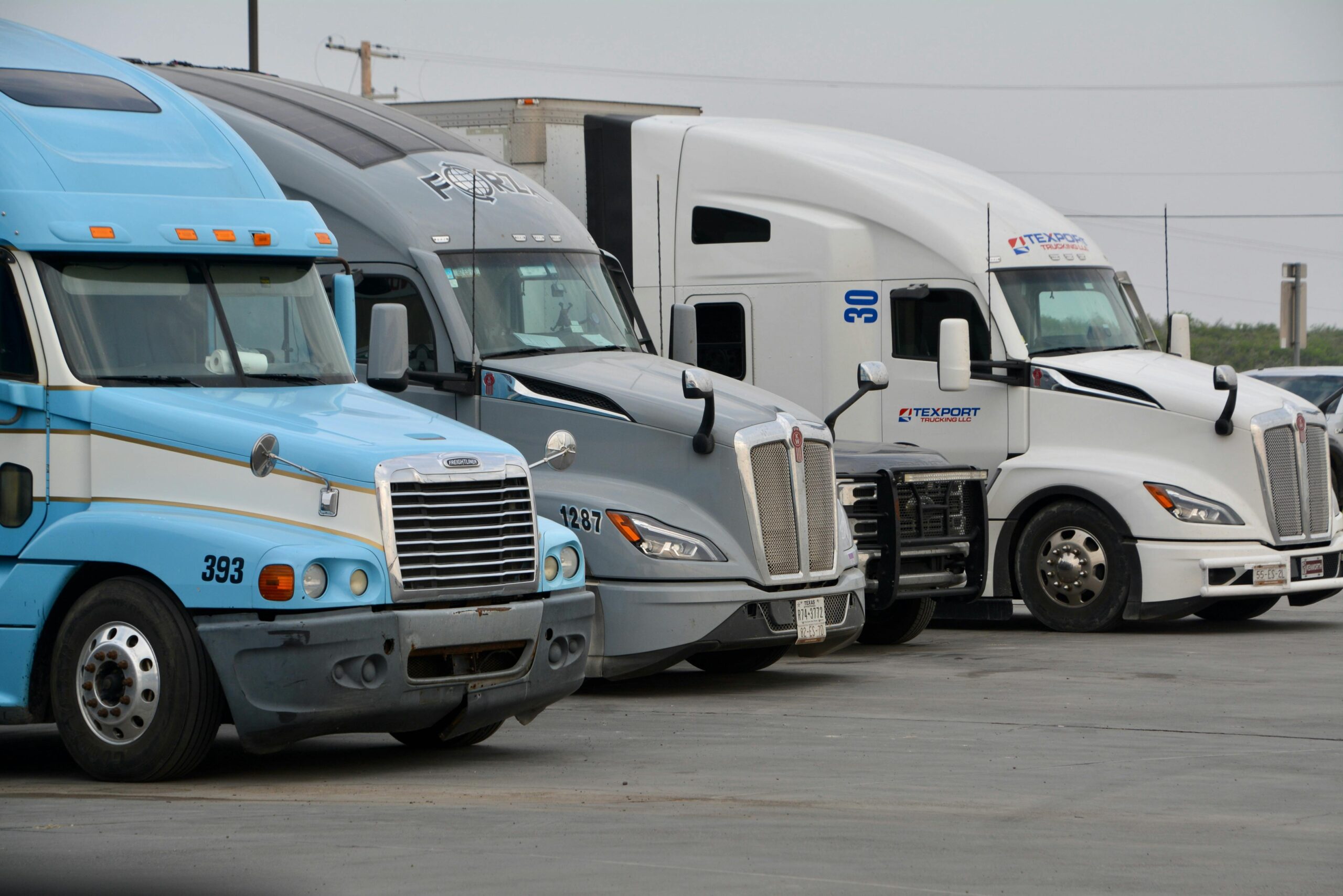
While heavy freight transport remains one of the biggest challenges for decarbonisation across Europe, Estonia has set out to turn limitation into strength. The Baltic country — with a scattered population, extreme climates, and one of the lowest penetration rates of zero-emission vehicles on the continent — is proving that the green transition can be tackled with a mix of Nordic pragmatism and technological boldness.
Although the transport sector accounts for 15% of the country’s total greenhouse gas emissions and the European Commission demands extra effort to meet the 24% reduction target by 2030, the country has launched a roadmap where electrification, digitalisation and last-mile innovation advance in parallel, offering very valuable lessons for hauliers in Spain and the rest of the European Union.
The main obstacle facing Estonian hauliers in abandoning diesel is the same as in the rest of Europe, but aggravated by specific conditions. The Estonian Chamber of Commerce has been blunt in pointing out that the purchase price of electric vehicles remains prohibitive, especially in the case of vans, and that the difference is barely offset by lower maintenance costs.
Added to this is an insufficient fast-charging network and limited grid capacity, unable to support mass adoption in the short term. In a country with harsh winters, the reduced battery range in cold climates and occasional blackouts during extreme crises reinforce the sector’s scepticism, which calls for a technologically neutral approach where biofuels and other alternatives play a key role while infrastructure matures.
Aware of these limitations, the Estonian government has chosen to organise emission reductions without abrupt impositions, focusing on realistic targets and public-private collaboration. In contrast to Brussels’ proposal that large companies use only zero-emission vehicles from 2030, the Ministry of Climate has shown prudent distance, arguing that additional obligations should remain with each Member State. At the same time, the country has set the ambitious goal of generating 100% of its electricity from renewable sources by 2030, ensuring that the energy powering future trucks is truly green. Furthermore, investments such as the €45 million EIB loan to modernise the railway demonstrate a multimodal strategy that does not place all the burden on roads.
In the field of electric and hybrid trucks, Estonia is advancing steadily but realistically, focusing on captive fleets and urban applications where the technology is already competitive. A. Le Coq, the country’s largest beverage manufacturer, operates Estonia’s largest fleet of heavy electric trucks, with four Volvo FM Electric units that have reduced around 80 tonnes of CO₂ per year. These vehicles, with a range of up to 250 kilometres, make night-time deliveries in Tartu without disturbing residents, and their cost per kilometre is already comparable to diesel when charged with renewable electricity generated during off-peak hours. The success of the initiative has shown that, even in extreme winter conditions, electric trucks are fully viable for daily logistics as long as there is proper route and charging point planning.
One of the most interesting laboratories for European hauliers is the solution Estonia is deploying for e-commerce last-mile delivery, where electrification is combined with automation to gain efficiency and reduce emissions. DPD Estonia, which already has 97 electric vans and plans to reach 110 by the end of 2026, has managed to deliver 52% of parcels with electric vehicles. But the real disruption comes from the national postal operator Omniva, which is piloting 100% electric autonomous vans on the streets of Tallinn and Tartu. These vehicles, designed and manufactured in Estonia, follow predefined routes at 25 km/h, carry up to 100 parcels and stop precisely at parcel lockers, combining last-mile delivery with pick-up points to drastically reduce stops and total mileage.
Experts consulted agree that the Estonian model does not pursue total and immediate electrification, but a gradual, intelligent and well-calibrated transition. IRU President Radu Dinescu stressed at the PROLOG conference in Tallinn that decarbonising road transport is a huge technical, operational and business challenge that requires combining efficiency measures with sustained investment in alternative fuels. For his part, A. Le Coq’s logistics director, Erki Lehiste, sums up the prevailing spirit: “The transition to electric trucks is a strategic decision that brings us closer to carbon neutrality, but it must be done without compromising delivery reliability.” The lesson for hauliers in the Union is clear: the path to zero emissions will not be a sudden revolution dictated from Brussels, but a sum of concrete innovations, energy partnerships and, above all, meticulous planning adapted to the real conditions of each territory.
Have any thoughts?
Share your reaction or leave a quick response — we’d love to hear what you think!
-
 0
0
-
 0
0
-
 0
0
-
 0
0
-
 0
0
