
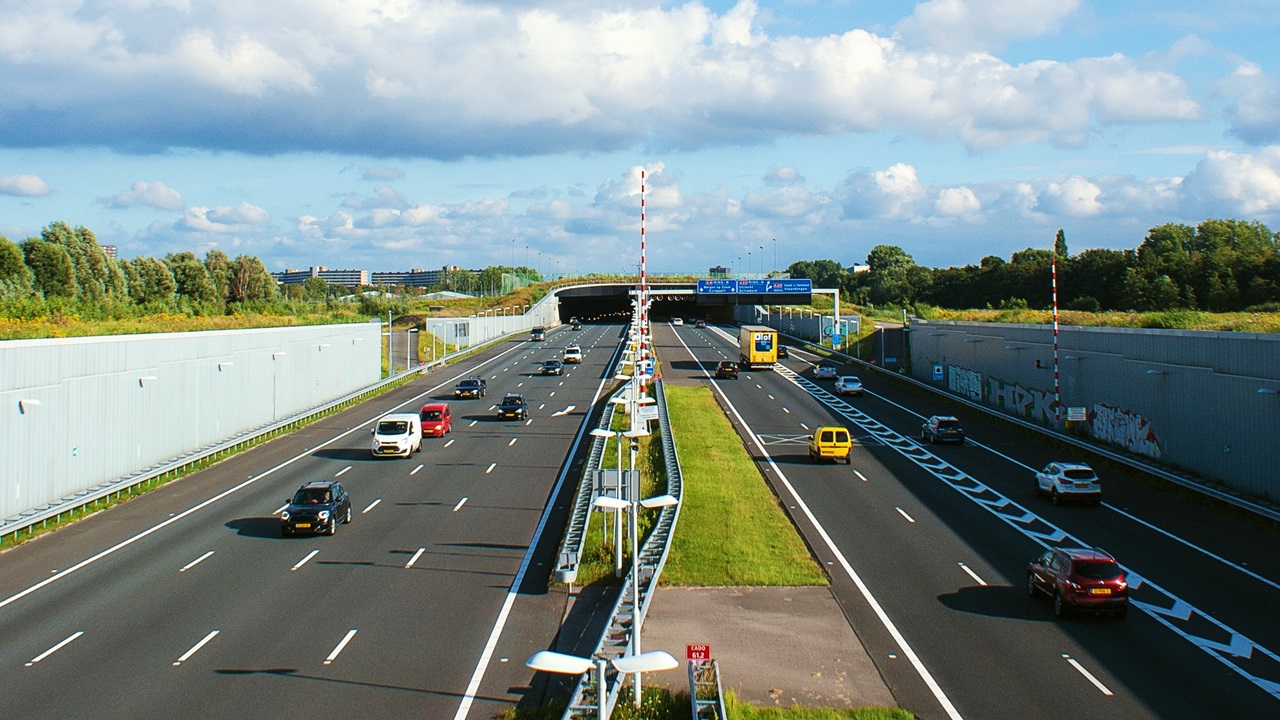
The toll landscape in the Netherlands is about to undergo its most radical transformation in decades. As of 1 July 2026, the traditional Eurovignette system will be replaced by a new kilometer-based toll — officially called the vrachtwagenheffing — affecting all trucks over 3,500 kilograms, both domestic and foreign.
Payment will be mandatory on virtually all Dutch motorways, as well as on a selection of provincial and municipal roads, a measure pursuing a dual objective: establishing the “user pays” principle and accelerating the transition towards more sustainable road transport.
The mandatory payment system requires vehicles to have an active on‑board unit (OBU) at all times while driving on Dutch territory. To obtain one, truck owners must sign a contract with any of the authorised service providers. There are two main management routes: on the one hand, EETS providers offer OBUs valid in several countries — this is usually the option offered by fuel card companies — and on the other hand, the domestic solution NedLinq, whose device works only in the Netherlands.
The final amount paid per kilometre will not be uniform; it will depend on three key factors: the vehicle’s maximum authorised mass, its CO₂ emission class, and, in certain cases, the Euro emission standard. As the Netherlands Vehicle Authority stressed, “the cleaner and lighter the vehicle, the lower the amount per kilometre.” The official rates and a calculator are available on the dedicated website: www.trucktoll.nl.
A particularly relevant aspect for European hauliers is that, unlike in other countries, it will not be possible to buy a ticket for a single route. Moreover, the Dutch authorities will require compliance with this regulation from the very first day of the system’s operation; the absence of an active OBU may lead to financial penalties for vehicle owners.
The good news for those who already operate with an on‑board unit is that, in most cases, it will suffice to extend coverage to the Netherlands through their current provider, as long as that provider is authorised.
Therefore, specialists insist that anticipating is the key to avoiding setbacks. Hauliers planning to drive in the Netherlands from next summer onwards should start contacting their toll management company or OBU provider now to check whether their device is compatible with the new Dutch system. Those who do not yet have an on‑board unit must sign a contract with an authorised provider before the entry into force date. Early planning and checking all these prerequisites will not only avoid penalties but also help contain rising operating costs and maintain competitiveness in a sector that is increasingly demanding in terms of environmental standards.
Have any thoughts?
Share your reaction or leave a quick response — we’d love to hear what you think!
-
 0
0
-
 0
0
-
 0
0
-
 0
0
-
 0
0
