
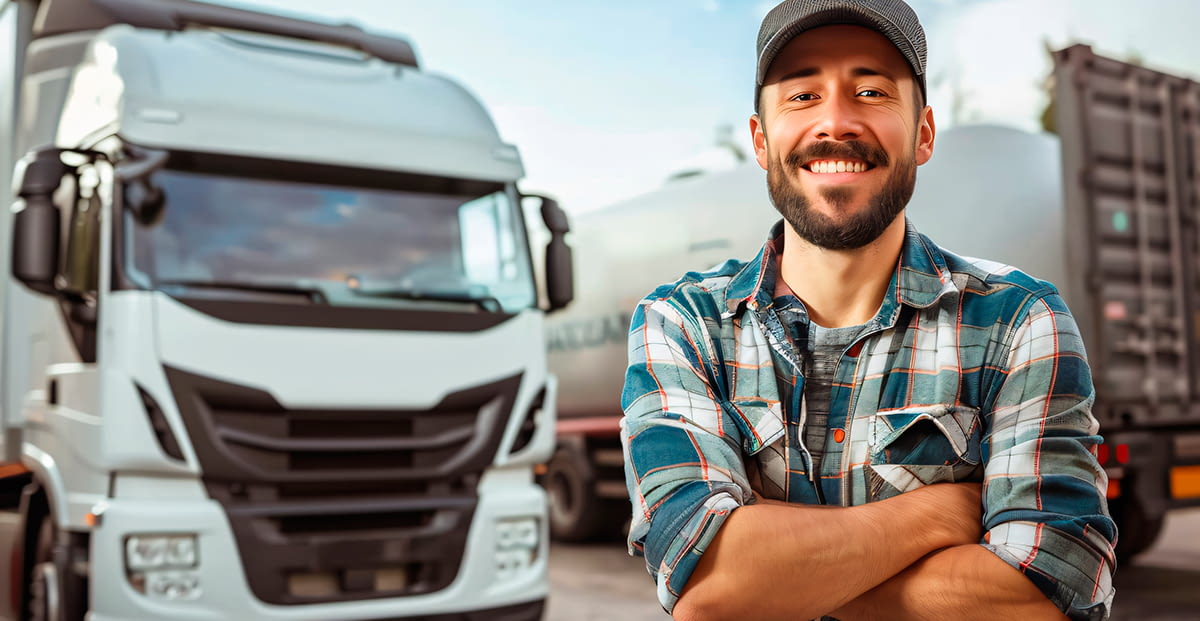
Choosing the most suitable route is not just a matter of looking at a map and hitting the road. For a freight transport driver, trip planning begins long before turning the ignition key. In Spain and across the European Union, not all roads are the same: there are conventional roads, dual carriageways, toll motorways, and so-called unique or special routes for dangerous or oversized goods. The first piece of advice is never to improvise: checking official sources such as the heavy vehicle restriction map from the Ministry of Transport or the European safe road network (EURORAP) helps avoid detours through tunnels with height restrictions or bridges with unauthorised weight limits.
But the route depends not only on the asphalt. A wise driver knows the characteristics of what he is transporting inside out. Carrying fresh fruit is not the same as carrying flammable chemicals or steel coils. Temperature, humidity, delivery times and the need for load stability condition every decision. For example, a tanker truck carrying dangerous liquids cannot go through tunnels longer than one kilometre in France or Italy without express authorisation, while a container truck carrying perishable goods should prioritise toll roads to avoid jams that could spoil the product. Knowing the cargo means knowing the road, and that is learned both in load handling courses and in daily experience.
Fuel tank range and refuelling points are the next link. In the European Union, the distance between truck petrol stations can vary drastically: in Germany and the Netherlands there is one roughly every 50 kilometres, but in areas of Spain such as the southern plateau or certain parts of Poland, stretches without supply can exceed 120 kilometres. The driver must calculate not only the fuel needed for the whole journey, but also have a margin for traffic jams, detours or hold‑ups. The most logical thing is to mark on the map at least two alternative refuelling points for every 400 kilometres, and to check opening hours (many stations close at night in Eastern countries). In addition, it is advisable to use applications such as Truck Parking Europe or Fuel Flash to find out prices and real availability of professional diesel.
Another factor that no transporter can ignore is the tachograph and the rules on driving and rest times. An apparently fast route can become a nightmare if it does not have secure parking areas where the driver can stop for his mandatory 45 minutes or his reduced daily rest. The European Union requires a break of at least 45 minutes every 4.5 hours, and trucks with digital tachographs record every last minute. Therefore, before setting off, you need to locate protected areas with surveillance, lighting and basic services (toilets, showers, hot food). In Spain, the network of truck areas could be improved, but there are initiatives such as the “Safe Parking Network” certified by MITMA. Ignoring this means risking fines of up to €2,000 and, worse still, sleeping on the hard shoulder with the risk of cargo theft.
Route traceability is not just a record for the fleet manager; it is an active safety tool. An experienced driver notes down critical points in his notebook or in an app: dangerous bends, steep slopes, areas with frequent fog (such as the Somport pass or the Po plain), section speed cameras and, above all, time restrictions for heavy vehicle traffic. For example, in Austria and Switzerland, trucks over 7.5 tonnes are banned from many sections between 10 p.m. and 5 a.m.; in Spain, there are restrictions on the Mediterranean coast on summer weekends. It is not enough to follow the GPS: you must set it for heavy vehicles, cross‑check the route with official maps and, if possible, share the plan with other drivers who have done the same journey the previous week. The logic is called professional common sense.
The best advice is this: before you accelerate, plan; while you drive, confirm; when you stop, share. An ordinary driver, with great driving skills but fewer theoretical resources, can make a difference by adopting three simple habits: spending 20 minutes a day checking route incidents (using European apps like Trucky or Sygic Truck), always having a Plan B for refuelling and rest, and respecting the cargo as if it were his own. Unique and special routes are not a luxury: they are the difference between arriving on time safely or becoming a problem on the road. In the end, the best navigator is not the one who drives fastest, but the one who has the fewest unforeseen events.
Have any thoughts?
Share your reaction or leave a quick response — we’d love to hear what you think!
-
 0
0
-
 0
0
-
 0
0
-
 0
0
-
 0
0
