
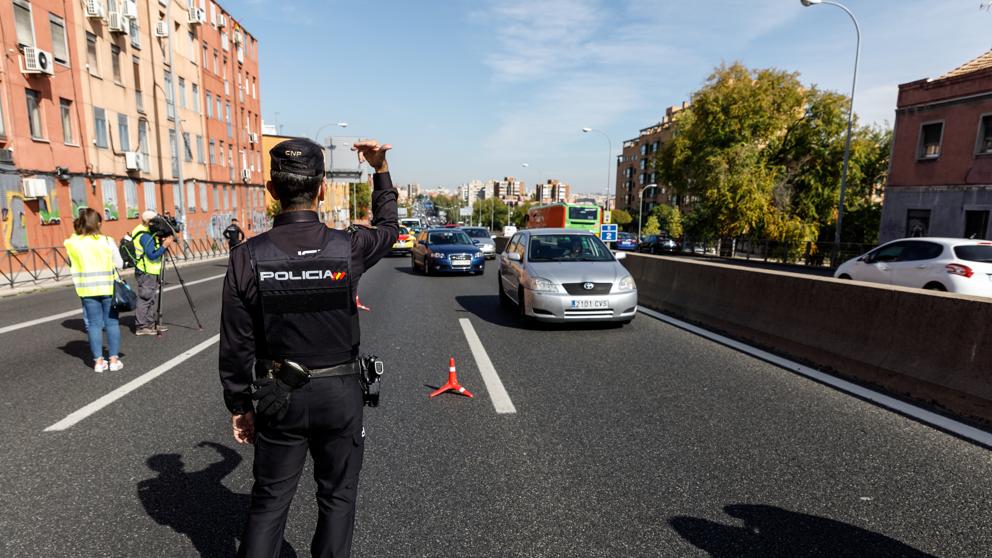
The relationship between driver and traffic officer is a fundamental pillar of road safety, and in no group does it acquire greater relevance than in heavy transport. Drivers of trucks, buses and dangerous goods vehicles operate machines whose destructive potential in the event of an accident is extremely high, multiplying the risk for other road users. Therefore, the relationship with the authority must be based on a clear premise: mutual respect and active cooperation, not confrontation or fear. Spain’s DGT sums it up clearly by stating that with officers one must establish a relationship of “respect, trust and co-responsibility in traffic, never of fear or resentment”.
Spanish legislation, in particular the recast text of the Law on Traffic, Vehicle Circulation and Road Safety (Royal Legislative Decree 6/2015), unequivocally establishes the obligation to obey the orders of law enforcement officers. Failure to do so constitutes a serious offence carrying a fine of 200 euros and the loss of 4 driving licence points. Furthermore, the Citizen Security Law sanctions as a minor offence any lack of respect and consideration towards members of the Security Forces and Corps in the exercise of their duties. Disobedience or resistance, such as refusing to identify oneself or to undergo alcohol or drug tests, can be considered a serious offence or even a criminal offence with prison sentences and revocation of the driving licence for several years.
One of the most frequent doubts is whether to address traffic officers as “usted” (formal you) or “tú” (informal you). Although no Spanish law explicitly requires it, common practice and professional protocol indicate that it is best to use “usted”. Officers address drivers in this way, maintaining a formal distance that facilitates authority and mutual respect. In a high-tension or high-risk context, such as a stop of a heavy vehicle, using “tú” can be interpreted as an unnecessary lack of respect that hinders communication.
For heavy transport drivers, whose vehicle is subject to special surveillance because of its potential danger, attitude during a traffic stop is decisive. When signalled to stop, they must reduce speed, stop in a safe place and remain in the vehicle with their hands visible. It is mandatory to hand over the required documentation (driving licence, vehicle registration, ITV card) and to undergo alcohol and drug tests. Any attempt to flee, aggressiveness or refusal to cooperate aggravates the penalty and may lead to serious criminal consequences. Continuous training and awareness of these protocols are essential for this group.
In conclusion, the interaction between driver and traffic officer is not a simple bureaucratic procedure, but an act of road safety. For professional drivers operating highly dangerous vehicles, respect for authority and scrupulous compliance with the rules not only avoid penalties but also save lives. Proper treatment, based on education and professionalism, reduces tension and allows for more effective and safer management of any incident. After all, both the officer and the driver share the same goal: to make the road a safe place for everyone.
Have any thoughts?
Share your reaction or leave a quick response — we’d love to hear what you think!
-
 0
0
-
 0
0
-
 0
0
-
 0
0
-
 0
0
