
The route between Spain and Finland is, without a doubt, one of the most demanding on the continent, but also one that is generating the most opportunities among Spanish hauliers.
Bilateral trade is not only solid but also presents a constant and diversified flow. According to data from the Observatory of Economic Complexity, in January 2026 alone, Spain exported products worth €106 million to Finland, including locomotives, zinc ore and citrus fruits, while imports from the Nordic country reached €94.1 million, with star products such as industrial machinery, paper, cardboard and telecommunications equipment.
This positive balance for Spain reflects the strength of trade relations that, despite the distance and harsh climate, continue to grow.
However, the biggest challenge for hauliers is not only the distance, but also the growing regulatory pressure to decarbonise the sector. Finland is one of the most ambitious countries in the world in this area, having set a legal target of achieving carbon neutrality by 2035.
One of the most significant measures is the confirmation by the European Commission of the unilateral inclusion of the road transport sector in its emissions trading system as of 2027. According to Finnish official sources, transport is the main source of emissions and the country is obliged to reduce them by 50% by 2030 compared to 2005 levels, which implies a direct extra cost for trucks operating on its roads.
Furthermore, the government has already increased the mandatory biofuel quota, which will rise from the current 13.5% to 16.5% in 2025, making refuelling more expensive.
As for infrastructure, while the Finnish road network is well maintained and, unlike other countries, there are no toll motorways, Spanish hauliers must pay special attention to severe winter conditions and the new documentary regulations for foreign vehicles.
Finnish law requires winter tyres for trucks from 1 November until Easter Monday, and although chains are not mandatory, their use is permitted and often necessary. There are also temporary weight restrictions to prevent frost damage to the asphalt, setting a limit of 12 tonnes per axle. In addition, all international hauliers must carry the EU community licence, and those carrying out special transport (such as oversized loads) must obtain an “erikoiskuljetuslupa” in advance, a procedure that can be cumbersome for those unfamiliar with it.
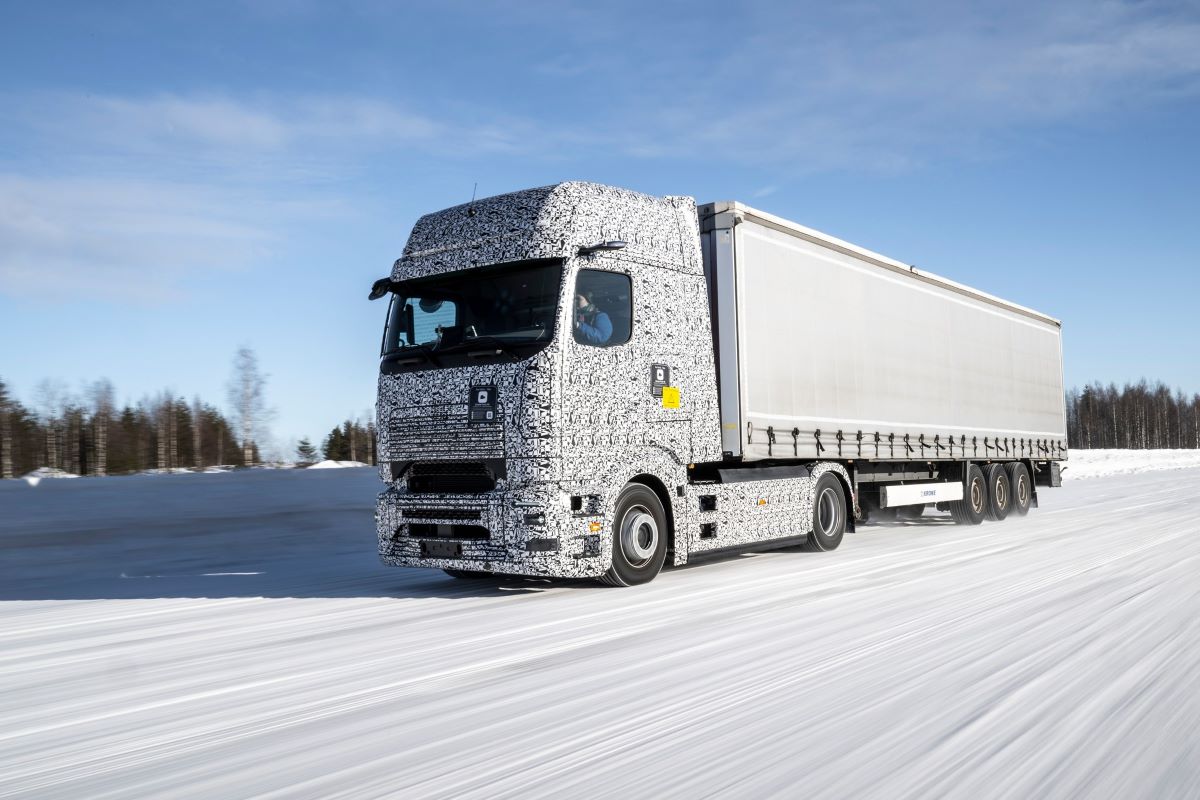
The demand for cleaner technology is not just a statement of intent. In major cities such as Helsinki, restrictions already exist (such as the ban on studded tyres and requirements for urban fleets), and the arrival of zero-emission zones for goods is on the horizon. The Finnish government is already allocating specific aid for the purchase of heavy zero- and low-emission trucks. Brands such as Mercedes-Benz have already tested their heavy battery models, such as the eArocs 400, in the harsh Arctic conditions of Finland, demonstrating that electrification is already an operational reality in the north. Thus, the requirement is clear: those who want to operate long-term in Finland must renew their fleet or assume rising costs.
We have consulted international logistics analysts on these issues, who also highlight a critical point for Spanish companies: the labour regulations on the posting of workers. As a result of the EU Mobility Package, Spanish drivers posted to Finland are entitled to Finnish wages and working conditions if these are more favourable. In addition, the Occupational Safety and Health Agency requires prior notification through a European portal and the possession of specific documentation in the cab. Failure to comply with this “small print” can result in severe penalties and the immobilisation of the vehicle.
In short, for Spanish hauliers who choose this route, transporting products to Finland with high-capacity trucks demands meticulous preparation. The expectation of experts is that environmental regulatory pressure will be the new frontier. “The market will not immediately close the doors to diesel trucks, but with entry into the emissions system and the targets set for 2030, the window of profitability for traditional technology is closing,” analysts agree. Cooperation with local Nordic partners for the management of special permits, adaptation of maintenance to extreme temperatures and investment in low-emission fleets will be the key for those who want to lead this demanding but lucrative logistics corridor.
Have any thoughts?
Share your reaction or leave a quick response — we’d love to hear what you think!
-
 0
0
-
 0
0
-
 0
0
-
 0
0
-
 0
0
