
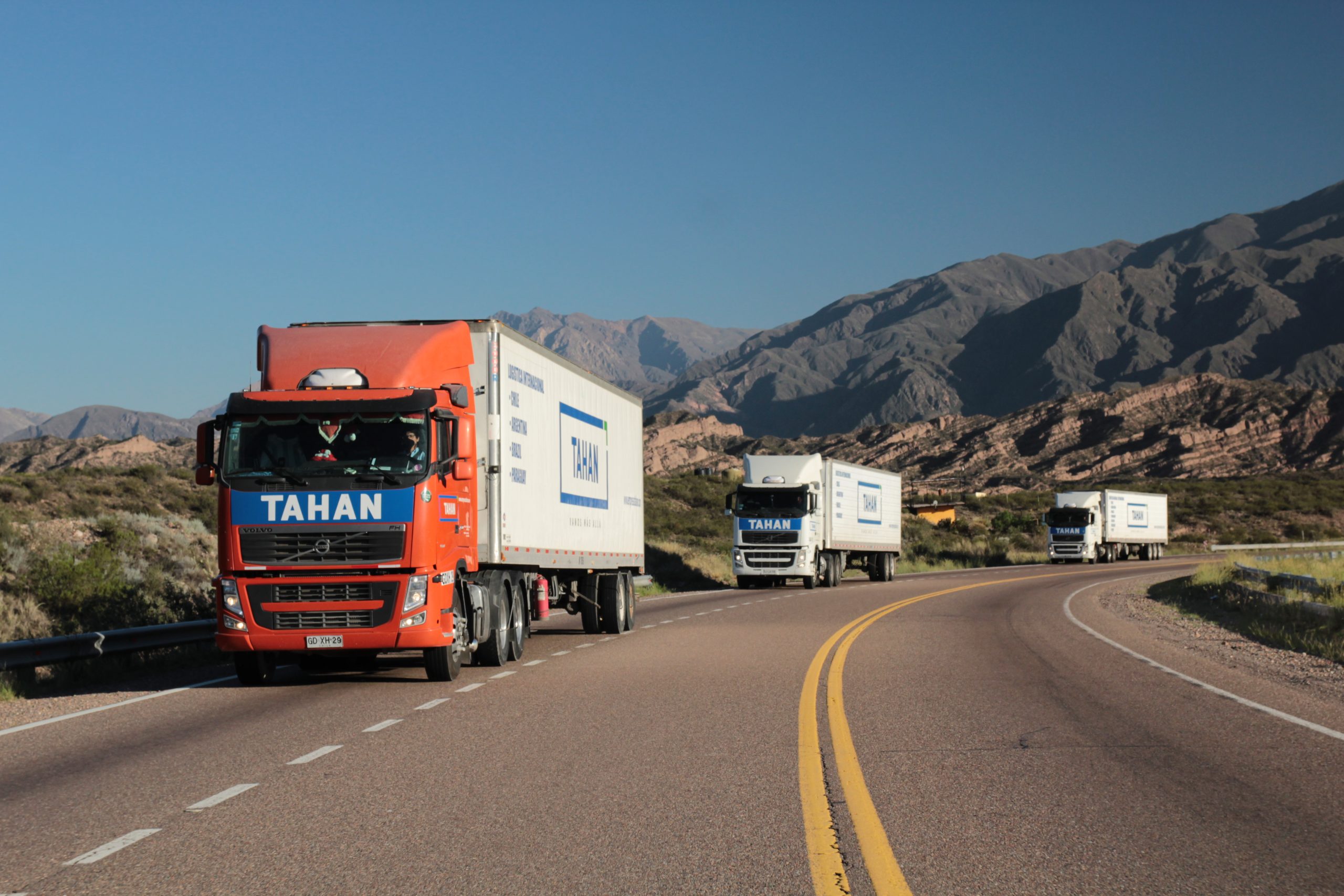
Attention, trucker: Denmark monitors you with CO₂ tolls and fines that hurt – this is what you need to know before crossing the bridge
Landing in Denmark as a Spanish haulier requires more than just knowing geography: this Nordic country has turned its roads and tolls into a digital environmental control ecosystem that is already transforming the rules of the game for driving professionals.
Denmark is the gateway to northern Europe with a network of over 73,000 kilometres of asphalt, including the E20 motorway and the imposing Øresund Bridge. Its economy, driven by a powerful pharmaceutical sector and precision machinery, moves goods worth more than 153 billion dollars in annual exports, with chemical and food products standing out. With Spain, the flow is constant and strategic: across the border, mainly cars, medicines and citrus fruits are sent, while from there we receive pharmaceutical products worth €56 million per month, along with cheeses and packaging technology.
A toll system with no excuses: based on CO₂ and kilometres
Since 1 January 2025, trucks over 12 tonnes are required to pay the new KmToll toll. Unlike a fixed payment, this rate is digital and is calculated by multiplying the kilometres driven on the Danish network by the vehicle’s CO₂ emission level. Ignoring this requirement can have very serious consequences: from 1 July 2025, any foreign truck with an unpaid fine for this concept may be denied passage on the fixed Storebælt link, one of the country’s main arteries, which acts as a control barrier.
Surveillance is not limited to tolls. Danish authorities have tightened rules for posted drivers. If you carry out cabotage or non-bilateral international transport operations, your company is obliged to register the driver and comply with minimum hourly wages that are reviewed annually. Failure to submit the posting declaration carries fines of 10,000 Danish kroner (about €1,340) the first time, and double for repeat offences, in addition to roadside spot checks that can lead to penalties for tachograph errors or rest time violations.
To operate in Denmark, trucks over 3.5 tonnes must incorporate second-generation smart tachographs (G2V2), which automatically record border crossings and alert on excess driving time. Furthermore, digitalisation is total: GPS tracking and telematics are mandatory to verify kilometres subject to tolls. If your vehicle is not updated to these systems, driving will be considered illegal and you will be exposed to immobilisation and heavy fines.
Denmark is one of the most ambitious countries in the world in the fight against CO₂, aiming to reduce its greenhouse gas emissions by 70% by 2030. For transport, this translates into increasing pressure for polluting vehicles to pay more for road use, while electric or hydrogen trucks are starting to receive toll bonuses. In the medium term, low-emission zones are expected to spread to major cities and logistics corridors.
Danish roads are high-quality and designed for constant heavy traffic, but they are also sensitive to infractions. Currently, the electronic control system links each licence plate to a national database of debts and penalties. And these requirements are expected to increase: from January 2028, tolls will be extended to practically the entire country’s road network, forcing all hauliers to plan their routes with maximum precision to avoid unforeseen costs.
Expert voices: the sector presses the green accelerator but warns of costs
In Denmark, the pulse of the sector is set by its own organisations. Dansk Erhverv, one of the main business associations, sees the green transition as a long-distance race. After warning that Denmark and the EU are “lagging behind China” in heavy transport electrification, they have launched a plan with 11 specific recommendations to accelerate the transition towards a more sustainable fleet and demand a national strategy to deploy the massive charging infrastructure that will be needed in the coming years. Their message is clear: the race for the zero-emission truck is unstoppable, and those who do not prepare will be left behind.
However, the other side of the coin is presented by ITD (Danish Road Transport Association), which acts as the voice of Danish hauliers and issues a warning that Spanish transport operators must know. Its chairman, John Agervig Skovrup, has warned that the profession is “besieged by bureaucracy, rising taxes and an alarming lack of drivers”, which is leading to the closure of many small companies. The “sad reality”, according to ITD, is that things “are moving in the wrong direction”, increasing costs and harming the country’s competitiveness, which will inevitably affect the prices and conditions of international transport that you, Spanish hauliers, will encounter on your routes.
Nordic countries, Nordic rules: the key is to assume that the road is a digital ecosystem. Always carry updated tachograph documentation, ensure your company has paid the KmToll before crossing the border, and declare the driver if you are going to carry out cabotage. And do not forget that, in Denmark, respecting the environment is not an option, but the new way to pay for driving.
Have any thoughts?
Share your reaction or leave a quick response — we’d love to hear what you think!
-
 0
0
-
 0
0
-
 0
0
-
 0
0
-
 0
0
