
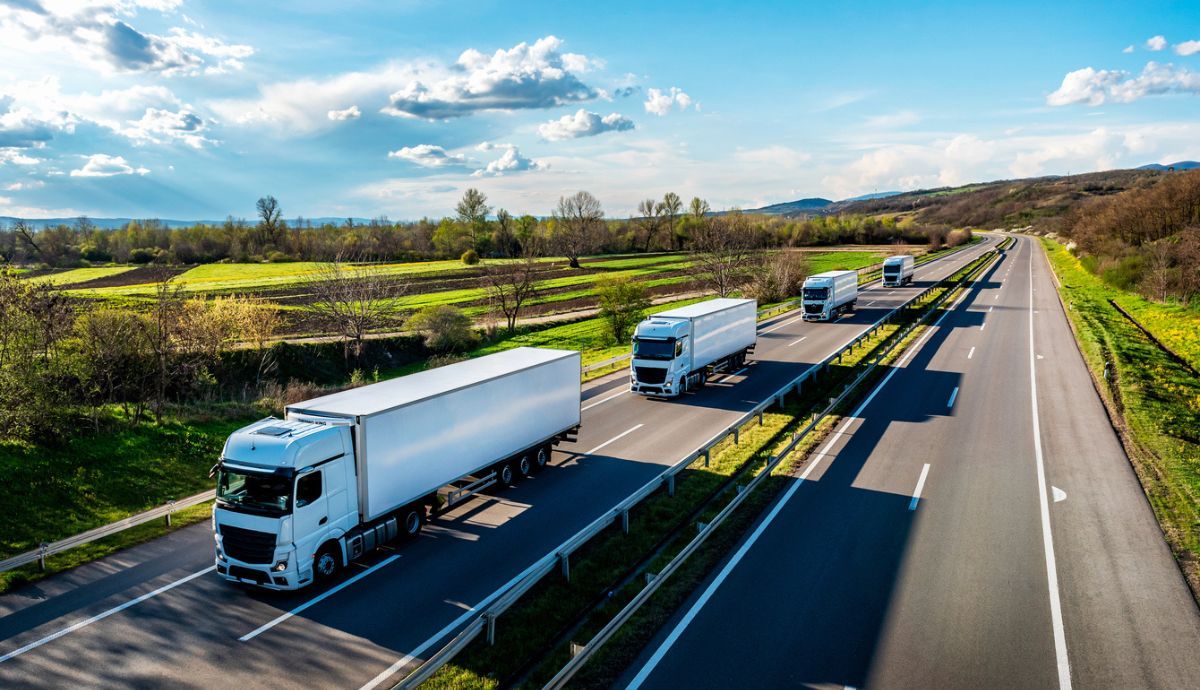
Did you know that Luxembourg is home to two of the most important logistics centres in Europe, has had completely free public transport since 2020, and is immersed in a digital revolution that seeks to turn the small duchy not only into a financial hub, but also into a European benchmark for e‑commerce and artificial intelligence? What is most striking for a Spanish haulier is that the country, historically known for its steel industry, has managed to transform its economy to the point where over 80% of its e‑commerce spending already comes from cross‑border purchases, turning its roads into a giant invisible “conveyor belt” of high value‑added consumer goods.
Although its population barely exceeds 670,000, its geographical position in the heart of the EU and its ability to attract foreign capital have made the country an unavoidable logistics node for international transport.
Between a structural goods deficit and a services surplus
At a commercial level, Luxembourg presents a very attractive paradox for hauliers. On the one hand, it traditionally acts as a large importer of consumer goods and energy, maintaining a goods trade deficit that in 2025 stood at around €1.9 billion, worsened this year by a 2.6% increase in imports. On the other hand, the country compensates for this negative balance with a huge surplus thanks to its exports of financial and non‑financial services, which fuels a constant flow of high‑value goods: from pharmaceuticals and precision machinery to high‑end rubber tyres and aerospace components. For a Spanish haulier, this means that traffic with Luxembourg is not limited to large volumes of steel, but includes a varied load of industrial and consumer products where reliability and speed of delivery are critical factors.
A top‑tier logistics heart with an eye on decarbonisation
The country has skilfully orchestrated its small territory to turn it into a giant multimodal logistics platform. Its road infrastructure, linked to the major German, French and Belgian motorways, allows a truck to reach any major European capital in less than 24 hours from its Findel air cargo centre (Cargolux’s base). In addition, the rail motorway connecting Luxembourg with southern France and Spain, operated by Lorry‑Rail, offers an efficient alternative for unaccompanied trailers that Spanish operators are already starting to take advantage of. But the real challenge for road transport has a name and surname: CO₂. With road transport accounting for more than 60% of the country’s greenhouse gas emissions — paradoxically, the highest percentage in the whole OECD — Luxembourg has decided to move from a national tax to a European emissions trading system (ETS2) from 2028, progressively increasing fuel costs and encouraging the introduction of sustainable fleets. “It is a particularly effective tool for reducing emissions, but it will force companies to modernise their fleets if they do not want to see their competitiveness reduced in the central European corridor,” explains Andrew Ferrone, expert at the Climate Policy Observatory.
Digitalisation as a hallmark: high‑level e‑commerce and fintech
In parallel, as part of its “Digital Decade 2030” plan, Luxembourg has become an advanced laboratory for e‑commerce and emerging technologies. Internet penetration reaches practically 100% of households, and the online retail market is expected to grow at an annual rate of more than 8%, driven by the national platform “Letzshop”, which already brings together more than 400 local shops and has more than 400,000 products online. The country is “seeding” the ground to also become a hub for innovation in blockchain and artificial intelligence, but the real driver of change is its digital financial sector, which attracts e‑payment giants and feeds a growing demand for last‑mile logistics and agile returns. For Spanish hauliers operating on the Madrid‑Paris‑Berlin corridor, this implies a notable opportunity: the B2C and B2B market for electronic and pharmaceutical goods is booming, with traceability and punctuality requirements that reward the most technology‑equipped companies.
Relations with Spain: a small but strategic partner in growth
Although Luxembourg accounts for a modest percentage of Spain’s total foreign trade, around 0.5% to 0.7% of non‑energy goods, its importance is more qualitative than quantitative. In 2024, Luxembourg ranked 23rd among buyers of Spanish products, with exports amounting to around €550 million and year‑on‑year growth of over 17%, one of the highest rates in the entire eurozone. Spain mainly sends agri‑food products (fruit, vegetables, wine), cars and components, as well as industrial machinery, while it imports high value‑added steel products and financial engineering services from the duchy. The Luxembourg Chamber of Commerce considers Spain one of its six key trading partners, and has recently organised official missions to increase collaboration in renewables and tourism, which opens up new prospects for the transport of perishable goods and construction materials.
Conclusion: a high‑profitability economy with a demanding green roadmap
The general opinion among international logistics experts is that Luxembourg is becoming a kind of “testing ground” for the future of European transport. Its roads, tolls and anti‑pollution regulations will serve as a model for the rest of the EU, so Spanish hauliers currently covering routes to Benelux, Germany or France should pay close attention to the rapid implementation of tolls linked to CO₂ emissions that will come into force in July 2026. The good news is that Luxembourg also offers unique advantages: a very stable business fabric, high purchasing power and trade flows that justify investment in more efficient vehicles. For Spanish companies in the sector, the key will be to adapt their fleets to the new environmental standards and take advantage of the growing demand for value‑added logistics services that the little big Duchy is generating in the heart of Europe.
Have any thoughts?
Share your reaction or leave a quick response — we’d love to hear what you think!
-
 0
0
-
 0
0
-
 0
0
-
 0
0
-
 0
0
