
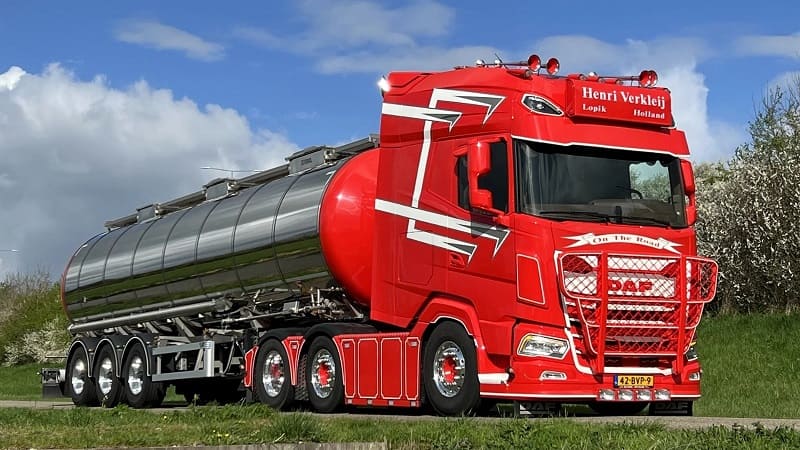
In the competitive international transport sector, driving through the Netherlands requires Spanish carriers to have detailed and up‑to‑date knowledge of local regulations, on pain of fines that can severely impact operational profitability. Dutch authorities carry out rigorous checks on critical aspects such as the mandatory use of the digital tachograph, Low Emission Zones (LEZ), weight and dimension restrictions, and speed limits. Ignoring these rules not only implies financial penalties but also risks of vehicle immobilisation and loss of customer trust.
Transport and logistics specialist María López warns that “the regulatory complexity in the Netherlands has increased in recent years, especially due to the implementation of stricter environmental policies”. Specifically, Low Emission Zones have expanded and become more stringent, restricting access for trucks that do not meet certain emission criteria. For a Spanish fleet, this means that investing in cleaner vehicles or adapting existing ones is no longer an option but a requirement, because driving without authorisation in an LEZ can lead to substantial fines and repeat offences that aggravate the penalty.
Another critical point is the proper management of permitted weight and dimensions. Javier Moreno, road safety expert, emphasises that “checks on roads and at border points are increasingly frequent and rigorous. Fines for excess weight or poorly distributed loads can not only be hefty but can also lead to vehicle immobilisation, affecting the logistics chain and delivery times”. Therefore, complying with Spanish regulations is not enough; it is essential to integrate telematics systems that allow real‑time exhaustive control of axle weight and cargo distribution.
To these two major fronts is added the mandatory use of the second‑generation smart digital tachograph, which accurately records driving and rest times. Inspections in the Netherlands are particularly thorough on this point, and any irregularity — from a faulty card to exceeding driving hours — generates immediate reports. Furthermore, documentation must always be in order and accessible: from vehicle technical certificates to specific permits for the international transport of dangerous or perishable goods.
To successfully navigate this demanding regulatory framework, experts recommend concrete measures that go beyond mere knowledge. Implementing advanced telematics systems that integrate GPS, weight sensors and digital tachographs helps anticipate infringements and plan efficient routes while avoiding LEZs. Similarly, continuous driver training — through specific courses on Dutch regulations — and the centralised digitisation of all documentation are foolproof barriers against sanctions. Intelligent route planning and constant vehicle maintenance according to current emission standards complete the circle of safe operations.
In short, complying with Dutch regulations should not be seen only as a legal obligation, but as an opportunity to gain efficiency and competitiveness in the European market. Proactivity, investment in technology and continuous training are the pillars that will allow Spanish carriers to avoid fines, keep their fleet always in compliance and project an image of sustainability and professionalism. As María López concludes, “fleet managers must invest in training and technology to ensure regulatory compliance and avoid fines that can impact both profitability and company reputation”.
Have any thoughts?
Share your reaction or leave a quick response — we’d love to hear what you think!
-
 0
0
-
 0
0
-
 0
0
-
 0
0
-
 0
0
