
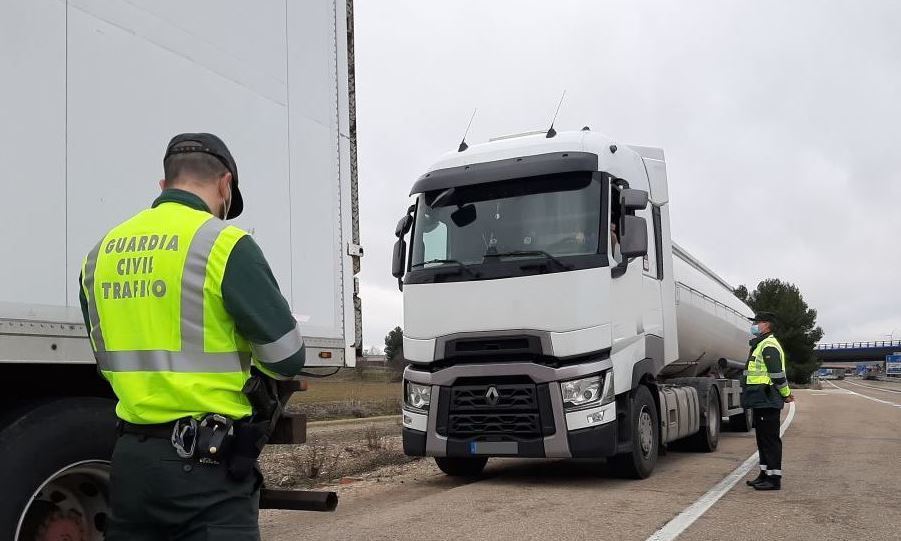
The month of January 2026 brought with it the approval of the Road Transport Inspection Plan for this year, a roadmap that defines what, how, and why they will be controlled over the coming months.
Far from being a mere bureaucratic formality, this plan is the Ministry of Transport’s response to a sector in full regulatory turmoil. The entry into force of new laws and technologies, such as the increase in the maximum weight to 44 tons or the digitalization of documents, forces the administration to reinforce its surveillance to ensure that these changes are applied correctly and do not generate distortions in competition or road safety problems. In essence, the 2026 inspection seeks to verify that the modernization of the sector does not remain only on paper.
The foundation of this inspection rests on a solid legal base, updated to respond to the challenges of modern transport. On the one hand, we have the new Law 9/2025, on Sustainable Mobility, which promotes the digitalization of documents such as the goods control record. On the other hand, the modifications to the General Vehicle Regulations that allow 44 tons, whose first year of full implementation requires special vigilance.
At the European level, the plan is supported by regulations such as Directive 2006/22/EC, which requires controlling at least 3% of drivers’ working days, and by the IMI and ERRU information systems for the fight against cross-border fraud. All this legal framework seeks a balance between business efficiency and safety.
The profiles of vehicles and drivers under scrutiny are varied, but they all share a common denominator: they are critical points where the major changes and conflicts in the sector are concentrated. Special attention will be paid to heavy vehicles with more than five axles that can now circulate with 44 tons, verifying that the technically permissible maximum mass is not exceeded, an error that entails a sanction without tolerance margins. Foreign drivers will also be in the spotlight, especially those in a posted worker situation, whose working and salary conditions will be cross-checked in real-time through Social Security databases and tachographs. Even Moroccan vehicles and, from July, vans over 2.5 tons on international routes, must comply with strict tachograph and rest period requirements.
The “why” of this battery of checks can be explained in two words: fraud and safety. The fight against “social dumping” through letterbox companies or bogus self-employment is a priority, using data synchronization between the Transport and Labor Inspectorates to uncover irregularities. Likewise, the control of late payments (payment terms of more than 60 days) and respect for the prohibition of drivers carrying out loading and unloading seek to protect the economic and physical health of the professional. It is, in short, about creating a fairer playing field where those who comply with the rules are not disadvantaged by those who compete unfairly.
For the carrier, the message of the 2026 Inspection Plan is clear: the era of improvisation is over, giving way to an environment of technological and coordinated control. Technology will be the great ally of the inspectors, with the second-generation smart tachograph (G2V2) as a key tool for recording border crossings and operations without human intervention. Inspections will not only be carried out on the road but will be intensified at companies (more than 50% of controlled working days) and at strategic points such as ports, industrial estates, and large logistics centers. The conclusion is that adaptation to regulations and digitalization are no longer an option but become the only way to operate with peace of mind and avoid penalties in 2026.
Have any thoughts?
Share your reaction or leave a quick response — we’d love to hear what you think!
-
 0
0
-
 0
0
-
 0
0
-
 0
0
-
 0
0
