
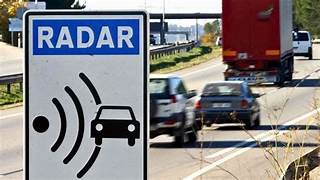
While the background noise of current events is marked by the transport crisis and the possibility that several cities may soften or delay the implementation of their Low Emission Zones (LEZs) following the collapse caused by the Madrid train accident, the Spanish General Directorate of Traffic (DGT) is playing a long-term chess game.
Instead of backing down, the organization has decided to get ahead of the future with a masterstroke that will change the way we understand road controls. If you were one of those who thought that by dodging the speed radar and keeping your MOT sticker up to date, you had a clear conscience, get ready: the next level of surveillance doesn’t look at the speedometer, but at what comes out of the exhaust pipe.
And it is that, in an apparent contradiction, while there is talk of giving a respite to access restrictions to cities, Spain becomes the first country in Europe to regulate remote emission detection systems.
The recently published UNE 82509:2026 standard provides legal coverage for devices that, installed on the sides of the road, are capable of measuring your car’s smoke while you are driving at 100 kilometers per hour.
Using light beams, these “green radars” instantly analyze polluting gases — from nitrogen oxides to particles — and cross-reference that data with a photograph of your license plate. Thus, the administration obtains a perfect record of how much your vehicle pollutes under real driving conditions, without needing to stop you.
The message for drivers is clear: the battle against pollution is not fought only with fences and signs that limit access to cities (the LEZs), but extends to every kilometer of asphalt.
Until now, a highly polluting car was only detectable at the MOT station or during a manual check.
With this new technology, if the system detects that your emissions are setting off alarms, you will not receive an immediate fine for polluting per se, but an order to undergo an extraordinary technical inspection.
If you ignore the notice, your vehicle could be immobilized. That is, even if your city decides to be lenient with entry to the center, the DGT will pursue you for the simple fact of driving with a defective or tampered anti-pollution system.
In short, we cannot be categorical and think that the transport crisis will mean a definitive halt to environmental policies. Rather, we are witnessing a change of strategy: if social pressure delays the Low Emission Zones (the visible “short term”), technology bursts in to monitor the invisible “day to day”.
From now on, the old advice of keeping the engine well-tuned to save fuel takes on a new dimension.
It is no longer just about mechanics, but about avoiding a penalty. What was once diluted in the air is now recorded by a camera. The all-seeing eye on the road no longer just puts a figure on your speed, but also a price on what we breathe.
Have any thoughts?
Share your reaction or leave a quick response — we’d love to hear what you think!
-
 0
0
-
 0
0
-
 0
0
-
 0
0
-
 0
0
