
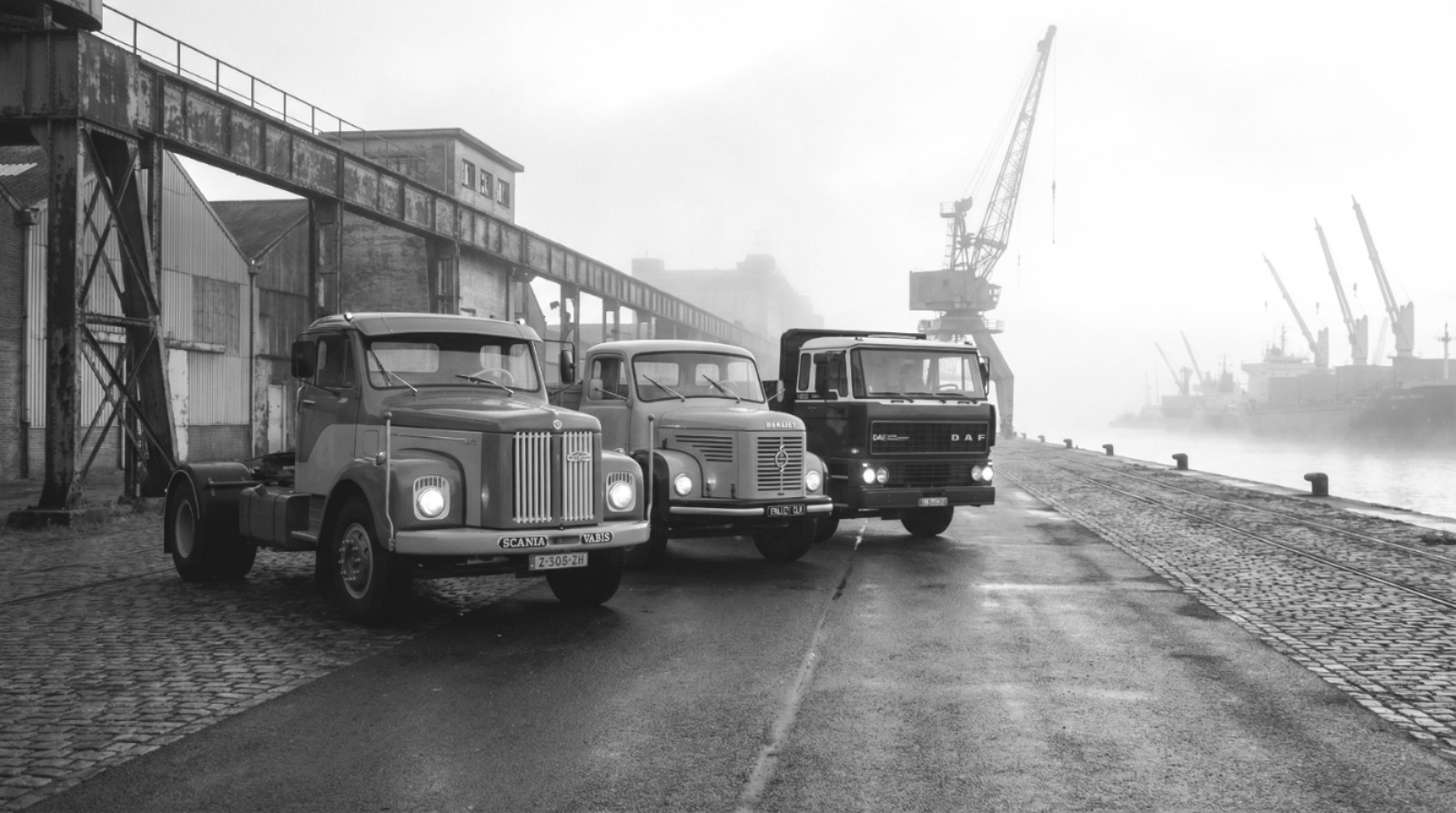
For centuries, the roar of diesel engines has been the heartbeat of the European economy. Although Germany, Italy and Spain have played an undeniable leading role in the automotive industry, the old continent guards other sacred temples where the giants of the road are forged.
Further north, in the cold Scandinavian landscapes, and in workshops with an innovative spirit in France and the Netherlands, fundamental chapters in the history of heavy transport were written. This is the story of how Sweden, France and the Netherlands earned their place on the Olympus of truck manufacturers, from the dawn of the engine to the era of electrification.
Sweden: The Cradle of Safety and Robustness
If there is a nationality that evokes a synonym for solidity on the road, it is the Swedish one. The story begins at the end of the 19th century, when in 1891, in Malmö, a group of pioneers founded a bicycle factory called Scania, in honor of the province of Skane. On the other side of the country, in Gothenburg, Volvo was taking its first steps. But it would be in 1911 when the merger between Scania and Vabis would give life to Scania-Vabis, a company that, after surviving bankruptcy in the 20s, would make the strategic decision to focus exclusively on industrial vehicles.
While Scania was being forged in the south, Volvo launched its first truck in 1928, the Series 1, a 28 HP vehicle that laid the foundations of what would become an empire of resistance.
The Swedes were not long in distinguishing themselves from the rest. If the Germans sought mechanical perfection, Sweden focused on the driver and efficiency. In 1959, Volvo gave the world its most precious invention: the three-point seat belt, a technology it shared without patenting, saving millions of lives inside and outside the cab.
For its part, Scania revolutionized the post-war period with low-consumption engines and, in 1951, was ahead of its time with the debut of the turbo diesel engine, laying the foundations for the gigantism that was to come.
Consecration would come in 1977, when Scania’s V8 engine, with its fierceness and low revolutions, earned it the nickname “The King of the Road.”
Swedish innovation did not stop. In 1969, Saab and Scania merged, creating a technological giant. And while Volvo presented in 1983 the first fully integrated sleeping compartment, humanizing long journeys, Scania perfected its modular system in the 80s, allowing carriers to configure their vehicles as if they were pieces of a precision Meccano set.
Entering the 21st century, both remain at the top: Volvo under the wing of the group that bears its name, and Scania, after being the object of desire of MAN and Volkswagen, consolidated as a pillar of the German group, but maintaining that Swedish essence of durability and cutting-edge safety.
France: The Latin Genius of Innovation and Giants
Crossing the Baltic and heading down to the heart of Europe, France built its own legend, often marked by an audacious and, at times, titanic spirit.
The Gallic epic has two founding names: Berliet and Renault. In 1894, Marius Berliet from Lyon built his first engine, and by 1906 he was already building his first truck.
At the same time, Louis Renault, in Billancourt, patented his gearbox and, in 1906, invented the precursor of the Parisian bus.
But it would be in the post-war period that France would earn its place in the world’s imagination. In 1957, Berliet amazed the planet with the T100, to this day one of the largest trucks ever built, a monster with a gross weight of over 100 tons designed to tame deserts and large construction sites.
This spirit of greatness coexisted with the need for industrial reorganization. In 1955, Saviem was born from the merger of Latil, Renault and Somua, creating a hub for industrial vehicles that would absorb other firms such as Chausson or Richard Continental. Saviem stood out for its technical collaboration with the German MAN, adopting its direct injection engines and creating technological synergies that benefited both banks of the Rhine.
The complex dance of mergers led to Berliet and Saviem being unified in 1978 under the banner of Renault Véhicules Industriels (RVI). It was time to reap the fruits. If the 1958 Berliet GLR8 was dubbed the “truck of the century” for its longevity and versatility, the 90s brought the modern myth: the Renault Magnum. Launched in 1990, its revolutionary concept of a flat, livable cab, with unprecedented comfort, earned it the title “Truck of the Year” in 1991, transforming the idea of what the driver’s home on the asphalt should be.
Although in 2001 Renault Trucks was absorbed by the Volvo Group, its French identity lives on, today focused on the ecological transition as a pioneer in the world of electric trucks with models like the Renault Trucks T. And let’s not forget Willème, the craftsman from Nanterre who, since 1919, specialized in titans for exceptional transport, like the TG300, an 8×8 capable of towing 1,000 tons, keeping the flame of the audacious builder alive until its disappearance in the 80s.
The Netherlands: Efficiency Made Cab
Among these industrial giants, a small country managed to carve out a niche for itself based on ingenuity and pragmatism: the Netherlands.
The story of DAF (Van Doorne’s Aanhangwagenfabriek) begins in 1928 in Eindhoven, at the hands of the brothers Hub and Wim van Doorne, manufacturing trailers with an innovative welded chassis technique that made them lighter.
But the big leap occurred in 1949 when, taking advantage of the post-war reconstruction fever, they launched their first truck, the DAF A30, a three-ton vehicle intended for the local market.
Soon, the Dutch brand showed its DNA: innovation at the service of the driver. In 1957, with the DO series, DAF introduced a truck suitable for international transport that already included a rudimentary bed, an absolute novelty.
However, the revolution came in the 60s with the legendary DAF 2600, nicknamed “the mother of international transport.” Its square, maximized cab offered unprecedented living space, with large windows that improved visibility and safety, understanding that comfort was the best ally of productivity.
DAF did not stop innovating. In 1970 it introduced the tilting cab in the F1600 and F2200 series, making maintenance easier than ever. In 1973, the DAF 2800 raised the stakes with two beds, becoming the king of long distances, and they were pioneers in incorporating the turbo intercooler to gain power without skyrocketing fuel consumption. The 80s brought the DAF 95 and its iconic Super Space Cab, a compartment where the driver could even stand up, a luxury at the time. Today, integrated into the American giant PACCAR, DAF continues to set the pace. Its New Generation of trucks (XF, XG, XD) has managed to take advantage of European regulations to create the most spacious and aerodynamic cabs on the market, winning multiple awards and leading the charge towards an emission-free future with its electric versions and the development of hydrogen engines.
Have any thoughts?
Share your reaction or leave a quick response — we’d love to hear what you think!
-
 0
0
-
 0
0
-
 0
0
-
 0
0
-
 0
0
