
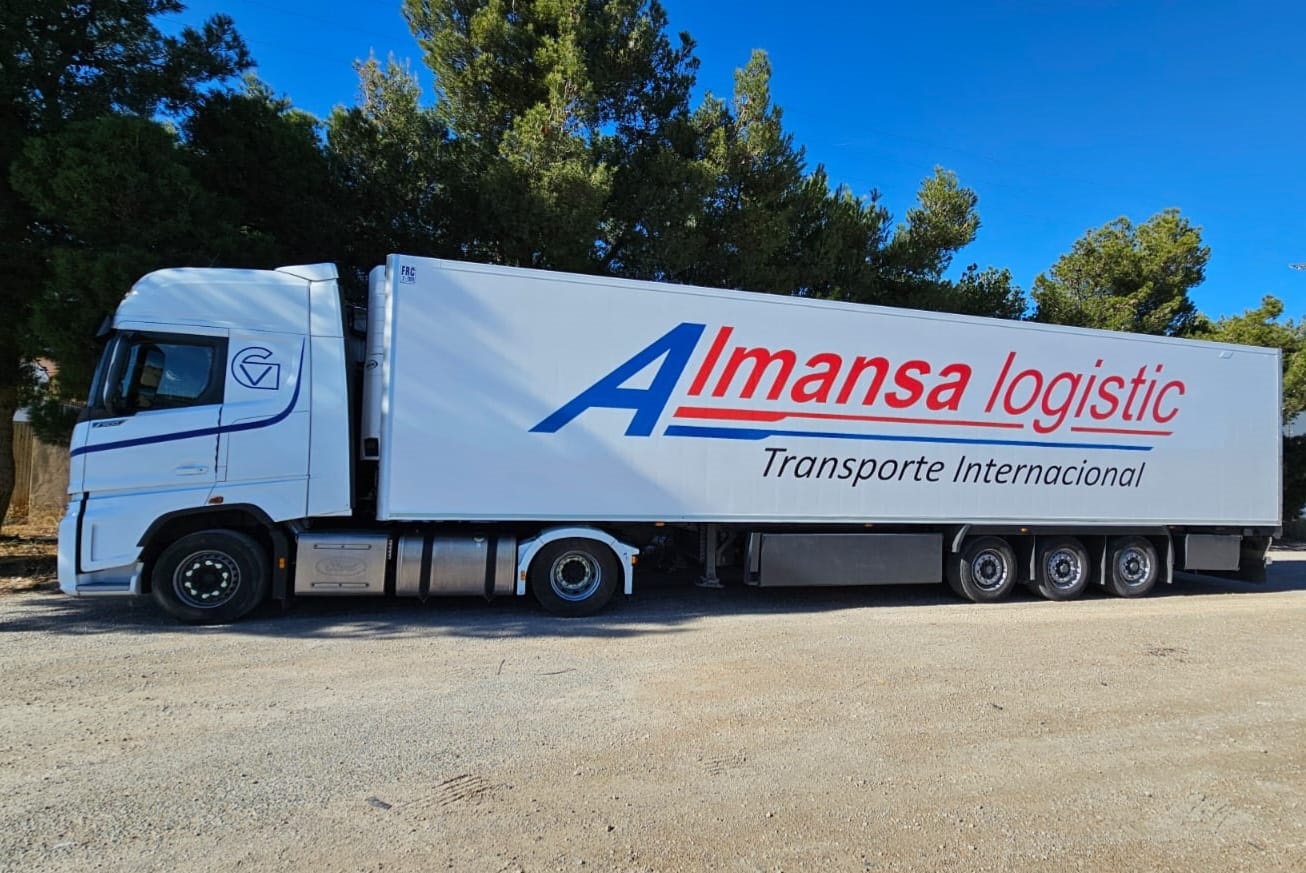
Denmark is a small but very active trading partner for Spain, with bilateral trade exceeding €4.4 billion in 2024. When analysing the flow of goods, hauliers will find clear opportunities in both directions: Spain mainly sends cars and auto parts, as well as fruit, vegetables and pharmaceutical products. The Nordic country, with a strong export vocation, is a major producer of medicines, machinery and electronic components, products that return to our country.
This Danish industrial profile, focused on high‑value goods, makes road transport particularly sensitive to punctuality and cargo security.
The natural corridor linking the Iberian Peninsula to Scandinavia forces truckers to plan meticulously. The main road transport route from Spain to Denmark runs through France and Germany, and usual transit times range from 72 hours to 4‑5 days.
Here a critical point breaks the continuity of the asphalt: the need to cross the strait by ferry, a stage with its own schedules and variable costs. Before starting the journey, hauliers must be clear about the conditions and rates of this maritime service, because the efficiency of the entire operation depends on its correct integration into the route.
Those operating in Denmark must comply with EU regulations that, in practice, demand a higher level of requirements for mobile professionals. The application of the Mobility Package imposes immediate obligations on any Spanish company performing international transport, cabotage, or the initial or final leg of a combined operation.
These companies must register their drivers in the Internal Market Information System (IMI) and guarantee them a minimum wage on Danish territory. Local rules have recently relaxed some hurdles, such as removing the 25‑hour limit for parking in service areas, but maintain the ban on carrying dangerous goods across the Øresund Bridge during daytime hours. Therefore, knowing and registering the operation in advance becomes the best insurance policy to avoid penalties.
To understand Denmark’s environmental commitment, it is enough to note the date of 1 January 2025, when the country replaced the Eurovignette with a new satellite‑based toll system based on CO₂ emissions and kilometres travelled by trucks. The Danish government has set a range that penalises the most polluting vehicles and taxes circulation directly according to their energy efficiency.
Initially, this charge applies to trucks over 12 tonnes and on a 10,000‑km network, but it is forecast to be extended in 2027 to all vehicles over 3.5 tonnes and to all roads in the country. The message to hauliers is clear: the route north forces fleet renewal under the logic of the green transition.
Aligned with these climate goals, in Denmark the ecological transition is a tangible, business‑led reality, with concrete plans to build a decarbonised logistics system. The private sector has already started developing zero‑emission green corridors in collaboration with major companies such as Maersk, DSV and DFDS, and recharging stations for electric truck fleets are being deployed.
For Spanish hauliers, this trend is not a mere symbolic gesture but a warning that future environmental requirements on European roads are being designed with Danish parameters in mind.
For a Spanish haulier, transporting goods to Denmark means managing a crossing of physical and regulatory borders, but also an opportunity to be part of efficient and sustainable logistics. Broadly speaking, the journey forces one to be very aware of three key points: the timetable conditions of ferries to cross the sea, the obligation to register workers in the IMI with the established wages, and the added cost of the new CO₂ toll.
Denmark is a small country but with enormous demands for quality, transparency and respect for the environment. Daring to conquer this market therefore implies overcoming those barriers and, above all, joining a more sustainable, forward‑looking transport model.
Have any thoughts?
Share your reaction or leave a quick response — we’d love to hear what you think!
-
 0
0
-
 0
0
-
 0
0
-
 0
0
-
 0
0
