
You spend most of the day behind the wheel, and you know that the tachograph is much more than just another device on the dashboard. It is a key control instrument, whose existence is enshrined in Spain within Regulation (EC) No. 561/2006 and the Land Transport Regulation Act (LOTT). Its main function is twofold: on the one hand, to guarantee the quality and safety of road traffic, preventing driver fatigue—a factor present in nearly 20% of fatal accidents in Europe—and on the other, to protect the labour rights of the driver, meticulously recording driving times, breaks, and rest periods.
Far from being a mere “stopwatch,” the tachograph is the silent guardian that ensures the pressure to meet deadlines does not put your health or that of others at risk.
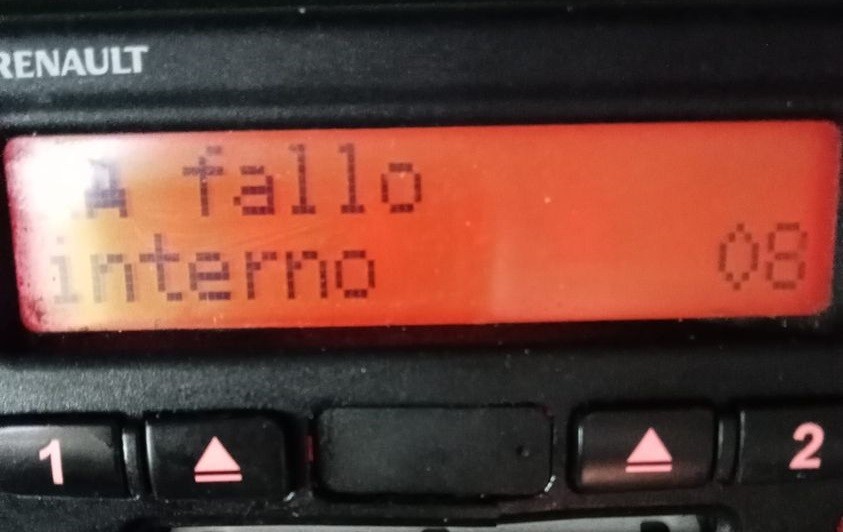
However, for many colleagues, this “guardian” often becomes a headache. Errors in the report issued by the tachograph are more common than they seem and are usually divided into two main groups: those arising from human error and technical faults. Among the former, the king is the famous Error 50 or “card not recognised,” which is usually solved with a simple soft cloth to clean the driver card chip. Another common issue is the question mark (?) on the printout, which reveals unrecorded periods of activity, such as when we forget to insert the card at the start of the shift. On the technical side, we find more complex codes like Fault 10 (problems with the speed sensor) or Fault 41/59, which indicate communication failures with the card. If these persist after cleaning, they oblige you to request a duplicate from the Traffic Authority.
For the tachograph to stop being a potential “enemy” and become a perfect ally, the key lies in prevention and knowing how to act when alerts appear. If an error appears, the first thing to do is stay calm and consult the device’s code manual, which should be mandatory reading in the cab. Never attempt to repair electronic faults or motion sensor issues on your own; in these cases, the only legal and safe course of action is to go to an authorised workshop. European regulations (Regulation 165/2014) grant a period of seven days from the detection of the malfunction to rectify it, during which the driver must make manual annotations on printouts to justify their activity.
Reading the tachograph correctly and knowing how to operate it is as vital as looking in the rearview mirror. Always ensure the activity selector is in the correct position: driving, other work (loading/unloading), availability, or rest. A common mistake is leaving the selector in the wrong position, which can show rest periods where work was performed, or vice versa, generating serious inconsistencies during an inspection. Furthermore, with the entry into force of the Mobility Package, enforcement officers can now audit up to 56 days of activity in a single check, so it is crucial that both the tachograph and your card store data correctly and that you periodically download this data to avoid information loss.
Detecting errors in time not only prevents scares but also saves you from fines that can jeopardise your finances and your professional licence. Penalties in Spain are progressive and severe. A minor exceedance (less than 20% of the permitted time) can result in a fine of between 100 and 400 euros. However, if you drive more than 13 and a half hours in a day (a 50% exceedance), the infraction is very serious, with fines ranging from 4,001 to 6,000 euros and immobilisation of the vehicle. Improper use of the “out of scope” function or, worse, tampering with the device, can increase the penalty to up to 30,000 euros and may even lead to imprisonment for forgery.
Finally, do not forget that there are “exceptional circumstances” (traffic jams due to roadworks, adverse weather conditions, accidents) which, according to Article 12 of Regulation (EC) 561/2006, allow you to deviate from the maximum driving times to reach a safe place. In these cases, the tachograph can become your best witness: make a printout of the ticket immediately, note the reason for the exceedance on the back (e.g., “hold-up due to snow on A-1”), and keep evidence such as weather reports or traffic authority statements. This manual annotation turns a potential penalty into a valid justification. Remember: the tachograph is only an enemy when we ignore it; if we treat it with the respect it deserves, it becomes the most reliable tool to demonstrate your professionalism and to return home safe and sound.
Have any thoughts?
Share your reaction or leave a quick response — we’d love to hear what you think!
-
 0
0
-
 0
0
-
 0
0
-
 0
0
-
 0
0
