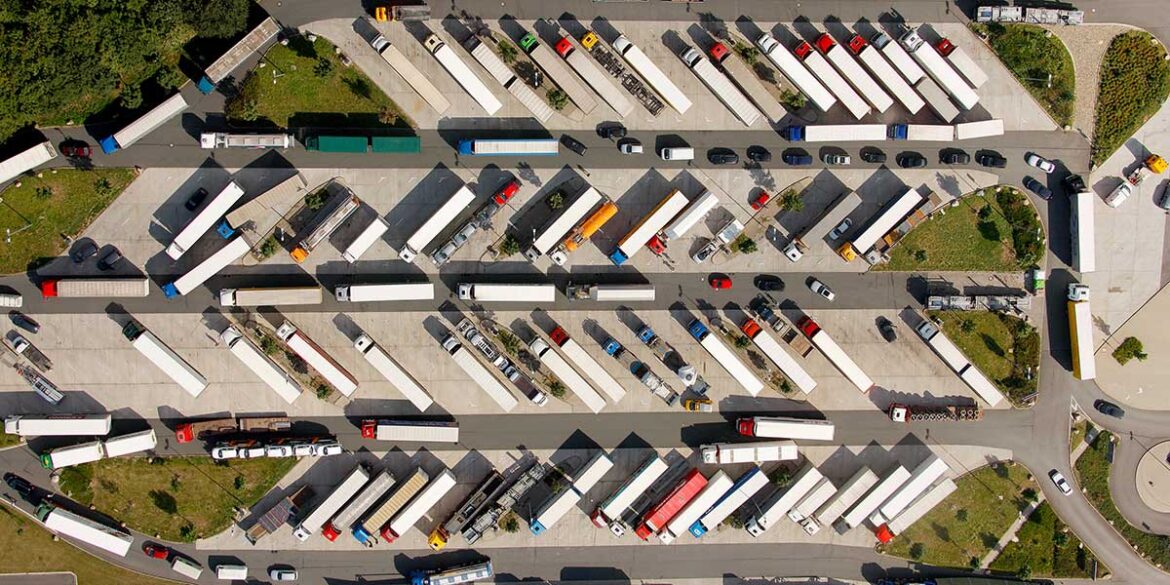
The shortage of safe truck parking has become one of the Achilles’ heels of road transport in Spain, a situation that directly compromises road safety and driver well-being.
While the European Union requires professionals to take their mandatory rest breaks in dignified conditions, the Spanish network of protected areas is still very incipient, forcing many transport workers, both men and women, to spend the night on hard shoulders or in industrial estates, exposing themselves to risks to their physical safety and the goods they transport.
For a parking area to be truly safe and allow for restorative rest, it must meet strict standards such as the European SSTPA (Safe and Secure Truck Parking Areas) certificate. This implies, first of all, perimeter security and surveillance measures such as anti-climb fences over two meters high, access control via barriers with license plate recognition, and 24/7 video surveillance with no blind spots to prevent theft and assaults. These infrastructures are the first barrier to ensuring that both the cargo and the driver are protected while they rest.
Beyond security, the facilities must guarantee the well-being and dignity of the professionals. A fundamental requirement is the existence of gender-separated toilets and showers with hot water, cleaned daily, as well as dining areas, free Wi-Fi connection, and power outlets for personal use. These services, which may seem basic, are essential so that drivers, especially in a sector with a growing female presence, can take their mandatory rest in conditions of hygiene and comfort, which has a direct impact on their safety behind the wheel.
The current situation in Spain reflects a dual reality. On one hand, there are leading private initiatives that are setting the standard. Companies like Andamur and OnTurtle have certified several of their areas (such as those in La Junquera, Guarromán, or San Román) with the SSTPA Gold level and even with TAPA certification, offering services that go beyond what is required, such as gyms, laundries, or picnic areas. Furthermore, recent alliances such as that of Mowiz Truck and Repsol seek to expand the network with more than 4,000 spaces that meet these European standards.
However, these high-quality infrastructures are still the exception. According to recent complaints, such as that of VOX in Avilés at the end of 2025, many public or municipal parking lots present “deplorable” and “third-world” conditions, with no type of certification or minimum service, leaving transport workers exposed to theft and assaults. This contrast highlights the urgency of addressing the enormous shortage of safe spaces in Spain, which is part of a European shortfall of almost 400,000 spaces, to ensure that all professionals, regardless of their route, can rest with dignity and safety.