
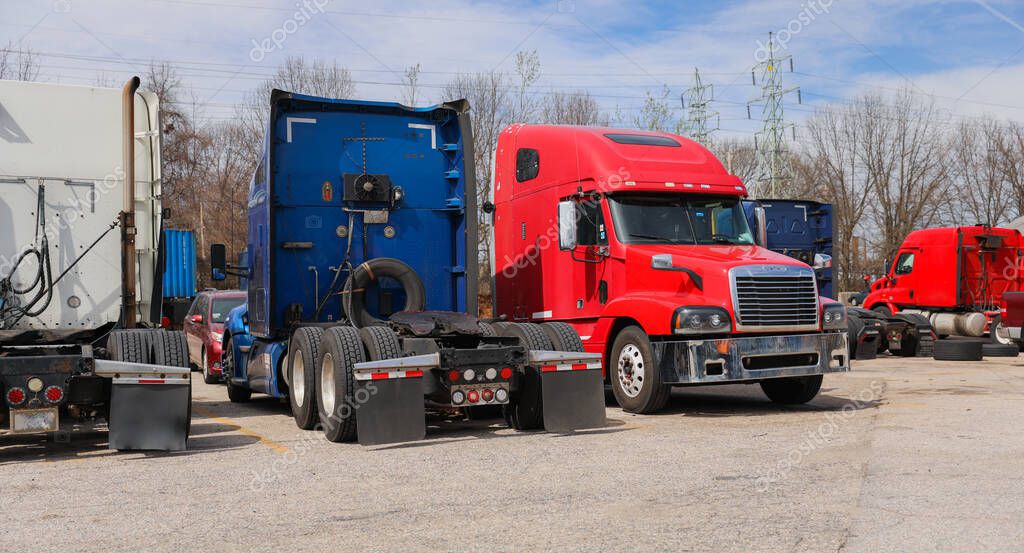
Estonia is one of Spain’s fastest-growing trading partners within the European Union in recent years, although it remains largely unknown to many hauliers. Economic relations between the two countries are governed by the International Road Transport Agreement signed in 1997, along with other bilateral agreements that have gradually strengthened the bond. Despite the distance, trade has notably intensified.
The Estonian Embassy in Madrid highlights that in 2023, exports from Estonia to Spain increased by almost 19%, reaching a value of €203 million, while imports from Spain amounted to €310 million, consolidating our country as the fifteenth largest trading partner of the Baltic republic.
The roads connecting Spain and Estonia carry a wide variety of goods. While cereals, electrical equipment and timber arrive in Spain from Estonia, Spanish hauliers transport very different products to Tallinn and other cities: motor vehicles, iron, steel and machinery. The geographical distance – routes of over 3,400 kilometres usually passing through Germany, Poland and the Baltic states – does not hinder a commercial flow that, according to the Estonian Foreign Trade Office, still has enormous room for improvement.
It is worth noting that Spanish entrepreneurs are showing growing interest in Estonia as a gateway to the Baltic region, with around 6,000 Spanish citizens registered as e-residents and more than 2,400 companies incorporated in the country.
For any Spanish haulier planning a route to Estonia, it is essential to know that there are no road regulations that differ radically from common European rules. As Estonia is an EU member state and part of the Schengen Area, the same guidelines on driving and rest times apply, but with one key peculiarity. As of July 1, 2026, as warned by the international association IRU, vans between 2.5 and 3.5 tonnes carrying out international transport will be subject to the same obligations as heavy trucks, including the installation of second‑generation smart tachographs. Furthermore, from October 2026, the Digital Control Document (DCD) will become mandatory across the EU, replacing traditional paper for all freight transport operations.
One of the aspects that most surprises Spanish hauliers is the Estonian toll system, which is based on purchasing a vignette before entering the country. Vehicles weighing more than 3,000 kilograms, as well as all transport vehicles whose maximum authorised mass exceeds 3.5 tonnes, are required to carry this vignette. Its cost varies depending on total weight, number of axles, vehicle emission class and the desired validity period, which can be one day, one week, one month or one year. The vignette must be bought before starting to drive, as it is never retroactive, and can be purchased online, by credit card or at physical sales points. There is no per‑kilometre toll system on motorways, which considerably simplifies cost management for hauliers.
Regarding driving and road conditions, speed limits in Estonia are lower than in the Iberian Peninsula. In urban areas, the limit is 50 km/h; on conventional roads outside built‑up areas, the maximum is 90 km/h; and only on some dual carriageways is it permitted to reach 110 km/h during the summer months. It is compulsory to keep dipped headlights on 24 hours a day, and during winter (from December 1 to March 1) winter tyres are mandatory. The road network is modern and safe, but weather conditions can become extreme; the winter season requires maximum caution, and it is advisable to carry chains in the vehicle. Likewise, all trucks must be equipped with a fire extinguisher, a wheel chock, a warning triangle and a reflective safety vest.
Experts recommend that Spanish hauliers planning to travel to Estonia prepare for a destination with great untapped potential. “This is the first time the light commercial vehicle sector will be subject to the full scope of EU transport rules,” warns Raluca Marian, Director of IRU EU, referring to the extension of regulations to vans in July 2026. From the Estonian Embassy in Madrid, they stress that “bilateral economic relations have developed gradually, but there is room for improvement”, encouraging hauliers to see this country not as a distant, cold destination, but as a real business opportunity in northern Europe. With proper planning, compliance with new technological and documentary requirements, and a thorough understanding of the vignette system, Estonia can become a much more accessible and profitable market than its geographical distance might suggest.
Have any thoughts?
Share your reaction or leave a quick response — we’d love to hear what you think!
-
 0
0
-
 0
0
-
 0
0
-
 0
0
-
 0
0
