
For a driver, especially for those taking their first steps in this profession, guidance is as valuable as the truck itself. In the world of transport, it is not enough to know how to handle the vehicle; the true craft begins when you understand what we are carrying inside it. That is why, at Powerload SL, we insist on a fundamental maxim: first, you must know the nature of your transport, and then, the type of goods you are going to move. It is not the same to carry parcels as it is to transport a substance that, in the event of an unforeseen incident, could become a risk. Because traveling safely begins with the certainty of what you are moving.
Powerload Sl, we know that the road does not understand schedules, which is why we make a consulting team available to our drivers 24 hours a day, seven days a week. We not only help them identify which loads are available in our freight exchange, but we also offer them thorough guidance on the nature of those goods, clearly indicating which ones fall into the dangerous goods category.
We want every driver who signs up with us to know that they are not alone; they can consult us at any time to clear up doubts about the type of contract they are undertaking, thus guaranteeing transparency and trust from the very first moment.
But our work goes beyond intermediation. We take training very seriously, which is why we want you to have a deep understanding of what the law says about dangerous goods. In Europe, the ADR regulation (European Agreement concerning the International Carriage of Dangerous Goods by Road) is what brings order and safety to this field. This regulation is not a simple bureaucratic formality; it was created to unify criteria and protect everyone: the driver, the population, and the environment. Understanding what the hazard classes are (explosives, gases, flammables, toxics, or corrosives) means understanding how we should act when dealing with them.
Confusion often arises between what constitutes dangerous goods and what constitutes special goods. Making this distinction is essential. A dangerous good, such as an acid or a flammable gas, implies an intrinsic risk due to its physico-chemical properties; improper handling can lead to a disaster. On the other hand, a special good may require particular logistical care due to its size or value, but it does not represent the same level of threat. Correctly identifying this difference is the first step towards complying with the law, avoiding penalties, and, most importantly, minimizing the probability of incidents on the road.
In our freight exchange, we clearly establish how you, as a driver, can connect with the logistics managers. We know that behind every product there are official owners who are responsible for it, but we want to go one step further. Therefore, by using these elements and data on dangerous goods, we create this type of journalistic content. We aim to make all this technical information easy to understand so that when you access our publications, you find useful tools for your day-to-day work.
At Powerload Sl, we have a clear goal that we want to be known for: we care about loads being insured, but also that drivers travel with maximum safety. An informed driver is a protected driver. That is why we invite you to use our consulting services, to ask questions, and never to take any type of goods for granted. The road already presents enough challenges; let’s not allow a lack of information about what we transport to be one of them. Travel safe, travel informed.
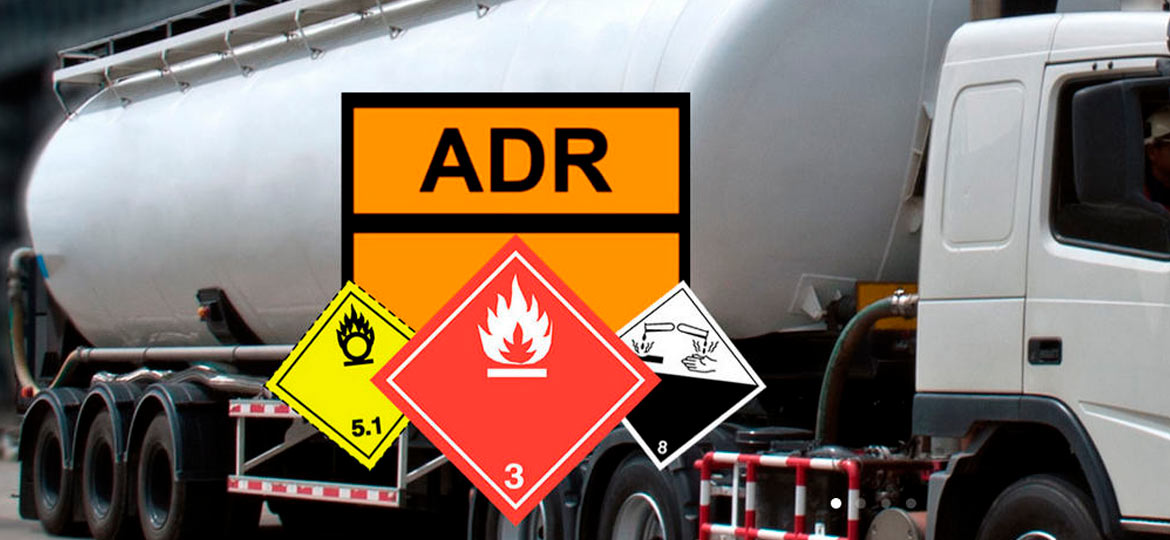
Furthermore, it is not enough to know that you are transporting dangerous goods; the ADR regulation requires that the vehicle speaks for itself. We are talking about the orange plates, hazard labels, and hazard identification numbers (Kemler codes) that must be visible on the truck. For the novice driver, understanding these symbols is not just a legal requirement; it is a survival mechanism. In the event of an accident, those signs are the first message received by emergency services. If the plate is incorrectly placed, absent, or illegible, critical seconds are lost that can make the difference between a controlled incident and a catastrophe. Having your paperwork in order, such as the Consignment Note with ADR indications, and having the appropriate Personal Protective Equipment (PPE) in the cab, are requirements that protect your life and your legal responsibility.
The risk lies not only in the goods but also in routine. Overconfidence is one of the transport driver’s greatest enemies. A substance that seems harmless today because it has arrived at its destination without incident may be the cause of an accident tomorrow if a small detail in the securing is overlooked or a minor leak is dismissed. That is why, at Powerload SL, we promote training not as a formality to be renewed every five years, but as a constant practice. Refresher courses, consultations with the advisory team, and periodic reviews of Safety Data Sheets (SDS) are tools that keep the driver alert. Remember: in the transport of dangerous goods, there is no second attempt. Prevention is the only path that guarantees you return home every night.
Have any thoughts?
Share your reaction or leave a quick response — we’d love to hear what you think!
-
 0
0
-
 0
0
-
 0
0
-
 0
0
-
 0
0
