
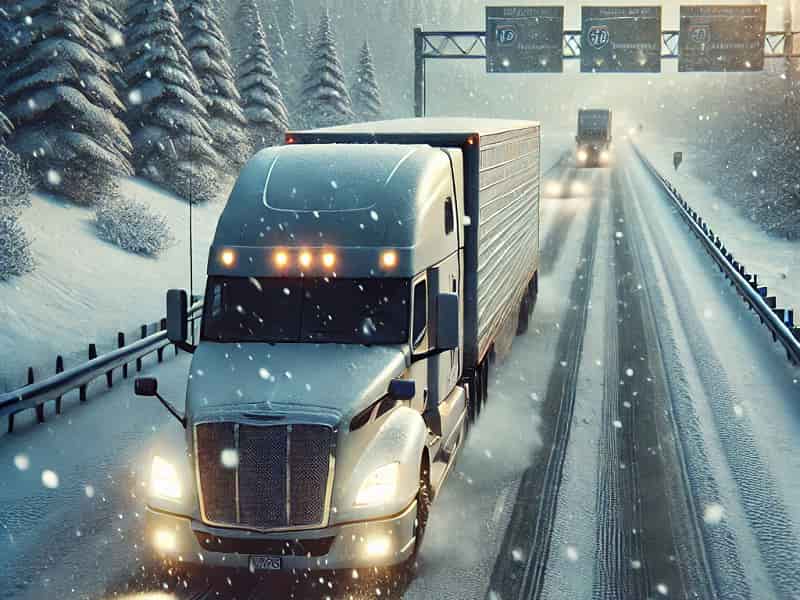
On New Year’s Eve, as millions of European citizens begin their journeys to reunite with family and friends, the continent’s road network becomes a delicate ecosystem of mobility. In this scenario, the figure of the professional freight transport driver emerges as a fundamental pillar of safety. Their performance behind the wheel goes beyond simple driving; it is an exercise in maximum responsibility, planning, and serenity, crucial to ensuring the celebration is not marred by tragedy on the asphalt.
The basic premise during these hours of high traffic density and often adverse weather conditions – fog, rain, ice – is meticulous planning. The conscientious trucker consults not only the most direct route but also the safest and most fluid one, using real-time applications to avoid traffic jams and conflict zones. The management of driving and rest times, strictly regulated by the tachograph, becomes sacred. “During these dates, a minute of haste can cost hours of drama. Planning is our best co-pilot,” says Klaus Berger, an international transport logistics expert.
Once on the move, patience and anticipation become their most valuable tools. They must anticipate the sudden movements of motorists, often caught up in stress or excitement, and maintain an even greater safety distance than usual. Clear communication with indicators, a moderate and steady speed, and special attention at crowded intersections and rest areas are gestures that make a difference. Their cabin is a bastion of calm amidst the festive bustle, where fatigue, the silent enemy, is combated with scheduled breaks and rigorous discipline.
Furthermore, the professionalism of the sector is demonstrated in preparation for the unexpected. Carrying chains, checking the condition of the vehicle (brake systems, winter tires, lights) before departure, and knowing the protocols in case of an incident or emergency are non-negotiable measures. Their role is key not only for their own safety but for that of all road users, sometimes acting as a stabilizing factor that, with their predictable driving, orders the flow of traffic.
In short, during these critical year-end hours, the trucker performs an essential profession with an extra burden of social consciousness. Their exemplary performance on European roads is a reminder that, even in times of celebration, road safety is a shared responsibility that begins with the seriousness and commitment of those who handle the largest and potentially most dangerous vehicles. Arriving on time is secondary; arriving safely is the only non-negotiable goal.