
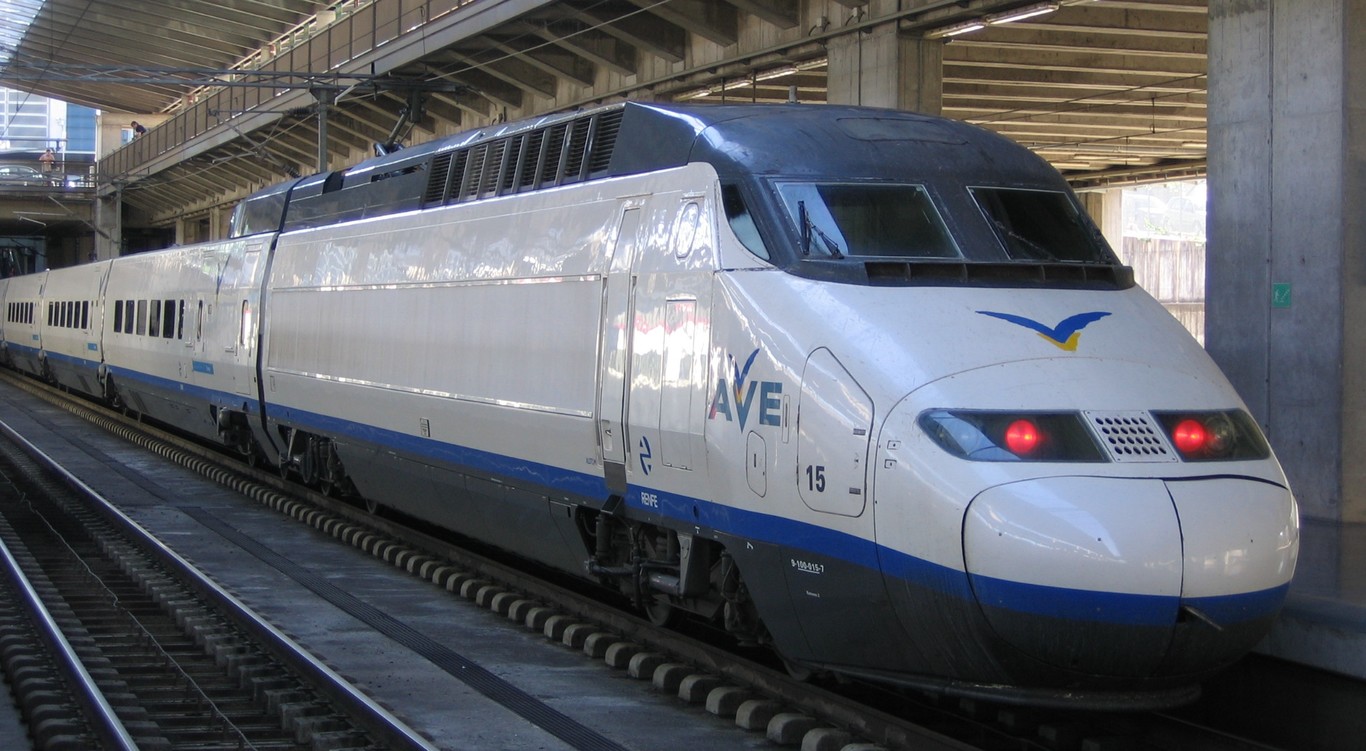
The restoration of the direct AVE service between Barcelona and Seville marks a milestone in the recovery of railway normality, almost two months after the worst tragedy in the history of Spanish high-speed rail.
The service, which was interrupted following the accident in Adamuz (Córdoba) on 18 January 2026, resumed operations in both directions from Monday 9 March, according to Renfe via its official account on the social network X.
The direct connection between Barcelona Sants and Seville Santa Justa stations – one of the most important long‑distance routes linking Catalonia and Andalusia – thus returns to normal operation.
The tragic incident that led to this suspension claimed the lives of 46 people and left 152 injured, according to consolidated data from the investigation.
The accident, which occurred at 19:45, involved a head‑on collision between Iryo train 6189, covering the Málaga‑Madrid route, and Renfe’s Alvia 2384, bound for Huelva.
After derailing its last carriages due to a fracture in the track, the Iryo invaded the opposite track, colliding with the Alvia, whose first two cars fell down a four‑metre embankment.
Of the 46 fatalities, 37 were travelling on the Alvia, including its 27‑year‑old driver, while the remaining nine were on the Iryo.
The investigation into the causes, led by the Railway Accident Investigation Commission (CIAF), continues in order to determine responsibilities.
All hypotheses point to a prior rail break in a welded section, caused by possible track wear, as the trigger for the collision.
The CIAF’s six‑page preliminary report has revealed that the fracture, approximately 40 centimetres long, occurred before the Iryo passed, and that similar marks were found on the wheels of up to three trains that had travelled over the same point that afternoon.
While the facts are being clarified, the Minister of Transport, Óscar Puente, has ruled out sabotage and stressed that the goal is “to improve by learning from what happened”.
The near two‑month service disruption not only affected the thousands of travellers who use this connection daily, but also reopened the debate on the maintenance of Spain’s rail network.
The drivers’ union Semaf has denounced “a gradual deterioration” due to lack of investment, which led to a national strike being called in February as a sign of mourning and protest.
With the reopening of the line, Renfe has prioritised safety and carried out the necessary repairs on the affected section, although the shadow of the tragedy hangs over a high‑speed system that was once considered a national pride.
The return of the AVE to the tracks between Barcelona and Seville represents a step forward in overcoming one of the worst railway catastrophes in recent European history. However, the families of the 46 victims and the more than 120 injured are still awaiting conclusive answers about what happened, while the CIAF continues its meticulous investigation to determine responsibility.
Returning to normal schedules and recovering user confidence will now be the next challenges for a network trying to rebuild itself after the mourning.
Have any thoughts?
Share your reaction or leave a quick response — we’d love to hear what you think!
-
 0
0
-
 0
0
-
 0
0
-
 0
0
-
 0
0
