
The outcry from the environment demands an urgent transformation in the type of fuel burned by traction vehicles for the transport of goods. This is no longer an ideological option but a physical necessity: the accumulation of CO₂ in the atmosphere and accelerated global warming make the current model based on diesel and petrol unsustainable. Regulations exist, steps have been laid out, and strategic pathways and moments have been defined to reach a point where emissions of this gas are minimised. However, reality always overrides the written plan, and today that reality is called war in the Persian Gulf and fossil fuel prices that become more unbearable every day for self‑employed drivers and small fleets.
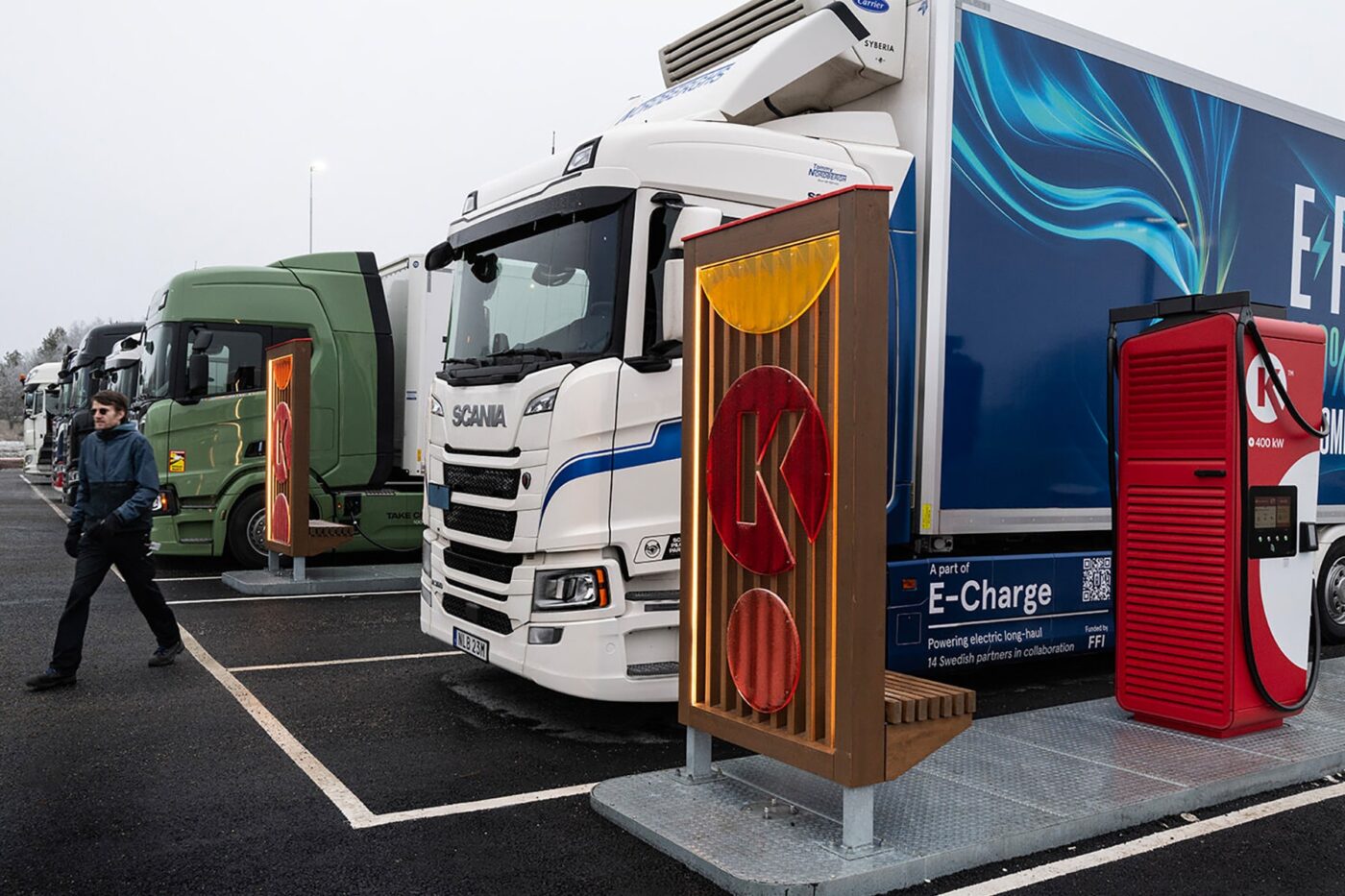
Given this situation, the shift towards renewable energy sources in transport vehicles becomes not only convenient but indispensable. Whether hybrid or electric, the truth is that solutions require a joint effort, because for long hauls — the very heart of road freight transport — an energy infrastructure to support that purpose does not yet exist. The European Union has correctly diagnosed the problem, but its own strategies clash with a lack of realistic deadlines and, above all, with an insufficient roll‑out of high‑power charging points. This is what various Spanish sources specialised in the transport sector have been pointing out, warning of the gap between political targets and the reality on the road.
It is precisely at this point of tension that the latest decision by Brussels, reported by the digital site Autónomos en Ruta under the title “EU relaxes truck and bus emissions for 2030 without changing 2040 target”, comes into play. The EU body openly acknowledges that the lack of high‑power charging points on motorways limits the development of the long‑distance electric lorry. That is why it has approved a revision of the emissions regulation for heavy‑duty vehicles that introduces greater flexibility for the 2030 horizon, while keeping intact the strategic goal of reducing emissions by 90% in 2040. This is not a change of direction, but a recalibration of the regulatory calendar in the face of evidence that the electrification of heavy transport is not yet mature.
The modification, already validated by the European Parliament and the Council, alters the system of emission credits to allow manufacturers to accumulate slack between 2025 and 2029. Until now, the pathway was linear and strict: 15% reduction in 2025, 43% in 2030 and 90% in 2040. Under the new rules, brands will be able to stay below their annual CO₂ targets in the early years and generate “buffers” of compliance before 2030 arrives, which facilitates industrial planning and avoids penalties at a stage where charging infrastructure remains the major bottleneck. Brussels admits without equivocation that without high‑power points on transport corridors, the long‑haul electric lorry is unworkable.
Nevertheless, the EU itself introduces a relevant differentiation within the sector. Urban buses are excluded from this flexibility because their electrification is more advanced and they operate in environments where charging infrastructure is more developed. This segmentation reflects a pragmatic approach: adapting regulation to different operational realities. Heavy freight transport, which accounts for more than 25% of road transport emissions in the EU, requires massive investments in energy on motorways — something that has not yet happened. The European decision is not a step backwards, but a recognition that the transition cannot be imposed by decree without adequate material support.
In short, the EU has chosen a balance between regulatory pressure and economic viability. The message to industry is clear: the target of reducing emissions by 90% in 2040 is non‑negotiable, but the path adapts to circumstances. For hauliers and self‑employed drivers who are currently suffering unbearable fossil fuel prices, this relaxation may ease immediate tensions, but it does not solve the underlying problem: without a high‑power charging network on motorways, without realistic deadlines and without joint solutions for long hauls, the transition to clean vehicles will remain a half‑fulfilled promise. Climate urgency and the geopolitical situation demand that we accelerate, but infrastructure forces us not to skip steps. On that balance depends whether freight transport will be left behind in the race towards decarbonisation.
Have any thoughts?
Share your reaction or leave a quick response — we’d love to hear what you think!
-
 0
0
-
 0
0
-
 0
0
-
 0
0
-
 0
0
