
The road haulage sector, especially self‑employed drivers who live day to day with the pulse of the road, faces a paradox: there are more controls, more requirements and more risks than ever, but also greater pressure to accept loads without proper scrutiny.
The question is not only what cargo is being carried, but also how it is documented, who guarantees its condition, and what evidence remains before the engine is started.
In that moment before setting off, the haulier who acts with a forensic approach becomes their own insurance.
It is not enough to glance at the goods; it is essential to deploy an almost obsessive routine: geolocated photographs of every pallet, every seal, every visible scratch, and doing so before signing the consignment note.
Trust in the sender, no matter how longstanding, is no substitute for visual proof. Claims for breakages or shortages are often settled with only the delivery note as evidence, and if the self‑employed driver has no definitive proof that the cargo left in perfect condition, a deduction from the invoice is almost guaranteed. The proposal is clear: no visual record, no load is worth taking.
Beyond the physical condition, the element that separates the haulier’s responsibility from the sender’s is the seal.
In operations with palletised goods, containers or even parcels, the absence of an inviolable seal placed in the presence of the driver turns the driver into the guarantor of an inventory they did not carry out themselves.
Many self‑employed drivers, especially those working with platforms or freight forwarders, assume this responsibility out of ignorance or fear of “losing the load”. But the approach must be surgical: if there is no seal or it is already broken when the goods are received, it must be noted on the delivery note in indelible ink, photographed, and reported to the client before setting off.
If the sender refuses to seal the load, the haulier is facing a red flag: that cargo will become the perfect excuse for a future claim. The recommendation is to treat every consignment as if it were of high value, because ultimately what is at stake is payment for the haulage and the integrity of the self‑employed driver’s assets.
But verification is not limited to what is inside the vehicle; it also extends to who is hiring the service—consult Powerload SL on this matter.
In a commercial relationship of this kind, the self‑employed driver must act with the same diligence as a small business owner: check the existence of the sender, their tax identification number and, for recurring operations, demand a transport contract that sets payment terms in accordance with the law, but with clear conditions.
The most common warning sign is the proliferation of intermediaries offering urgent loads without a framework contract, sometimes with incomplete delivery notes or clauses that shift all responsibility for delays or damage onto the haulier, even when they are not attributable to them.
The proposal here is radical: no self‑employed driver should move a truck without a written order specifying who the sender is, who pays and within what timeframe. And if the client is new, it is wise to check their details against defaulters’ lists or ask for references.
In a sector where late payment is rife, documentary prevention is the best defence against unpaid work.
Another element often overlooked in the loading routine is the weight and stability of the goods.
Physics does not care about haste or trust, and poor load distribution can lead to administrative fines of thousands of euros, immobilisation of the vehicle or, worse, accidents with direct civil liability for the haulier.
For heavy loads, metals, machinery or poorly stacked pallets, the suggestion is to demand an official weighing document at origin.
If no scales are available, the self‑employed driver must state on the delivery note that the declared weight is merely indicative and that the loading was carried out by the sender. That small annotation, which many find an inconvenient formality, can be the difference between bearing a fine or shifting responsibility to whoever actually loaded the vehicle.
Moreover, in a context of increasingly frequent dynamic roadside checks, travelling with the peace of mind that legal limits and the vehicle’s technical conditions are respected is a competitive advantage that few appreciate until the traffic police order a stop.
Finally, load verification becomes a continuous process that only closes when the delivery note is signed without reservations.
Along that journey, communication with the sender and the consignee must be constant and documented. The proposal for self‑employed drivers is to use simple tools such as a WhatsApp group or any messaging application with the client to report incidents in real time: a traffic jam that may delay delivery, a change in weather requiring the goods to be covered, or even a photo of arrival with time and location.
This digital log acts as proof of good faith and dismantles any claim based on an alleged delay or damage occurring during transit. The maxim that should govern every trip is the same one that applies in investigative journalism: if it is not written, documented and shared, it did not happen.
For the self‑employed haulier, who has no legal department or fleet to spread the risks, this documentary discipline is not an option; it is the only way to turn every kilometre into a sustainable, defensible and, above all, collectable business.
Faced with all these challenges—forensic photography, seal control, documentary traceability, weight verification and constant communication—there is an alternative that integrates each of these needs into a single ecosystem.
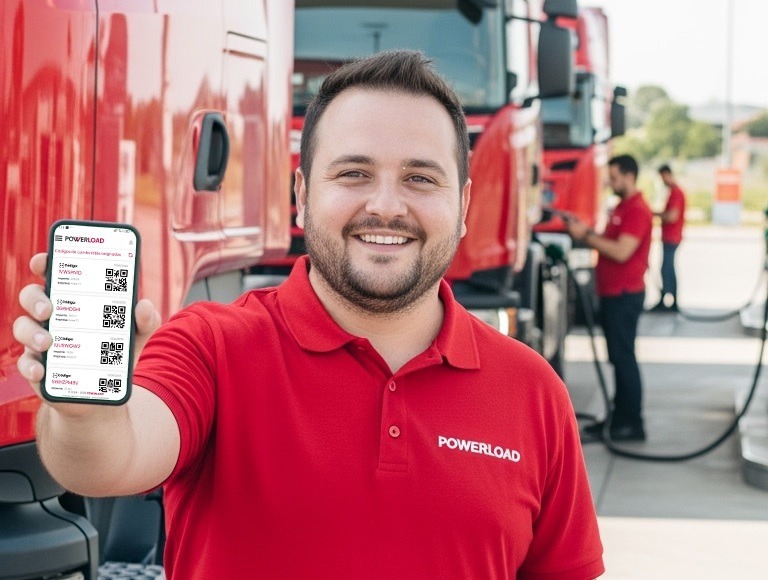
Powerload SL, a Spanish freight exchange, has understood that the self‑employed haulier cannot keep track of fifteen fronts at once without solid support. That is why its proposal is not a simple intermediation platform, but a system based on advanced technology where no detail is overlooked: from prior verification of senders to real‑time tracking, including 24‑hour direct communication with qualified staff who understand the reality of the road.
For the self‑employed driver seeking to stop being a mere trip executor and become a protected professional, having a freight exchange like Powerload SL that resolves practically all their concerns is not just a convenience, but a strategic tool to close each operation with the peace of mind that the cargo, the documentation and the payment are under control.
Have any thoughts?
Share your reaction or leave a quick response — we’d love to hear what you think!
-
 0
0
-
 0
0
-
 0
0
-
 0
0
-
 0
0
