
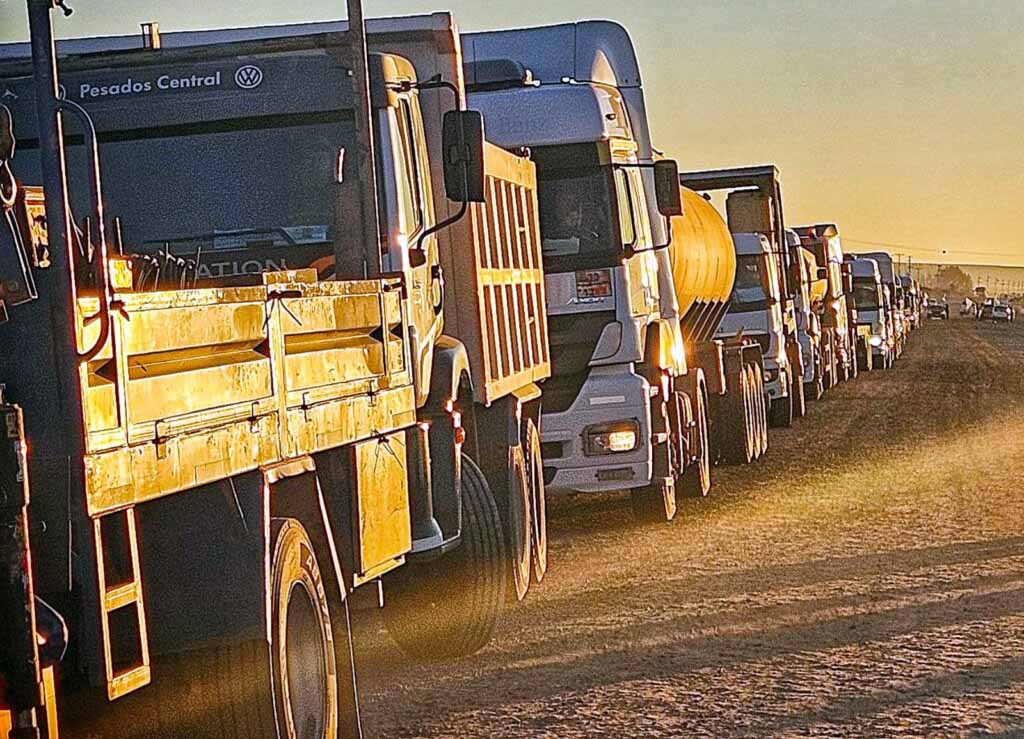
Road freight transport in Italy is going through one of its most silent yet profound crises. While Italian motorways show a reduced presence of heavy vehicles during these summer days due to temporary restrictions imposed by the Ministry of Infrastructure and Transport, the real underlying problem lurks in the medium- and long-term statistics.
According to data released by the CGIA of Mestre, there is currently a shortage of more than 22,000 truck drivers in the national labor market, a deficit that threatens to paralyze the country’s logistics and reflects an unstoppable trend across Europe.
The figures are stark and paint a desolate picture. Over the past five years, the number of holders of the (CQC) has decreased by almost 410,000 units, and the projection for the next decade is even more alarming: it is estimated that by 2034, half of the drivers currently active will have reached retirement age. A situation that has led to the closure of 21,248 road transport companies in just ten years, leaving only 80,687 operational nationwide in the last five-year period.
What has led to this drain of professionals? The causes are accumulating, and few show signs of a short-term solution. Increased stress, physical strain, and long working hours have turned a profession that was once a source of pride into an unattractive job, especially for younger people. Added to this is a significant bureaucratic barrier: the cost of obtaining the CQC amounts to thousands of euros, an entry obstacle that many candidates cannot afford. Faced with this reality, transport companies have begun to absorb this cost to facilitate the hiring of new generations.
Despite these efforts, generational turnover appears insufficient. Currently, Italy has 767,948 holders of the Driver Qualification Card (CQC), 34 percent fewer than five years ago. Of these, only 7,190 are under 25 years old, while the group of drivers over 50 totals 412,000, representing more than half of the total. The sector’s age pyramid has completely inverted, and time is working against an activity that is vital to the country’s economy.
Faced with this bleak outlook, the solutions on the horizon involve completely rethinking the transport model. The CGIA of Mestre warns that in the future it will be inevitable to turn to foreign drivers, boost international transport, and, on a still uncertain horizon, incorporate autonomous heavy vehicles to meet the demand for freight transport.
Meanwhile, the consequences are already being felt in urban public transport, with frequent cuts to buses, trams, and subways affecting tourists and citizens alike. The road transport sector finds itself at a crossroads that demands concrete actions at the European level, before the hemorrhage of drivers leaves an increasingly pressing logistics demand unanswered.
Have any thoughts?
Share your reaction or leave a quick response — we’d love to hear what you think!
-
 0
0
-
 0
0
-
 0
0
-
 0
0
-
 0
0
