
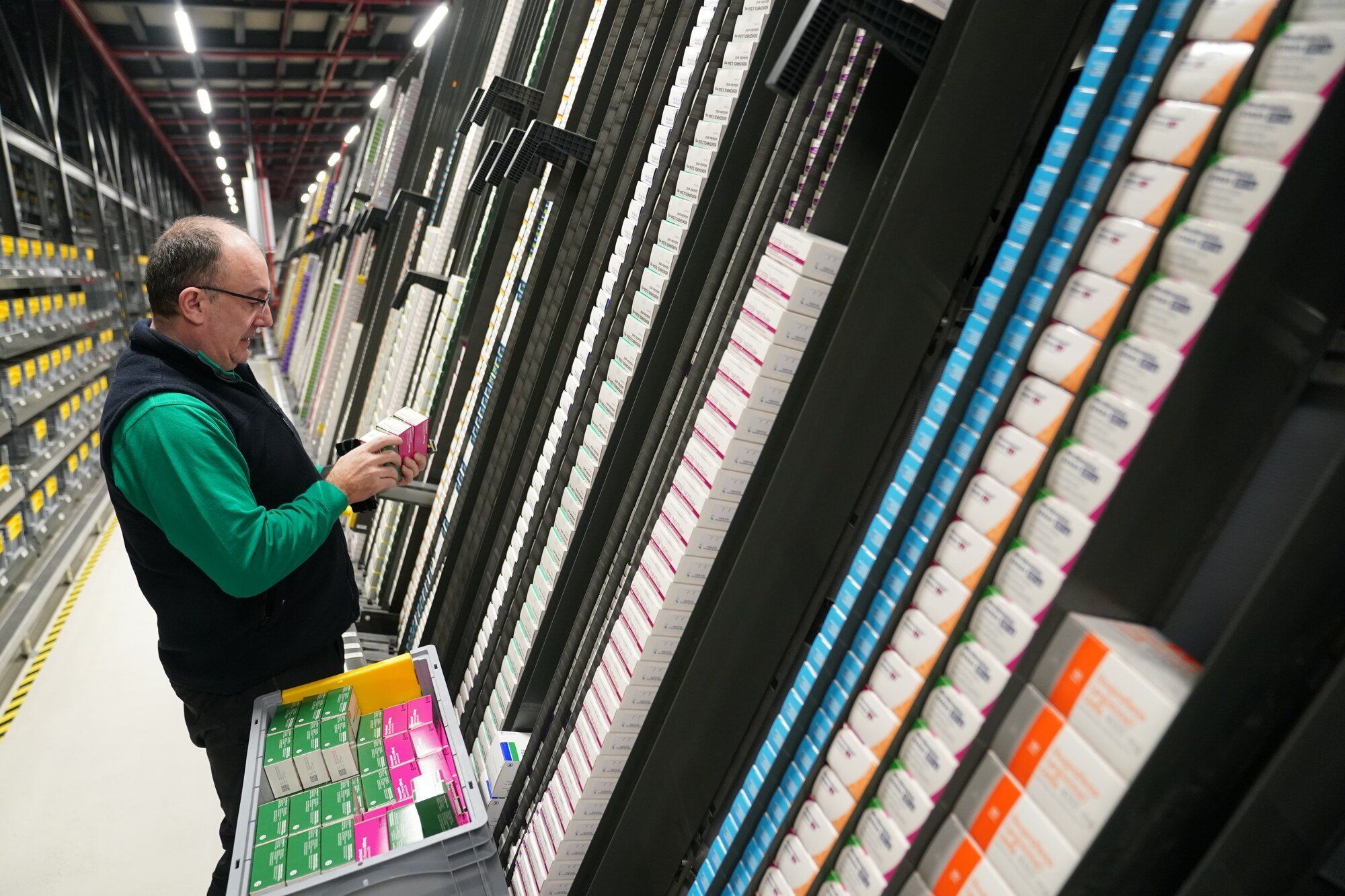
If every productive sector has its own storage norms, how is it possible that today thousands of different products — frozen foods, temperature-sensitive medicines, flammable textiles, humidity-sensitive electronics — coexist under one roof without everything ending in a chaos of spoiled or lost goods? The answer is no longer in brute force or the prodigious memory of a warehouse manager, but in an artificial intelligence that learns, predicts, and decides faster than any human. Modern logistics has managed to turn that impossible jumble into a surgical order, and it has done so by applying algorithms where before there was only patience and spreadsheets.
Each industry imposes rigorous rules: dairy requires an uninterrupted cold chain, chemical products require segregation by compatibility, pharmaceuticals demand traceability by batch and expiration date, and automotive parts need to be organized by assembly sequence. For decades, simultaneously meeting all these requirements was an operational nightmare. Warehouses were filled with separated zones, aisles with different temperatures, and hand-labeled shelves, but accidental mixing was common. A mistake in placing a batch of paints next to food could mean a million-dollar loss or a health risk.
Artificial intelligence has burst into this labyrinth as an internal navigation system that does not make mistakes. Machine learning algorithms analyze in real time the characteristics of each incoming product — weight, volume, fragility, required temperature, expected turnover — and automatically assign the optimal location within the warehouse. It is not about sorting by simple visual similarity, but by regulatory compatibility and access efficiency. A well-trained system knows that strong-smelling products cannot be next to absorbent ones, that high-turnover items should be near the packing area, and that soon-to-expire medicines have priority for dispatch.
But the real revolution occurs when AI ceases to be passive and becomes predictive. Current models anticipate demand by season, by hour, or even by weather event, and reorganize the warehouse before the goods arrive. If an algorithm detects that three containers of refrigerated products will be received tomorrow, it virtually reconfigures the space: it moves less urgent inventory, adjusts robot routes, and sends alerts to the cold staff. Thus, storage norms are not an obstacle, but data that feeds a logistics choreography where every move is calculated to the millimeter.
The results are striking for the economy. Companies that have implemented AI in their distribution centers report reductions of up to 40% in product location times, a drastic drop in errors due to regulatory non-compliance, and a significant increase in the shelf life of perishable goods. Moreover, intelligent systems generate automatic traceability: each batch knows where it is, how long it has been there, and when it must leave. This not only saves money but also saves lives in the case of drugs or food, and avoids regulatory fines that in some sectors can shut down a business.
Thus, what seemed a contradiction — the greater the diversity of products and requirements, the greater the possibility of chaos — has been resolved with artificial intelligence that does not replace the norms, but makes them executable at a massive scale. The lesson for global trade is clear: order within the labyrinth no longer depends on having fewer products, but on having better algorithms. And in that race, the countries and companies that learn to teach their machines the rules of each sector will be those who master the logistics of the future. Because, in the end, artificial intelligence is not magic: it is the ability to make thousands of different norms work together as if they were a single symphony.
Have any thoughts?
Share your reaction or leave a quick response — we’d love to hear what you think!
-
 0
0
-
 0
0
-
 0
0
-
 0
0
-
 0
0
