
Technology is taking over the roads, and to provide greater safety for traffic flow, all creative intellect is being invested in its use.
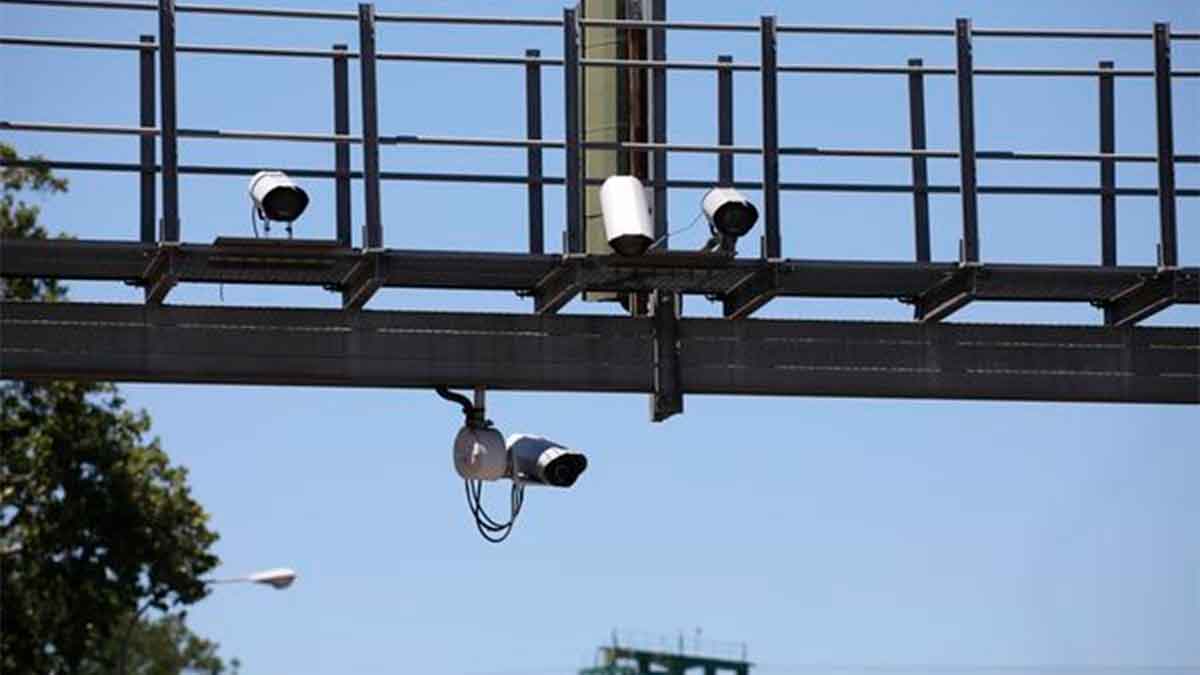
The latest and most sophisticated example of this trend is the implementation by the DGT of cameras with artificial intelligence capable of reading license plates and detecting infractions in a fraction of a second.
This qualitative leap transforms traffic surveillance: it is no longer just about measuring speed, but about analyzing and judging the behavior of each vehicle with a precision and consistency that no human eye could maintain.
It is the road converted into a stage of automated control, where the machine observes, processes, and penalizes without rest.
Although perhaps it is not always entirely fair, the stated goal is to reduce accident rates.
The first four cameras, already active in Madrid at critical points on the A-6, A-1, A-2, and A-42, focus on high-risk infractions such as crossing solid lines.
The technology, called ANPR (Automatic Number Plate Recognition), is relentless: two synchronized cameras certify whether a vehicle has performed a prohibited maneuver, generating an automatic fine of 200 euros that arrives at the home without an agent being involved.
The system, tested since 2023, has demonstrated effectiveness of over 95 percent, which has convinced the DGT to expand its use during 2026.
However, this technological efficiency clashes with the complexity of the human factor. The text I am reflecting on points out that human reactions occur that cameras will not understand, and this is the main flaw in the system.
What happens when a driver crosses a solid line to avoid an unforeseen obstacle or a pothole? Or when a motorcyclist does so to avoid an imminent collision?
The algorithm, trained to recognize geometric patterns, does not distinguish between a deliberate infraction and an evasive maneuver forced by circumstances.
The machine lacks the context that any agent could interpret on the ground, which opens the door to false positives and sanctions perceived as deeply unfair.
This lack of nuance is aggravated by the opacity of the process. Unlike a conventional radar, where the speed photo is the proof, here the driver faces an algorithm whose criteria are confidential.
Appealing a fine becomes an unequal battle: the citizen must prove a technical error of a system to which they have no access, while their movements are archived in a database. This creates a new legal gray area regarding the storage of images and the possible reuse of that data, raising an inevitable debate between road safety and privacy.
In conclusion, technology is taking over the roads with the promise of seamless safety, but its implementation fragments justice into two speeds. On one hand, there are the “automatable” infractions, like crossing a solid line, which suffer zero and relentless tolerance. On the other, there are those that require human judgment, such as improperly driving in the left lane, whose 200-euro sanction still depends on the physical presence of a patrol.
The challenge for the immediate future is not technical, but ethical: how to integrate this powerful artificial intelligence without losing sight of that human complexity that, for now, no camera is capable of understanding.
Have any thoughts?
Share your reaction or leave a quick response — we’d love to hear what you think!
-
 0
0
-
 0
0
-
 0
0
-
 0
0
-
 0
0
