
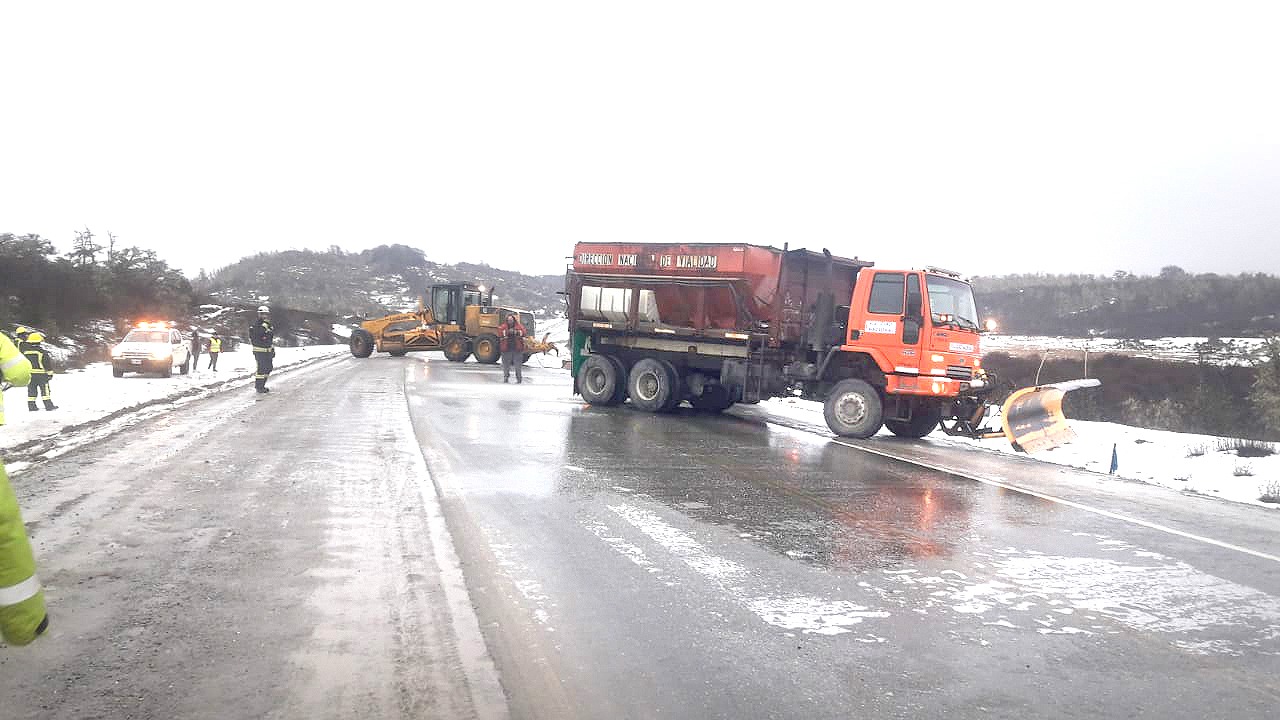
In the world of heavy transport, where every journey moves tons of responsibility, the braking system is the vital hinge between control and catastrophe.
Unlike light vehicles, these steel colossi do not rely on a single mechanism. The air brake system is the undisputed king, using compressed air to actuate shoes or pads, with the crucial advantage that, in case of a leak, the brake applies automatically for safety.
Complementing this force, the retarder or hydrodynamic brake – whether on the axle or in the engine – acts without wear, transforming motion into heat in the cooling circuit, relieving the monumental load on traditional brakes on long descents. Knowing this braking ecosystem is the first mandate for any professional driver.
Rain, that deceptive ally of the road, demands a change in mindset from the very first moment.
Aquaplaning is a silent threat; to overcome it, tires must have legal tread depth and correct pressure.
The technique here is anticipation: at least double the safety distance and perform smooth, progressive decelerations, preferably using the retarder to avoid early wheel lock-up.
A veteran’s trick is to observe the tracks of the vehicle ahead: if they suddenly disappear, it’s a sign of a dangerous puddle. Driving in these conditions is not a matter of courage, but of foresight.
When the temperature drops and the cold turns icy, the wise driver becomes a meteorologist.
Before setting off, a thorough inspection is non-negotiable: completely clear all windows, mirrors, and lights of ice or snow, and ensure the air lines of the brake system are dry to prevent moisture from freezing, which could incapacitate the system.
Driving on black ice, that almost invisible enemy, demands extreme smoothness. Any abrupt movement – hard braking, sudden acceleration, or sharp steering – is an invitation to skid. The golden rule is to drive as if you had a full glass of water on the dashboard and didn’t want to spill a single drop.
Snow and frost constitute the scenario of greatest technical demand. Here, the strategic use of the retarder becomes an art. While on dry asphalt it is an ally, on slippery surfaces its abrupt application can cause loss of traction on the drive wheels.
The key lies in modulation and, in many cases, in deactivating it during critical moments of low adhesion. Chains, not an accessory, are the mandatory lifesaver for significant snow depths. Learning to put them on quickly and safely, before getting stuck, is a skill every driver in cold areas must master. Patience is measured in kilometers per hour, not in hours of travel.
In the event of an emergency due to loss of control, deep knowledge of the systems becomes instinct. A skid in a curve with a trailer requires smooth counter-steering and never braking hard, trusting that the air system will apply force in a modulated way between axles.
If the emergency brakes activate due to a pressure loss, staying calm and holding the steering wheel firmly to guide the immense mass during the forced deceleration is crucial. Experience does not prevent the incident, but it dictates the serenity to manage it, minimizing the consequences.
Driving a large vehicle in adverse conditions transcends skill at the wheel; it is a comprehensive management of physics, technology, and prudence.
The experienced driver does not fight the elements; he interprets them. He knows that his best brake is the anticipation he applies kilometers before the obstacle, that his retarder is a conditional ally, and that on ice, the safest speed is the one that allows him to stop within the field of vision illuminated by his headlights.
On the winter road, the real weight being transported is not the cargo, but the responsibility.
Have any thoughts?
Share your reaction or leave a quick response — we’d love to hear what you think!
-
 0
0
-
 0
0
-
 0
0
-
 0
0
-
 0
0
