
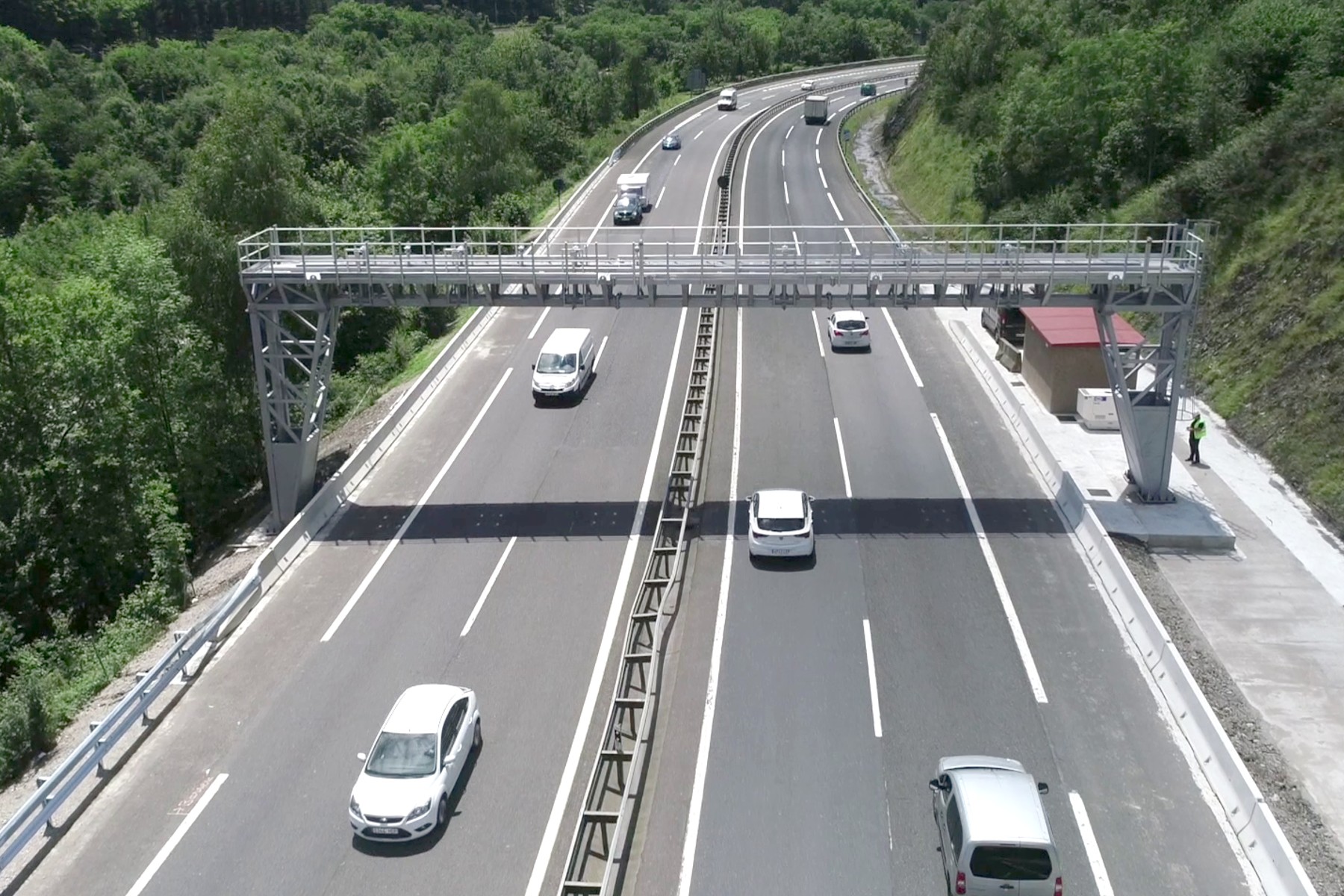
Europe is embarking on a silent revolution on its asphalt. Traditional tolls with barriers and coins are giving way to an invisible, digital, and ubiquitous system: smart tolls.
More than just a payment method, they have become a sophisticated tool for managing traffic, financing infrastructure, and, increasingly, for driving the ecological transition. Their principle is simple yet powerful: paying for the actual use of the road, with tariffs that can vary based on vehicle pollution or road congestion.
This transformation was not born yesterday. Countries like Austria and Germany were pioneers two decades ago, implementing systems for trucks that combined electronic tags and cameras. Their success proved it was possible to charge by distance without stopping traffic, laying the groundwork for expansion across the Union. Today, the trend is unstoppable and goes beyond freight: from electronic vignettes in Eastern Europe to urban tolls in London or Milan, the road has become a space of data and dynamic pricing.
The true disruption, however, comes from the sky. The new generation of tolls, like the one being prepared in the Netherlands, no longer depends on gantries on the road, but on satellites (GNSS). A device in the vehicle calculates the route and applies the corresponding tariff automatically.
This allows for pinpoint accuracy and covering extensive road networks more efficiently, promising fiscal justice on wheels: you pay exactly for what you drive.
But this technological leap is not without its bumps. The major shadow is technological obsolescence. Most current devices operate on the old 2G mobile network, the phase-out of which has already begun in several countries. Thousands of carriers are facing a race against time to renew their equipment before they are left disconnected, an added cost in a sector with narrow margins. The transition is twofold: towards new regulations and towards new digital infrastructure.
The significance of this change goes beyond logistics. Smart tolls are the spearhead of a new pact between mobility and sustainability.
By linking the cost directly to emissions, they starkly apply the “polluter pays” principle, incentivizing the renewal of the vehicle fleet towards cleaner vehicles. They become, in essence, an instrument of climate policy.
The path towards a Europe with fully interoperable and digital tolls is still under construction, with each country moving at a different speed. However, the direction is clear: the future of tolls is invisible, intelligent, and irrevocably linked to the health of the planet.
The road has ceased to be a mere support of rubber and concrete to become a neural network that charges, measures, and persuades, redefining from the ground up the price and impact of our collective journey.
Have any thoughts?
Share your reaction or leave a quick response — we’d love to hear what you think!
-
 0
0
-
 0
0
-
 0
0
-
 0
0
-
 0
0
