
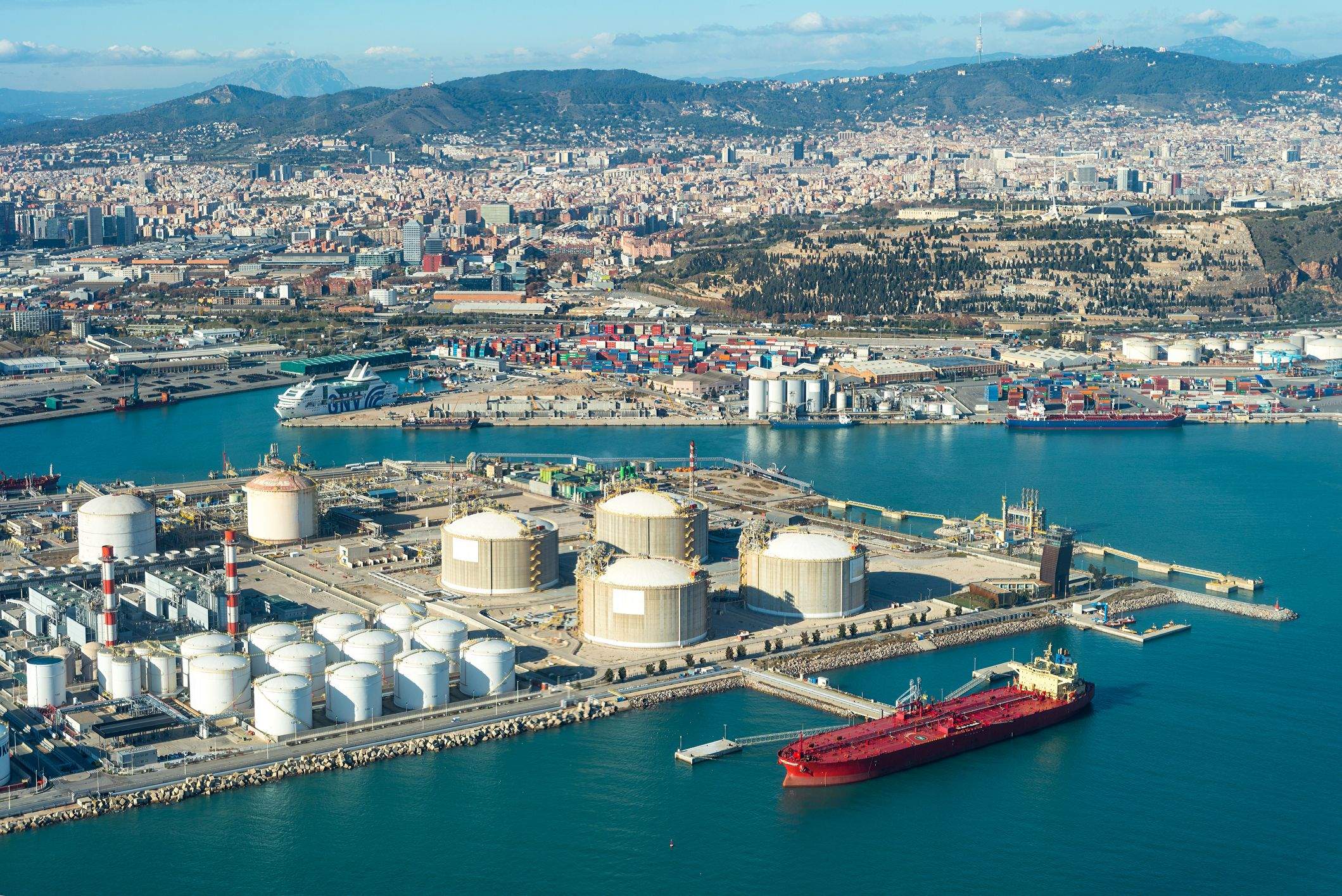
The repeated accidents on the Spanish railway network, with particular severity in Catalonia, have triggered a wide-ranging logistics crisis that is strangling the flow of goods, particularly those linked to ports. Incidents such as the fatal crash in Gelida and the closure of the Rubí tunnel have left the strategic Port of Barcelona practically cut off by rail from the Spanish mainland and Europe, creating an unprecedented bottleneck that has already transcended the local level to become a national problem.
The Port of Barcelona, which handles about 4,000 containers per week by rail, is in a state of “technical isolation.” Although Adif has announced a partial and imminent reopening of the northern section (this Thursday) and the southern section (next Monday), restrictions will persist. Its president, José Alberto Carbonell, downplays the direct economic impact on the port facility but warns of a severe “reputational impact” and demands a clear contingency plan from the authorities and Adif for the future.
Alarm is spreading among shippers. The Association of Spanish Shippers (ACE) warns that competitiveness and supply are “in check.” Sensitive sectors such as food are already suffering critical delays, with unforeseen cost overruns and production lines threatened by a lack of components. The inability to use the train forces a massive migration of cargo to an alternative system that is already showing its limits.
The natural alternative, road transport, is on the brink of collapse. The diversion of heavy traffic due to the saturation of the AP-7 motorway has shifted the problem to secondary roads like the N-II, which are not designed for such density. This creates long queues, exponentially increases transit times, and drives up operating costs in a country where trucks already handle 95 percent of domestic freight.
In the face of this pressure, immediate solutions are stopgaps. The Port of Barcelona has seen a 10-15 percent increase in goods arriving by road, partially alleviating the crisis, while seeking alternative coastal rail routes for a minimal percentage of traffic. However, international freight remains blocked. The prioritization of truckers is a reality, but not a structural solution.
The sector’s outcry is unanimous: lasting solutions and a resilience plan are required. Beyond urgent repairs, the authorities are called upon to guarantee the robustness of the rail lines and, above all, to design protocols to prevent a localized incident from leading to a national multimodal shutdown. The demand is clear: this disruption, which is already affecting key hubs of commerce, must not be repeated, or at least feasible and agile alternatives must exist for when it does occur.
Have any thoughts?
Share your reaction or leave a quick response — we’d love to hear what you think!
-
 0
0
-
 0
0
-
 0
0
-
 0
0
-
 0
0
