
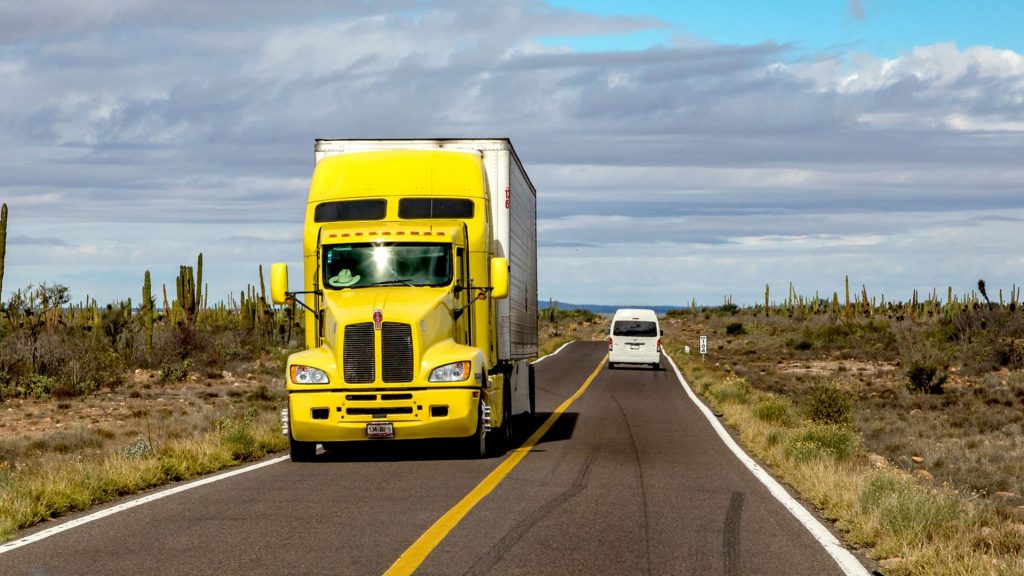
Spain is immersed in a profound transformation of its transport sector, driven by the EU’s decarbonization objectives. The focus has rightly been on phasing out diesel engines, the traditional lifeblood of road freight transport. However, the roadmap to sustainability presents a complex strategic dilemma: is it viable and profitable to massively replace the more than 30,000 long-haul trucks traveling on Spanish roads with electric or hydrogen alternatives? The data reveals a significant gap: while diesel, despite its volatility, offers ranges of over 1,500 km and an ultra-fast and ubiquitous refueling network, battery-electric trucks (although with significantly lower “refueling” costs per km) still grapple with practical ranges around 300-400 km and require hours of charging, even at megawatt-capable 750 kW charging stations that are still a rarity on highways.
The viability of this transition, therefore, seems to paint two divergent scenarios. For last-mile and urban and regional distribution, electrification presents itself as the optimal and economically advantageous solution. Vehicles operate within limited radii, can charge overnight at logistics centers, and are key to complying with Low Emission Zone (LEZ) protocols in cities. Savings in fuel and maintenance offset, in the medium term, the higher initial investment. The problem grows exponentially in long-distance transport, the backbone of commerce. Here, the lack of a robust national network of high-power public charging or green hydrogen stations (the only truly clean vector) is the Achilles’ heel. The required investment is colossal, and the question of who bears the cost – companies, the administration, or European funds – remains up in the air.
Experts are divided on this outlook. In favor of acceleration, voices like María García, a professor of Transport Engineering at the UPC, argue: “The commitment must be bold and coordinated. The costs of diesel include negative externalities – health and climate-related – that the consumer does not pay. Investing in green corridors with strategic charging stations is a national necessity, not an expense. Technology is advancing at breakneck speed, and range will cease to be a problem in this decade.” Against excessive optimism, Luis Martínez, president of the Madrid Transport Association, warns: “They are asking us to renew fleets with vehicles that cost three times as much, with a range that is useless for our Seville-Barcelona routes and nowhere to charge them. It’s a recipe for bankruptcy for self-employed drivers and SMEs. The infrastructure must exist first, then the obligation.”
The Spanish strategy, embodied in the Moves III Plan and the Strategic Project for Economic Recovery and Transformation (PERTE) for the Electric and Connected Vehicle, attempts to balance this scale. Substantial funds are allocated for the purchase of zero-emission trucks and the deployment of infrastructure, prioritizing key corridors. The key to viability seems to lie in a pragmatic and temporary technological mix: promoting renewable gas (biomethane) for existing fleets and long distances as a bridge, while rolling out the high-power electrical network at full speed and developing a real green hydrogen economy. It will not be a homogeneous substitution, but a technological coexistence where each solution finds its operational niche.
In conclusion, the profitability of abandoning diesel in heavy transport in Spain is not a question of yes or no, but of where and when. For the last mile and the urban sphere, it is already an unquestionable and profitable reality. For long distances, the road is still long and costly, dependent on ambitious public-private collaboration and on rail planning that alleviates pressure on roads. The objective is clear, but the journey demands pragmatism, enormous investments, and time, lest it disarticulate a logistical sector vital to the national economy. The transition, in short, resembles a marathon more than a sprint.
Have any thoughts?
Share your reaction or leave a quick response — we’d love to hear what you think!
-
 0
0
-
 0
0
-
 0
0
-
 0
0
-
 0
0
