
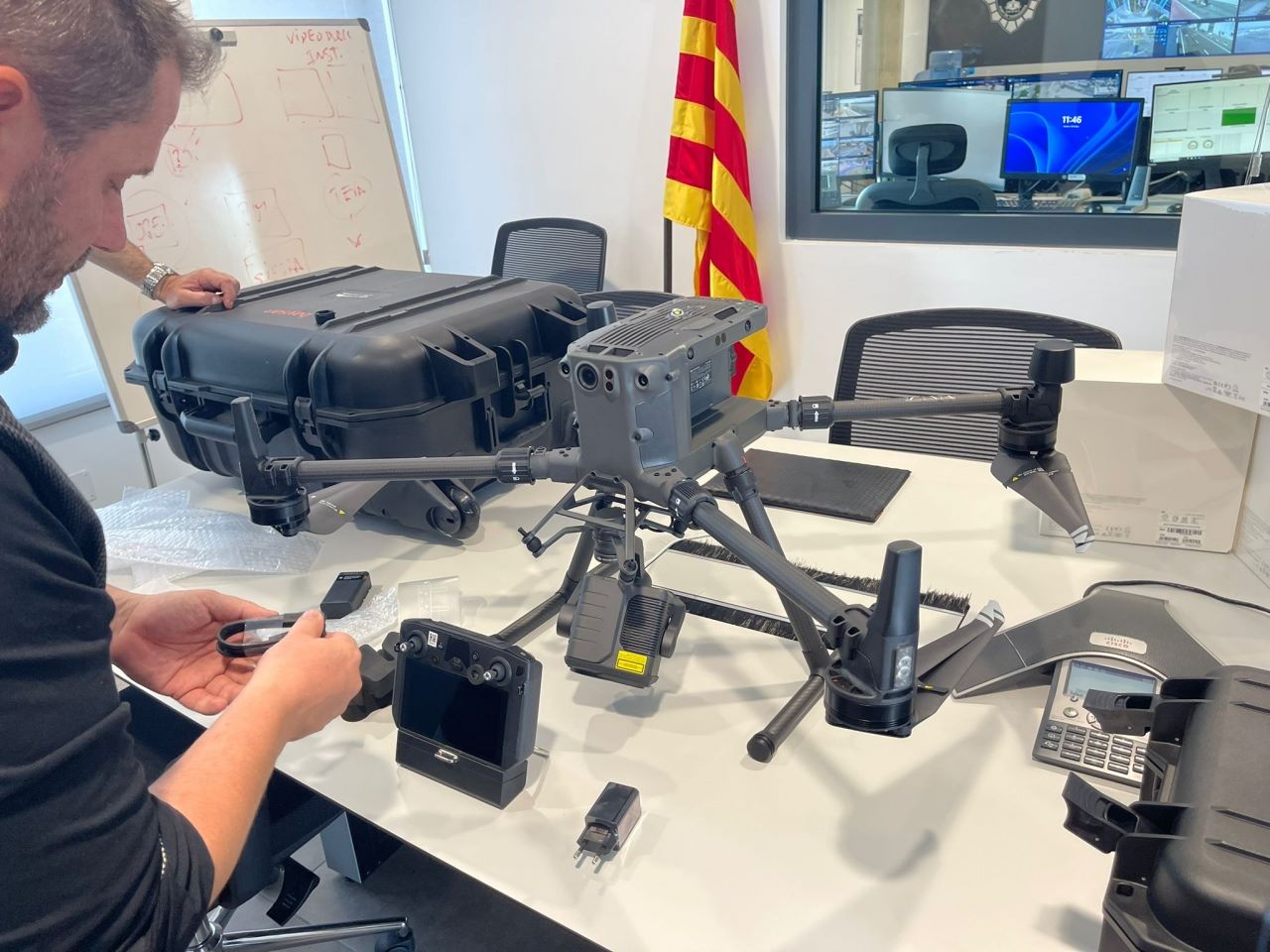
The first state conference on the use of drones in the port system, held in Tarragona in November 2025 under the organization of Puertos del Estado, represents a milestone of great strategic importance.
This event, which brought together 19 of the 28 Spanish port authorities, went beyond mere experience sharing to establish itself as the pillar of a coordinated and homogeneous framework for technological implementation.
Its significance for best practices is fundamental, as it seeks to standardize procedures, guarantee operational safety, and maximize investment efficiency, avoiding fragmentation and fostering an ecosystem of shared knowledge among state ports.
The creation of a working group and a specific Technical Guide, with assistance from Ineco, exemplifies the commitment to a regulated and safe adoption.
A drone, or Unmanned Aircraft System (UAS), is an aerial vehicle that flies without a pilot on board, controlled remotely or autonomously via pre-programmed flight plans.
These systems are developed on a multifaceted technological basis that integrates advanced hardware and software: global positioning systems (GPS/GNSS) for navigation, sensors (RGB, thermal, multispectral cameras, LiDAR), real-time data communication systems, and information processing and flight management software.
This technological convergence allows their adaptability to complex environments such as ports.
The conference highlighted the operational maturity already achieved, with ten port authorities routinely using drones.
The Port of Tarragona, a pioneer and host, demonstrated a comprehensive model with its own unit, 20 accredited pilots, and a drone fleet whose images are integrated in real time into its control center.
This case serves as a testing ground and benchmark, illustrating the transition from pilot projects towards recurrent operations fully integrated into surveillance, maintenance, and emergency protocols.
The experiences presented revealed a range of applications driving port digital transformation.
From the inspection of critical infrastructure (lighthouses, breakwaters) in Vilagarcía or Gijón, to environmental control through the detection of gases and pollutants in water (Barcelona), or topography and construction monitoring in Valencia.
The Port Authority of A Coruña even presented an advanced airspace management model, granting authorizations to external operators. This diversity of uses underscores the drone’s role as a versatile tool that enhances safety, operational efficiency, and environmental sustainability.
Future challenges identified point to the next frontier of innovation: the integration of UAS data into digital twins to create dynamic virtual replicas of facilities, and the development of systems to manage U-Space, the low-level airspace dedicated to drones.
The Tarragona conference therefore laid the foundations not only for a safe and standardized implementation in the present but for a coordinated evolution towards smart ports where drones, managed with the same diligence as terrestrial and maritime space, are a key strategic asset for competitiveness and security.
Have any thoughts?
Share your reaction or leave a quick response — we’d love to hear what you think!
-
 0
0
-
 0
0
-
 0
0
-
 0
0
-
 0
0
