
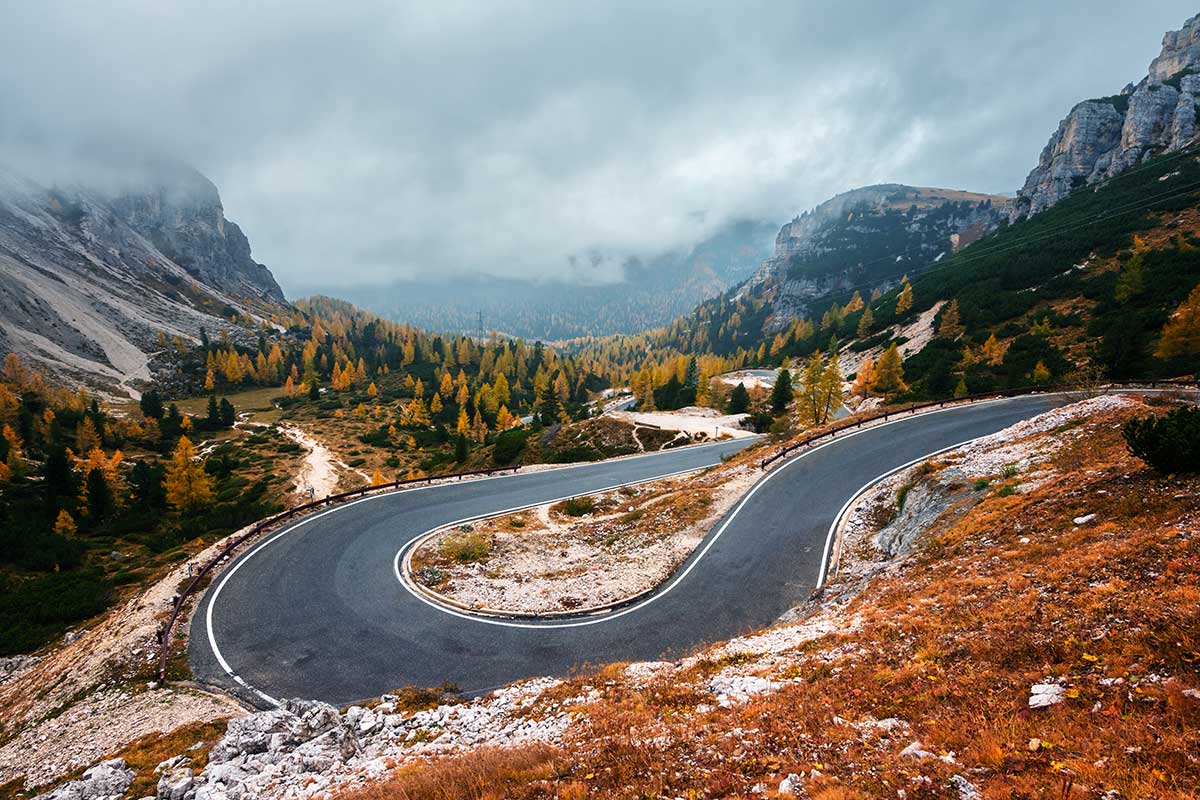
Paris, December 17, 2025. The first wave of winter cold has firmly settled over the French hexagon, transforming road networks into a stage of logistical challenges and extreme caution. According to the latest bulletins from Bison Futé and the Road Directorate, conditions are particularly delicate in the mountain ranges (Alps, Jura, Vosges, Massif Central, and Pyrenees), where snow and ice are the main players, and in the northern and eastern regions, where night and morning frosts create treacherous patches of black ice on secondary and service roads. Although the main highways remain operational thanks to salting and snowplow services, driving requires maximum attention.
For the thousands of heavy goods carriers who are the backbone of the economy, this start of winter brings out its most dreaded catalogue of problems. The cardinal issue is the “white risk”: the accumulation of snow on roadways and mountain passes which forces the use of chains or winter tires, dramatically slowing down journeys and threatening to leave vehicles immobilized on slopes. To this is added the formation of invisible ice (black ice / verglas), especially dangerous in the early morning hours, which causes traction loss in seconds. Furthermore, strong crosswinds, such as the Tramontane or the Mistral, pose an added risk of rollover for trailers and large-volume vans, compromising stability.
Faced with this scenario, authorities have activated the winter protocol and issued precise instructions to the sector. The main one is the obligation to be equipped with winter tires or to possess chains on board in signposted areas, a regulation that is especially monitored in affected regions by municipal ordinances. There is an insistence on the mandatory consultation of weather and road conditions before each trip, using official applications like Bison Futé or Info Trafic. Likewise, the prohibition of overtaking snowplows and the need to maintain an extended safety distance are reiterated. In extreme cases, the prefecture can decree a ban on truck circulation on certain routes, a disruptive but necessary measure for safety.
Experts in the sector underline the critical importance of preparation. Lucile Mercier, an analyst at the National Union of Road Transport (UNTR), warns: “This winter finds us with an aging fleet and fierce delivery time pressures. Specific winter driving training for new drivers is more crucial than ever. A stopped truck is not just a delay; it’s a broken link in the supply chain.” For his part, Pierre Dubois, former director of road safety, comments: “The measures are in place, but their effectiveness depends on discipline. We still see too many cases of bald tires trying to navigate mountain passes. Technology helps – traction control, stability systems – but the primary safety factor remains the driver’s responsible decision.”
In short, the winter of 2025-2026 has begun in France with its annual reminder of fragility. The roads, although monitored, are hostile territory during these weeks. The heavy transport sector navigates between the imperative need to keep the country supplied and the scrupulous respect for rules that mark the thin line between on-time delivery and an accident. The key, as reiterated from all fronts, lies in meticulous preparation, real-time information, and, above all, in adapting one’s pace to a rhythm dictated by nature.
Have any thoughts?
Share your reaction or leave a quick response — we’d love to hear what you think!
-
 0
0
-
 0
0
-
 0
0
-
 0
0
-
 0
0
