
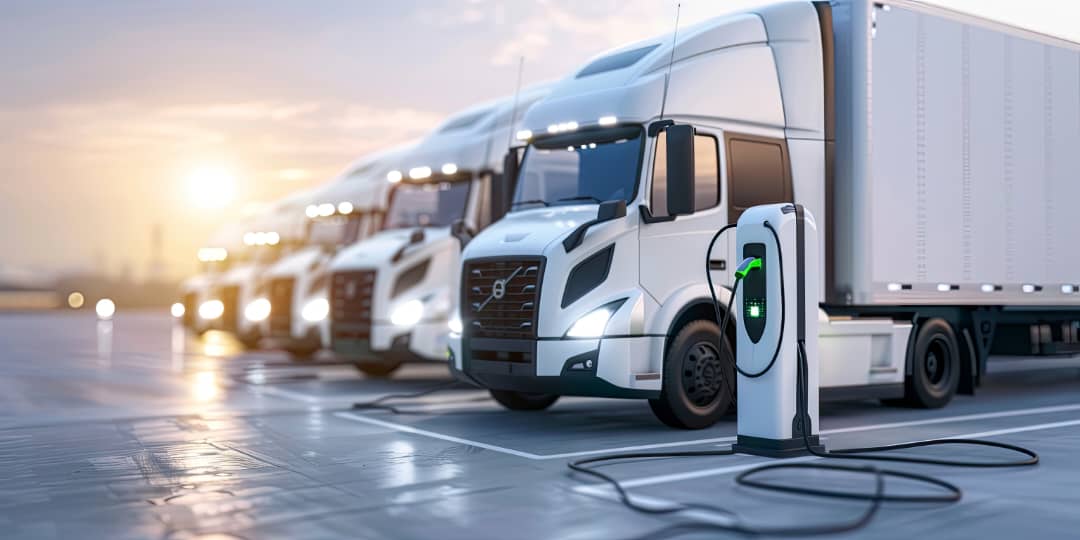
In this December of 2025, the European transport sector stands at a crossroads. While the European Union pushes ambitious plans to eliminate fossil fuels and reduce emissions, over 5,300 hauliers and logistics operators have raised a unified voice of protest against the mandatory purchase of electric trucks.
This rejection, summarized in the slogan “Yes to greening, no to purchase obligations,” does not stem from a denial of climate change, but from a deep concern about the economic and operational viability of a forced and premature transition.
The signatories, ranging from small family businesses to large operators, insist on their commitment to decarbonization but warn that impositions without the right conditions could be devastating.
The main causes of this rejection are, in essence, economic and practical. Firstly, the acquisition cost of an electric truck remains significantly higher than that of its diesel equivalent, an unaffordable investment for many SMEs operating on slim margins. Furthermore, uncertainty about the depreciation of these vehicles and the high maintenance and repair costs add considerable financial risk.
Hauliers argue that, in a context of cost crises and without practical and massive financing instruments, a purchase obligation equates to endangering their business survival and, by extension, the resilience of the entire European supply chain.
Beyond economics, serious operational challenges hinder adoption. Public charging infrastructure for heavy vehicles is still insufficient and its deployment is slow and uneven across the territory. Issues such as real-world range—affected by payload, terrain, or extreme temperatures—and downtime for charging complicate logistics planning and threaten profitability.
Hauliers thus face the dilemma of acquiring assets that might not be operationally viable for many of their services, especially long-distance ones, which would distort the market and harm the sector’s efficiency.
A systemic concern also underlies this: the capacity of the electrical grid to support a massive fleet of heavy-tonnage trucks charging simultaneously. Without a guarantee of stable, green, and affordable electricity supply, the transition could create new bottlenecks.
The petition addressed to President Von der Leyen therefore criticizes a political instrument that seems designed more to help manufacturers meet production targets than to ensure a successful and just transition. Hauliers feel treated as “collateral damage,” forced to buy vehicles whose support infrastructure and long-term economic viability are not guaranteed.
Ultimately, the conflict is not between ecology and denialism, but between obligation and opportunity. The sector calls for prioritizing the creation of “enabling conditions”: an accelerated and realistic deployment of infrastructure, supportive fiscal frameworks, and accessible financing mechanisms. Only when a viable operational and economic ecosystem exists will the demand for zero-emission trucks increase naturally. The energy transition in heavy transport requires, according to professionals, pragmatism and cooperation, not rigid quotas that ignore business reality and jeopardize a service essential to the European economy.
Have any thoughts?
Share your reaction or leave a quick response — we’d love to hear what you think!
-
 0
0
-
 0
0
-
 0
0
-
 0
0
-
 0
0
