
On the roads and streets of Spain, compliance with speed limits stands as the first line of defence against traffic accidents. It is not a mere suggestion, but a legal obligation with a clear purpose: to save lives. The General Directorate of Traffic (DGT) has established a precise regulatory framework that distinguishes between urban and rural environments, as well as between types of vehicles, recognizing that excessive speed does not have the same consequences on a quiet residential street as on a motorway. Respecting these rules is the difference between a safe journey and a tragic outcome or a serious administrative penalty.
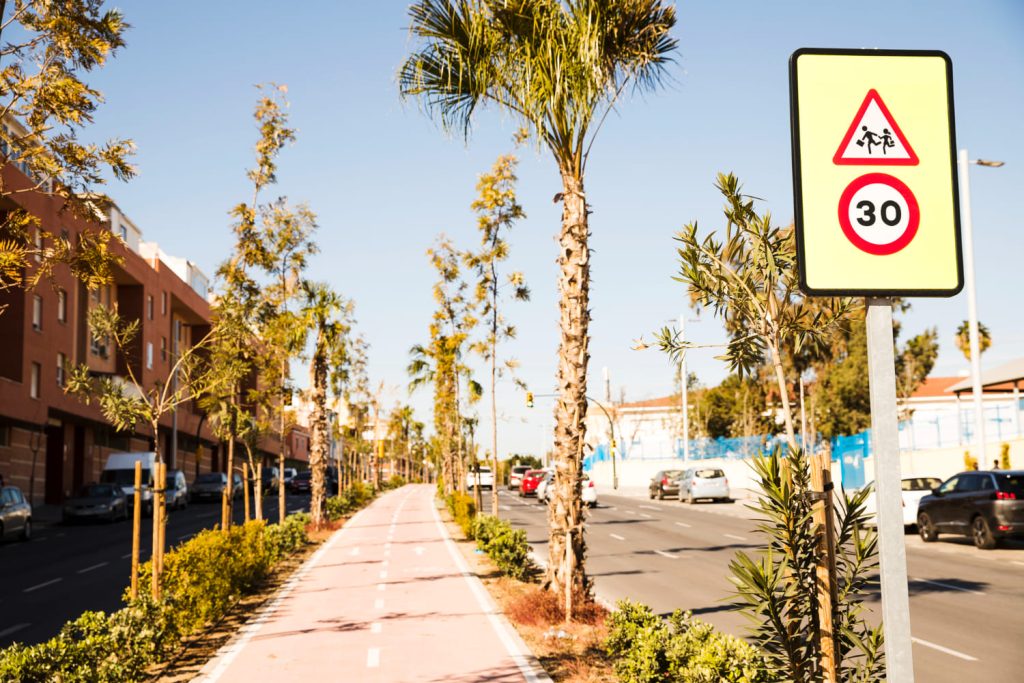
The most significant change in recent regulations has occurred in the heart of our cities. Since 2021, Spanish urban areas have been transformed into safer environments for the most vulnerable users with the implementation of 20, 30, and 50 km/h limits. These speeds, which may seem excessively low to some drivers, respond to an irrefutable logic: at lower speeds, the braking distance is shorter, and in the event of a collision, the probability of fatalities is drastically lower. Streets once dominated by cars are now shared spaces where pedestrians and cyclists regain their right to move safely.
Outside the cities, the network of interurban roads demands constant adaptation from the driver. On conventional roads, the general limit of 90 km/h for cars contrasts with 80 km/h for trucks and heavy vehicles, a crucial distinction that recognizes different braking and handling capabilities. However, it is on motorways and dual carriageways where the maximum speed of 120 km/h for cars can generate a false sense of security. It is vital to remember that this is a limit, not a target, and that factors such as adverse weather conditions or the presence of trailers force drivers to reduce their speed significantly to maintain control of the vehicle.
The consequences of ignoring these rules are severe and progressive. The DGT’s penalty system is clear and forceful: what begins as a €100 fine for a minor excess of up to 20 km/h can escalate to €600 and the loss of 6 points for exceeding the limit by 50 km/h. But the true point of no return is its classification as a criminal offence against road safety, applicable when the limit is exceeded by more than 60 km/h on a road. In these cases, penalties can include prison sentences of 3 to 6 months, community service, and the withdrawal of the driving licence for up to four years, turning a moment of recklessness at the wheel into a criminal record. In conclusion, speed limits in Spain are the result of a comprehensive road safety strategy that seeks to balance traffic flow with the protection of life. They are not arbitrary numbers, but calculated thresholds to minimise risk. Driving while respecting these limits, adapting to the vehicle, the road, and the environmental conditions, is not only an act of legal compliance but the ultimate expression of responsibility at the wheel. After all, every extra kilometre per hour brings the driver not only closer to a penalty but also to a potential, avoidable tragedy.
Have any thoughts?
Share your reaction or leave a quick response — we’d love to hear what you think!
-
 0
0
-
 0
0
-
 0
0
-
 0
0
-
 0
0
